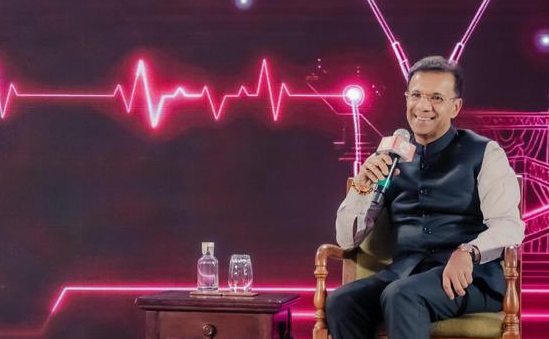
Health Minister Vishwajit Rane speaks during the Goa HealthTech Summit 2025.
PANAJI
Goa’s health sector in 2025 was a story of contrasts — strides in technology adaptation and medical education, tempered by persistent public health challenges and a stormy controversy involving Health Minister Vishwajit Rane at its premier hospital, the Goa Medical College and Hospital, Bambolim. The year began with optimism as the Goa HealthTech Summit 2025 showcased the State’s ambition to harness AI and digital tools for healthcare delivery.
Rane announced reforms in medical interventions and social welfare, while 19 new postgraduate seats at Goa Medical College (GMC) gave the State’s medical training capacity a leg up.
Dengue decline
Goa’s battle against vector-borne diseases saw encouraging results. Dengue, which has long troubled the State, showed a marked improvement in 2025, said to be the outcome of intensified surveillance, awareness drives and better mosquito-control measures.
Public health officials reported fewer outbreaks compared to previous years, offering relief to both urban and rural communities.
TB eradication: still work in progress
The State continued its push under the National TB Elimination Programme, originally aimed at ‘eradicating’ tuberculosis by 2025.
While detection and treatment rates improved, officials are on record about the challenges in reaching vulnerable populations and ensuring adherence to medication. The programme remains a work in progress, with grassroots health workers playing a critical role in sustaining momentum.
Alarming lifestyle disease stats
The Economic Survey 2024-25 painted a sobering picture: nearly 47% of natural deaths in Goa were due to cancer, heart disease and diabetes.
Infant mortality rates also worsened, raising alarms about maternal and child health. These figures underscored the urgent need for preventive care and stronger primary health systems.
Questions over emergency response
Earlier in the year, Goa’s emergency response was tested during the Lairai Zatra festival in Shirgao, where a stampede killed six and left several devotees injured, sparking panic.
Victims were rushed to nearby health facilities and later to the GMC, but the incident revealed glaring weaknesses in crowd management and rapid medical deployment. Ambulances struggled to reach the site quickly due to traffic bottlenecks, and local health facilities were overwhelmed in the immediate aftermath.
The stampede underscored the urgent need for better disaster preparedness protocols, faster ambulance coordination and stronger frontline capacity. The experience also highlighted that Goa’s health system, while resilient in moments of crisis, still lacks the infrastructure and planning needed to handle mass emergencies smoothly.
GMC row sparks doctor protest
The year also saw turmoil at Goa Medical College and Hospital, Bambolim, when Health Minister Vishwajit Rane was caught on camera abusing and ridiculing a senior doctor — the CMO at the casualty department — with crude language.
Rane was reportedly peeved that the aged kin of a journalist friend was denied medical care, but it later emerged that the routine injection sought by the patient to deal with sciatica could not be administered at the casualty department.
The incident triggered a revolt and a spontaneous protest by doctors, exposing simmering tensions between the medical fraternity and the political leadership.
The road ahead
As Goa steps into 2026, the health sector faces a dual challenge: leveraging technology and reforms to modernise care, while tackling entrenched issues like lifestyle diseases, infant mortality and emergency preparedness.
The GMC controversy has added a political dimension, reminding the State that healthcare progress depends not just on innovation, but also on trust and respect between policymakers, administrators and medical professionals.