Preliminary assessment work by agency initiated in Benaulim
MAPUSA
As villages across the State increasingly raise objections to large-scale development projects, the government’s carrying capacity study has emerged as a crucial test of whether future growth can be balanced with environmental and infrastructural sustainability.
The government had announced during the recent budget session of the Assembly that it has signed an agreement with The Energy and Resources Institute (TERI) to undertake a comprehensive carrying capacity study for villages across the State.
Chief Minister Pramod Sawant had stated that the study would examine Goa’s environmental and infrastructural limits and help determine how much development the State can sustain without damaging its ecological balance.
The announcement came at a time when gram sabhas in several villages have intensified demands for scientific assessments before permissions are granted to mega projects, particularly large residential and tourism-related developments.
At last Sunday’s gram sabha meetings held in Nuvem, Aquem Baixo and Pomburpa-Olaulim, residents voiced strong opposition to projects involving large constructions and swimming pools, insisting that carrying capacity studies be completed and made public before approvals are issued.
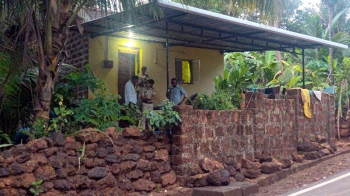
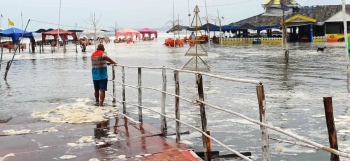
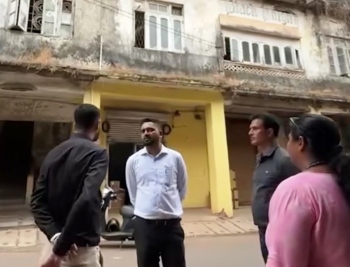
While the government has maintained that the study is currently underway, sources said TERI has already initiated preliminary work in Benaulim, which is understood to be among the first villages selected for assessment.
The exercise is expected to evaluate the availability of basic infrastructure and natural resources, including water supply, power, waste management, road infrastructure and ecological sensitivity of hills, coastal belts and low-lying areas.
“The study aims to assess how much developmental pressure villages can realistically absorb without leading to irreversible environmental degradation or infrastructure collapse,” sources familiar with the process said.
However, even as public expectations around the study grow, there appears to be limited clarity within sections of the administration regarding its scope and implementation timeline.
Director of Panchayats Mahadev Arondekar confirmed that the State government has undertaken the study, though he acknowledged that he was not fully aware of its details.
“The government has assigned TERI to carry out the carrying capacity study in villages. However, I have not yet examined the terms and framework of the study in detail,” Arondekar said.
The growing demand for carrying capacity assessments reflects a broader shift in public discourse across Goa, where village communities are increasingly questioning the pace and scale of development in ecologically sensitive areas. Civic groups argue that in the absence of scientific benchmarks, indiscriminate approvals could place unsustainable pressure on local resources and infrastructure.
With TERI now tasked with conducting the carrying capacity study, attention will likely center on how swiftly the government completes the exercise and whether the findings ultimately influence policies related to construction, tourism and land use across the State.