MAPUSA
From crumbling roads and unchecked noise pollution to controversial coastal clearances, 2025 exposed serious governance gaps in three of Goa’s most critical regulatory bodies – the Public Works Department (PWD), the Goa State Pollution Control Board (GSPCB) and the Goa Coastal Zone Management Authority (GCZMA).
Together, their failures not only caused public hardship but also raised fundamental questions about accountability, coordination and institutional integrity.
As the State steps into a new year, restoring public trust will depend on whether these departments can move beyond routine assurances and demonstrate meaningful reform.
PWD: Focus on roads
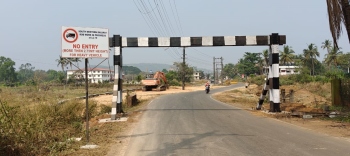
The deteriorating condition of Goa’s roads dominated public discourse last year, particularly during the monsoon when large stretches were either washed away or riddled with deep potholes.
The impact went beyond inconvenience – several fatal accidents were attributed to poor road conditions across the State.
Public complaints surfaced almost every other day during the rainy season.
The annual cycle has become predictable: roads collapse during the monsoon, public anger rises and political assurances follow – usually with promises that repairs will be completed before Chaturthi or Diwali.
These assurances have now lost credibility, reduced to fodder for memes and viral videos mocking both governance and political will.
PWD engineers concede that unscientific trenching and poor reinstatement of roads are a major factor.
Water accumulation due to inadequate drainage further weakens road layers, allowing rainwater to seep into bitumen and form potholes.
Temporary solutions like jet-patcher machines have proven ineffective during the monsoon, often washing away within days – raising concerns of wasteful expenditure.
The way forward: Experts stress the need for mandatory and time-bound reinstatement of roads by utility agencies, pre-monsoon road profiling and preventive maintenance, proper stormwater drainage with functional outlets and accountability mechanisms to fix responsibility for recurring failures.
Without systemic coordination and enforcement, the monsoon road crisis will remain an annual inevitability.
GSPCB: Under the scanner
The Goa State Pollution Control Board faced intense scrutiny in 2025, particularly over its handling of noise pollution along the coastal belt. Complaints from residents about loud music from nightclubs continued unabated, even as enforcement appeared lax.
The issue escalated dramatically with the deadly fire at Birch by Romeo Lane nightclub at the end of the year, which claimed 25 lives.
The tragedy brought the GSPCB’s licensing process into sharp focus, especially questions about how permissions were granted despite the club allegedly lacking mandatory clearances.
While a senior official was suspended immediately after the incident, followed by two more suspensions, the larger institutional question remains unanswered: were licences issued after proper evaluation, or does the system allow manipulation and pressure?
The way forward: The High Court, while hearing a PIL on coastal noise pollution, had directed the installation of sound monitoring stations at nightclubs, to be monitored by police and GSPCB officials.
However, residents and activists allege that monitoring remains largely on paper, with violations continuing unchecked.
To restore credibility, the Board must ensure mandatory installation and real-time monitoring of sound stations, act decisively against violators, including cancellation of licences, strengthen verification processes before granting permissions and demonstrate independence from political or commercial pressure.
The Board’s claim of “limited powers” will ring hollow unless backed by visible enforcement.
GCZMA: Coastal watchdog
The Goa Coastal Zone Management Authority also found itself under fire in 2025, with several decisions raising more questions than answers.
Demolition notices issued in coastal violation cases often failed to reach logical conclusions, undermining the Authority’s deterrence.
The most controversial decision was the clearance granted for the construction of Birch by Romeo Lane in what activists described as a wetland.
The approval, later followed by tragedy, intensified criticism that the Authority was failing in its core mandate to protect fragile coastal ecosystems.
Environmentalists and citizens accused the GCZMA of selective action and an apparent reluctance to take difficult decisions when influential interests are involved.
The way forward: Going into the New Year, expectations from the Authority are high. To regain public confidence, GCZMA must enforce its orders consistently, including demolitions where required, ensure transparent, science-based decision-making, remain insulated from political pressure, reaffirm its role as a neutral guardian of Goa’s coastline
Governance test in the New Year
The challenges faced by PWD, GSPCB and GCZMA in 2025 point to a deeper issue – weak inter-departmental coordination, inconsistent enforcement and an absence of accountability.
The New Year offers an opportunity to correct course, but only if governance moves from reactive damage control to proactive reform.