Concern grows over proposed 52,000 sq mt land conversion in village
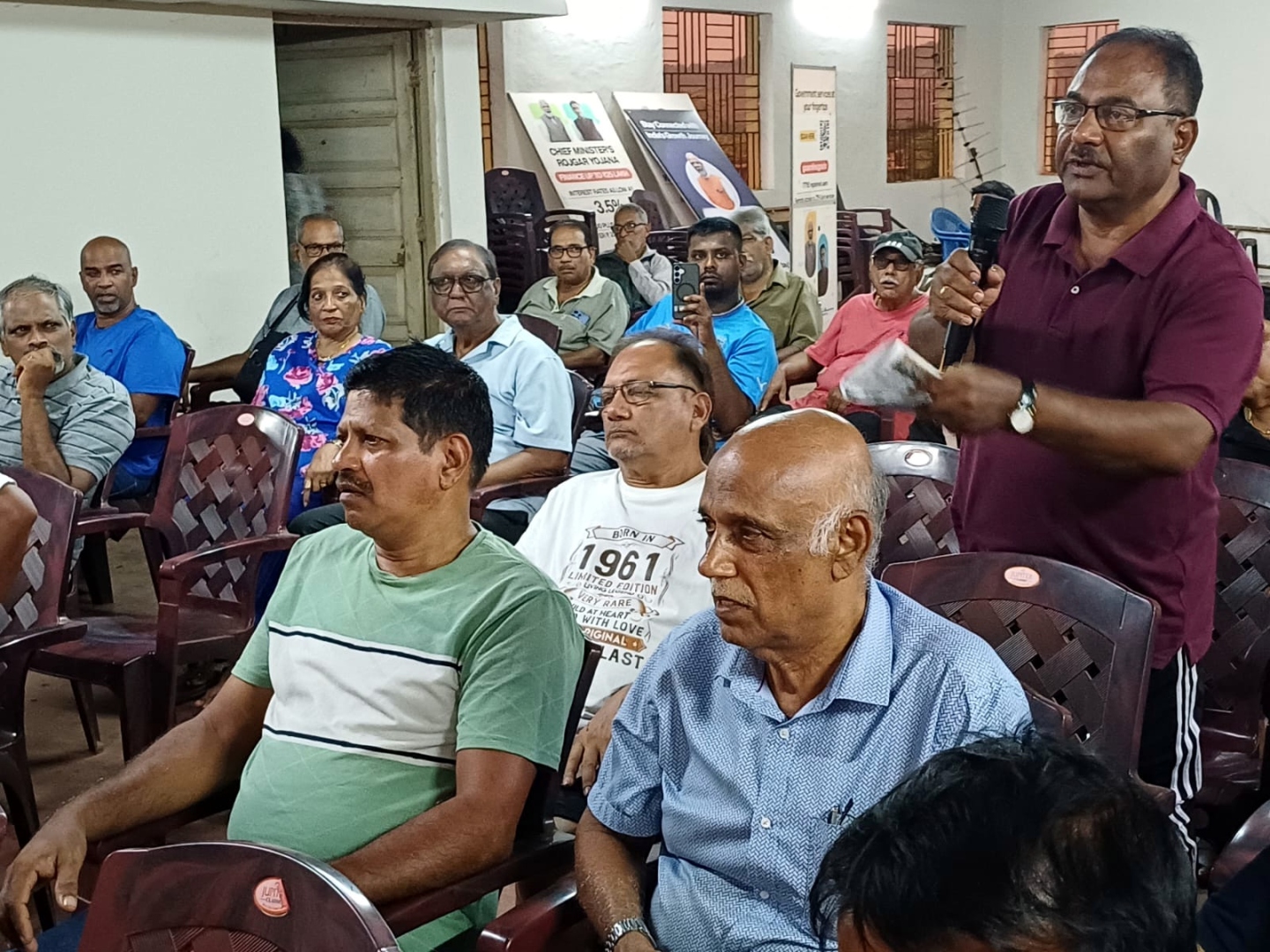
GRASSROOTS VIGIL: Concerned citizens of Tivim participate in an awareness meeting aimed at strengthening environmental vigilance and opposing proposed land-use changes in the village.
Allegations of large-scale land-use manipulation and threats to ecologically sensitive zones took centre stage at a packed public meeting in Tivim on Sunday, where environmental experts and residents warned that over 52,000 square metres of land could be opened up for future development through proposed zoning changes.
Addressing the “I Care For Goa” community assembly at the Tivim village panchayat hall, environment architect Elsa Fernandes alleged that spot zoning amendments were being used to alter regional plans in favour of commercial interests while undermining Goa’s fragile environmental balance.
Fernandes drew attention to a pending gazette notification concerning land in Tivim presently designated as cultivable irrigation command areas, playgrounds and institutional spaces.
According to her, the proposed conversion represents a larger pattern of incremental planning changes that could irreversibly alter the character of Goa’s villages.
“We entrust elected representatives with the responsibility of protecting our collective assets, not liquidating them permanently,” Fernandes said, calling for immediate public vigilance and intervention.
Backed by hydrogeological maps and satellite data, Fernandes argued that the Tivim plateau serves as a critical natural recharge zone feeding groundwater sources in surrounding villages.
Any large-scale alteration of the terrain, she warned, could directly threaten freshwater wells and drinking water springs depended upon by local communities.
The meeting, organised by Goyche Fuddle Pillge Khatir (GFPK) along with concerned citizens of Tivim, witnessed a strong turnout of residents, activists and professionals amid growing concerns over rapid land conversions and environmental degradation across Goa.
Environmental researcher Avertino Miranda warned that unchecked commercialisation and speculative development were steadily eroding the traditional gaunkari (comunidade) system that historically safeguarded village commons and community resources.
Miranda cited what he termed the “3.5 per cent rule,” arguing that a small but determined section of citizens could successfully influence policy decisions and resist destructive projects through sustained civic action.
He referred to the decade-long legal battle in Merces, where residents eventually secured the demolition of an alleged illegal real estate project on protected Khazan land.
GFPK President Jack Mascarenhas called for inter-faith and community unity to defend Goa’s ecological and cultural identity, asserting that grassroots participation remained the strongest safeguard against indiscriminate development.
During the interactive session, residents raised concerns over alleged planning violations in Tivim, including claims that development permissions had been granted despite the absence of mandatory infrastructure requirements.
The gathering concluded with a unanimous resolution to move the Block Development Officer for a special gram sabha meeting, file RTI applications seeking planning records and submit formal public objections against the proposed land conversion within the statutory notice period.