SANGUEM
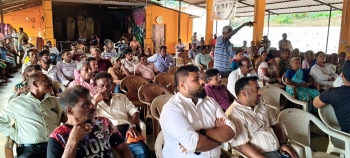
With several long-pending issues of the Selaulim Dam affected families still unresolved, a number of dam-affected residents from Vade-Kurdi and Valkini attended a special meeting in Vadem Colony No. 1, where concerns spanning over 42 years were reviewed.
The meeting was chaired by Sanjay Kurdikar and attended by Vadem-Kurdi Sarpanch Chandan Unandkar, Panchayat member Josephina Rodrigues, along with Kusht Gaonkar, Manoj Parab, Sadanand Gaonkar and Ajay Kurdikar.
Addressing the gathering, Sanjay Kurdikar highlighted that despite four decades having passed since the relocation of Kurdi residents to Vadem-Kurdi, their issues have only intensified rather than being resolved.
He pointed out that even during the tenure of former MLAs from the affected community, the problems remained unaddressed. He further alleged that there has been a consistent failure to effectively present these grievances before the government.
Criticising the lack of action, he noted that not a single meeting has been held in the past five years, terming it a major administrative lapse. With nearly 650 families displaced and assurances still unmet, he asserted that the affected community would now unite and lead their own struggle without relying on political leaders.
Sarpanch Chandan Unandkar stated that efforts are ongoing to resolve the issues, and that multiple meetings have been held with Chief Minister Pramod Sawant in coordination with Social Welfare Minister and local MLA Subhash Phal Dessai. He expressed optimism that gradual progress would be made in the near future.
KEY DEMANDS
A concern raised during the meeting was opposition to any further increase in the dam’s height. Villagers argued that instead of allocating alternative plots elsewhere when land is submerged, equivalent land should be provided in suitable locations. They also demanded that open land in the affected areas should not be transferred to other government departments.
Panchayat member Josephine Rodrigues noted that many affected families have been cultivating vegetables and cashew on vacant land.
She insisted that these lands should remain with farmers, even if a nominal fee is charged by the Water Resources Department. She also criticised the closure of the Sanjeevani sugar factory, stating that it has worsened the financial condition of farmers.
Manoj Parab alleged that officials had mishandled the rehabilitation process and withheld crucial information. Citing data obtained under the Right to Information Act, he said that out of 861 hectares of land in Vadem-Kurdi and Valkini, around 237 hectares still remain unutilised, despite claims of land shortage.
He demanded that all eligible beneficiaries be granted equal rights to land allotment. He also made it clear that any move to increase the dam’s height would be firmly opposed.
The meeting also raised concerns about compensation and land ownership. It was pointed out that affected families were paid Rs 4 lakh for submerged plots, although in most cases the land has not actually been submerged.
A demand was made to return the compensation and restore ownership to the original landholders. Additionally, irregularities in issuing “Class I” land documents were highlighted, with many beneficiaries forced to seek legal remedies. Participants called for a transparent and fair reissuance of documents in consultation with the affected community.
Other issues discussed included inadequate water supply and electricity. Immediate power connections for agricultural wells were demanded. Residents also expressed dissatisfaction over the inclusion of Vadem and Valkini within buffer zone and wildlife sanctuary limits following their relocation, which has restricted livelihoods due to forest department regulations.