Causes traced to encroachments, clogged drains, WRD lapses
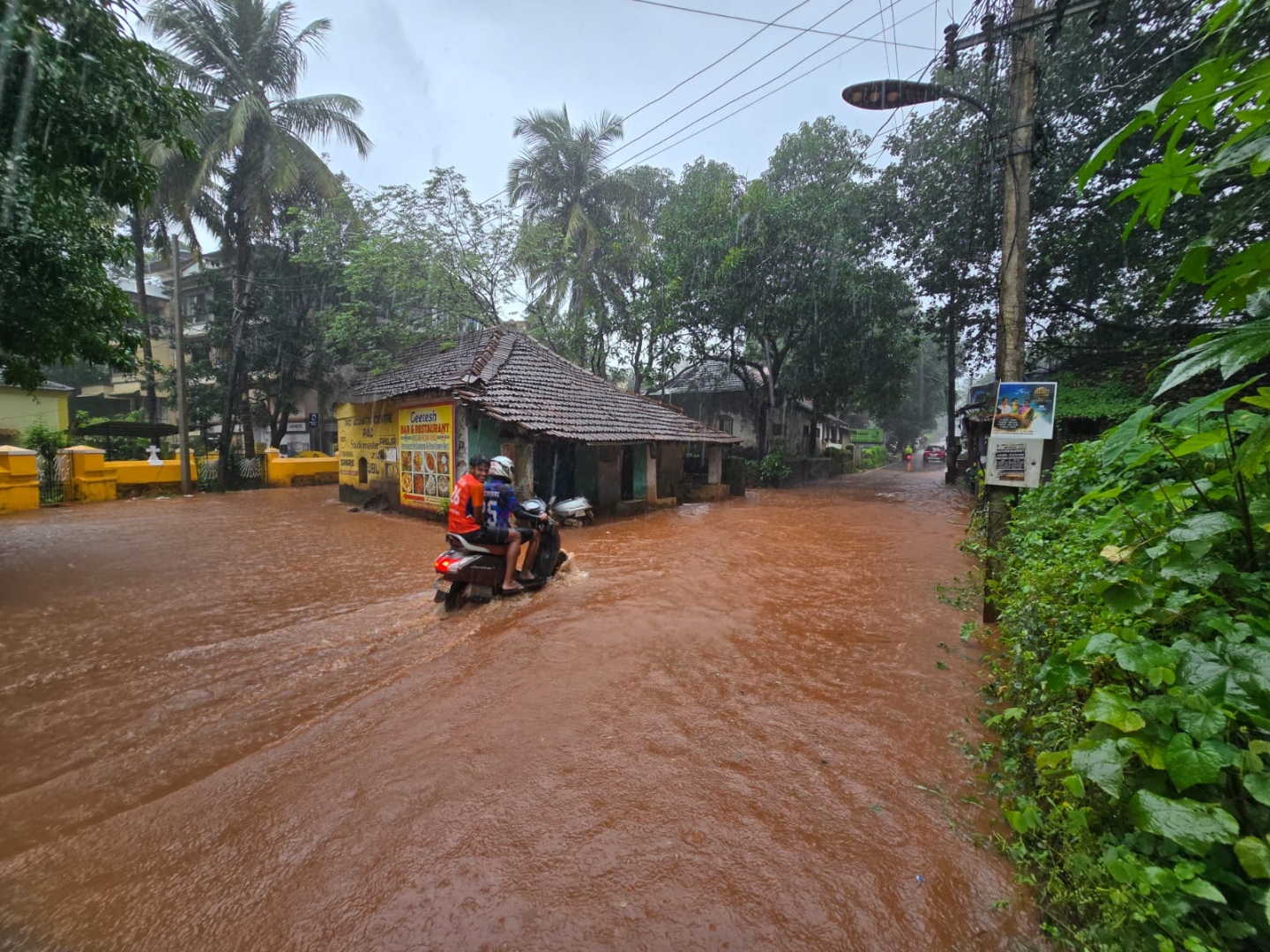
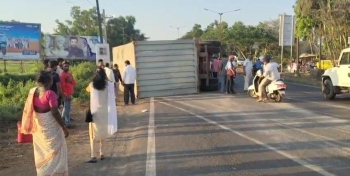
MONSOON MAYHEM: The Usapkar junction at Khorlim, Mapusa, went under water for the sixth time this monsoon, leaving motorists, pedestrians and residents struggling with the floods.
MAPUSA
The Khorlim junction in Mapusa, popularly known as Usapkar junction, has once again gone under water, marking the sixth flooding incident in just two months. What was once an annual nuisance during the monsoon has now become a recurring crisis, bringing traffic to a halt, inconveniencing pedestrians, and flooding homes and shops in the area.
The issue gained national attention recently when a video of a two-wheeler rider being swept away in floodwaters at the junction went viral. The flooding reoccurred over the weekend, with heavy rains on Saturday and again on Sunday causing knee-deep waterlogging.
Why the junction
floods
The prime cause lies in the drainage system linked to the main nullah carrying rainwater from the Khorlim hill. The nullah flows through the Usapkar junction, past the fields, before joining the Bodgeshwar temple nullah and eventually draining into the Mapusa River. However, several problems have crippled its functioning.
First, indiscriminate dumping of plastic, garden waste and debris by people living along the nullah has choked its flow. Second, encroachments have narrowed the channel. “An illegal staircase has been constructed on the nullah,” a government official revealed on condition of anonymity.
Another factor is the poor state of roadside drains. Choked with mud and debris, they have not been cleaned, leaving no outlet for excess water during a downpour.
Faulty reconstruction
adds to woes
Officials admit that technical lapses in earlier reconstruction works by the Water Resources Department (WRD) have aggravated the flooding. The nullah’s base was concretised, preventing natural seepage of rainwater. “At least 30 per cent of water does not soak into the ground because of the concrete base. It was not the right way to do it,” a WRD engineer said.
Further downstream, the nullah at Bodgeshwar temple has been reconstructed in a way that constricts the channel. This slows down the outflow of water, creating a bottleneck during heavy rains.
Adding to the problem is a misplaced speed breaker at the Khorlim junction, which obstructs water flow. “It has been constructed at the wrong spot and needs to be relocated,” said local councillor Anvi Korgaonkar.
WRD response
WRD Assistant Engineer Vinoo Naik acknowledged the gravity of the issue. “We are aware of the problem and have noted all the causes of flooding. For the moment, we have stationed a JCB near the junction and plan to desilt the nullah every week,” he said.
Naik added that long-term measures would be required to ensure that such flooding does not recur next monsoon.
For now, however, the Khorlim junction continues to remain a flood-prone choke point, leaving residents and commuters at the mercy of every heavy downpour.