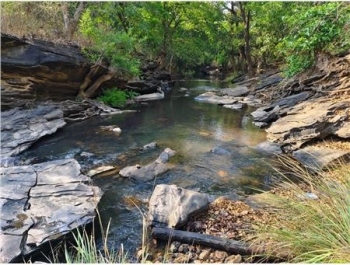
A group of villagers from the Mhadei basin of Karnataka on March 29 visited Nerse and found water level of the Bandhura nullah has been drastically reduced. “In comparison with last year, we found water level inside the Bandhura nullah has been reduced this year. This will certainly have serious ecological and environmental implications,” said environmentalist Rajendra Kerkar, who accompanied the villagers during their visit.
Water of this nullah provides drinking and irrigation water needs of people as well as the wildlife in the area. Water begins in the forest of Jamgao and eventually meets the Mhadei river at Nerse, from where it flows in the direction of Goa.
Though the Central Water Commission has given the technical clearance to the modified detailed project report of the Bandhura project, the Regional Empowered Committee of the Ministry of Environment, Forest and Climate Change in Bengaluru recently had deferred mandatory forest clearance, seeking further clarifications from Karnataka regarding the project’s ecological sanctity of the Bandhura nullah.
Also, a comprehensive report on the Bandhura nullah project and desertification of North Karnataka, prepared by a group of scientists, researchers and experts from Karnataka, states that the project violates various environmental laws like The Wildlife Protection Act of 1972, the Forest Conservation Act of 1980 and the Environment Protection Act of 1986 as well as result in irreparable losses to environment and forest of the region.