MARGAO
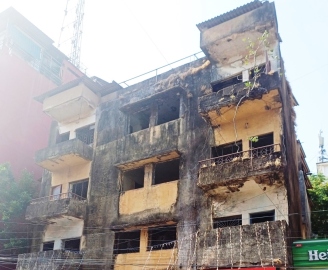
Casa Menezes, located at the entrance of the congested Gandhi Market, and Cabecca de Calcondem, standing amid the bustling Isidore Baptista Road, have one striking similarity ” both structures, identified as unsafe by district authorities, were eventually demolished by their owners. Their demolition, however, has brought the spotlight back on several ageing and structurally weak buildings that continue to dot the townscape of Margao, posing a looming threat to public safety.
With the two structures now reduced to rubble after being declared unsafe, serious questions are once again being raised over the fate of dozens of other dilapidated buildings standing precariously across Goa’s commercial capital.
The concern has assumed urgency in the wake of recent incidents where portions of unsafe structures came crashing down near the busy Pimpalkatta junction and the Cine Lata area. Citizens and traders alike are now questioning whether the authorities have done enough to identify and act against dangerous buildings before tragedy strikes.
Despite the recurring danger, sources in the Margao Municipal Council (MMC) revealed that there has been virtually no addition to the official list of unsafe structures identified by the civic body over the last five years. This, even as several old buildings in the town continues to deteriorate visibly with the passage of time.
Officials pointed out that a joint inspection exercise had earlier been conducted by a team comprising representatives of the MMC, the Salcete Mamlatdar’s office, the Deputy Collector’s office in Margao, and experts from the Goa Engineering College, Ponda. The exercise was aimed at assessing the structural stability of old and vulnerable buildings across the commercial capital.
However, the outcome of the inspections remains shrouded in uncertainty.
Almost all the buildings that had come under the scanner continue to stand as they were, raising uncomfortable questions over whether owners were ever directed to undertake structural repairs or whether the authorities simply failed to pursue follow-up action after the inspections.
Residents and activists say the issue reflects a larger systemic failure in addressing urban safety concerns in Margao. Many of the ageing structures are located in densely populated commercial zones frequented daily by thousands of pedestrians, vendors and motorists, making any collapse potentially disastrous.
Critics argue that the district Disaster Management Authority and the Margao Municipal Council ought to have adopted a far more proactive approach by periodically reviewing the condition of old buildings, issuing mandatory structural audit notices, and taking timely demolition or repair measures wherever necessary.
The absence of visible enforcement, they say, partly due to political interference, has allowed unsafe structures to remain standing despite repeated warnings and minor collapse incidents over the years.
With monsoon approaching ” a season that often worsens the condition of weakened buildings ” public concern is mounting over whether the authorities will finally act before another accident occurs.