


MARGAO
The LPG tanker mishap at Paddi in Barcem village along NH66 on Tuesday afternoon has raised serious concerns about the preparedness of the District Disaster Management Authority (DDMA), after traffic on the busy highway remained diverted for several hours.
The accident occurred around 1.15 pm but was reported to the Cuncolim police only at 1.30 pm. Authorities, including the police, fire services, and district administration, responded swiftly by cordoning off the area, diverting traffic, and initiating cooling operations at the site. However, the rescue and gas transfer operation faced significant delays due to the non-availability of an Emergency Response Vehicle (ERV) and heavy-duty cranes within the State.
ERV called from Mangaluru
Representatives of Hindustan Petroleum (HP) reached the site with specialised devices and gauges to assess the extent of the gas leakage from the tanker.
However, the local HP unit did not have an Emergency Response Vehicle stationed in Goa. An SOS was subsequently sent to the company’s headquarters in Mangaluru to dispatch an ERV to the site.
With Goa and Mangaluru separated by a distance of over 400 kilometres, State agencies were left with no option but to wait for the ERV to arrive before initiating the critical task of transferring gas from the damaged tanker. Officials indicated that the ERV was expected to reach the site only late at night, and the gas transfer operation was likely to continue well past midnight due to its sensitive and high-risk nature.
The incident triggered a pressing question among residents and officials alike: why has the Disaster Management Authority not mandated petroleum companies to station an ERV in Goa, given the regular movement of LPG tankers along the Goa“Mangaluru corridor?
Balli resident and Aam Aadmi Party senior leader Prashant Naik described the Paddi incident as a wake-up call for both the State and District Disaster Management Authorities.
“If HP had to wait for an ERV and experts from Mangaluru to initiate the rescue mission, it is time for disaster management officials to insist that petroleum companies procure and station an ERV to address emergencies along the Goa“Karwar stretch,” he said.
Heavy-duty cranes requisitioned from Karwar
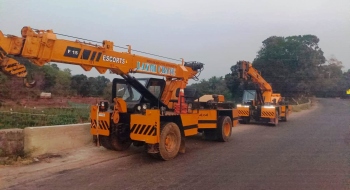
In another development highlighting gaps in local preparedness, authorities had to requisition heavy-duty cranes from Karwar to assist in salvaging the ill-fated tanker.
However, the cranes ultimately could not be deployed. The operator reportedly refused to proceed without written assurance that he would not be held liable in the event of any mishap, particularly due to the risk of sparks during operations. Neither HP officials nor the authorities were willing to provide such an undertaking, resulting in the cranes remaining unused.
The situation has raised further questions about the availability of heavy-duty cranes within Goa. A senior police official stated that efforts were made to secure cranes from the Cuncolim Industrial Estate, but these attempts were unsuccessful. Similarly, a crane operator from Margao declined to provide equipment, citing the distance between Margao and Paddi.
Questions remain
While authorities managed to prevent a major disaster through timely traffic diversion and precautionary measures, the incident has exposed critical gaps in emergency infrastructure, inter-agency coordination, and equipment availability in the state.
As LPG tankers continue to ply regularly along NH66, the Paddi mishap may well serve as a catalyst for a comprehensive review of Goa’s disaster response mechanisms ” before the next emergency strikes.


