MARGAO
The storm that kicked up over the government’s decision to charge fees for fishing with traditional equipment has refused to subside as confusion reigned supreme among the stakeholders and others for whom fishing with a rod has been more of a hobby than an occupation.
Confusion in the air
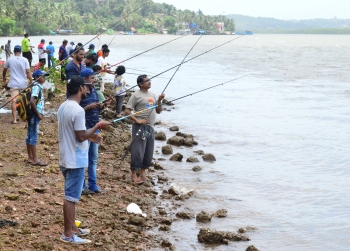
When the ban on fishing comes into force every year on June 1, curtains come down on the hustle and bustle at South Goa’s major fishing hub Cutbona, which wears a deserted look for the next two months. But, come monsoons and it’s common to find people from Cutbona and nearby areas taking their positions all along the jetty with their fishing rods and fishing lines in a bid to catch the typical fish variety available during that part of the year.
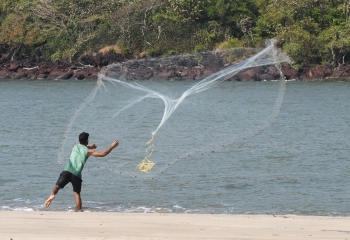
The government’s rules have only left the people in a confused state of mind over whether the rules mandate them to register and pay the prescribed fees before they descend at the riverfront or the sea to fish with the traditional rod or fishing line.
Stakeholders taken aback
Says Betul-based traditional fisherman, Vinay Tari: “I am completely taken aback by the government’s decision to charge fees on citizens who go out for fishing with a bamboo rod out of a hobby. I have nothing to say. What exactly is the government up to, I have nothing to say. I only hope the Fisheries Minister and the Director clear the air of confusion on the rules.”
The entire Cutbona-Betul riverfront is a fishing paradise for many fishing enthusiasts, who descend on the river banks with their fishing gear, including rods. It’s common to find enthusiasts fishing around the Betul stretch of the river Sal, right up to the river mouth, late at night to net the prized red snapper and other varieties of fish.
Boat owner & Cutbona-based fisherman, Cypriano Cardozo was more candid in saying those who run the department should have experience in fishing. “How can the department charge fees on people who just go out to the riverfront with a fishing rod or fishing line. For some, fishing is a hobby, while for others it is simply a means to eke a living, more so during monsoons when fish is scarce,” Cypriano said.
He added: “Decisions concerning fishing and fishermen cannot be taken from air-conditioned cabins, but the officials ought to have knowledge of the ground reality.”
Pele's challenge
Benaulim-based traditional fisherman Pele Fernandes was forthright in condemning the government's decision. Pele came out with a novel way of protesting against the move, as he dared the 40 Legislators to compete with him in a five-kilometre swimming race.
“Today, the Fisheries department has come out with plans to levy fees on fishing. Tomorrow, the government may unveil rules to bar people from taking a bath in the sea. This is totally unacceptable,” he said.
Pele has dared the Legislators to accept his swimming challenge. “I am ready to accept the decision to levy fees on the use of traditional fishing gear if they beat me in the swimming race. Or, else the rule should be scrapped,” Pele thundered.