Set in the village of Agassaim, famous for its choris pao, Saint Lawrence church is considered to be the centre of faith for its inhabitants. But whle the Church has the old faithful’s, it misses the young ones who don’t come as often
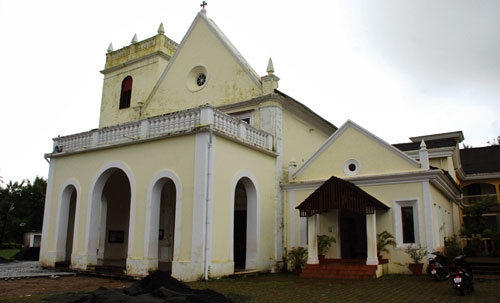
In the quaint yet busy village of Agassaim, StLawrence Church is a formidable structure that is deceptively simple to thenaked eye. The church is located alongside the busy highway that crossesthe Agassaim market place, en route to Margao from Panjim. However once there,the highway fades, as one lays eyes on the spacious, clean and scenic groundssurrounding the church, accompanied by an abundance of peace and quiet.
The Church of St Lawrence was an initiative of theJesuit missionaries. They first chose a site that was located north of the Zuaririver and constructed the church in the year 1565, after realising that expansionwas required on the existing chapel that was initially constructed in 1541. Theprimitive chapel’s faint traces are still noticeable upon closer inspection ofthe northern side of the present church. The bell of the church was transferredfrom the Chorao seminary in 1871, after a request for acquisition of the samewas made.
This simplistic looking church also houses one of themost elaborate and extravagantly decorated reredos (the construction behind thealtar) in Goa. The intricately gilded construction behind the altar is setapart not only by its particular design, which has multitudes of candlesticksprojecting from the reredos itself. The panelled blue and white ceiling of thechancel provides a scenic backdrop. The length of the church is tiled with theJesuit ‘JHS’ symbols that are still set into the walls to this day.
While the church may have been constructed in1565, it doesn’t look 450 years old. Thecondition of the church is pristine, and the edifice stands out beautifully inits landscaped surroundings. Parish priest Father Johnsie Colaco says,“Although we have a crowd in the church every Sunday, there is a decrease inyounger parishioners. We have several small Christian communities; however theadults are more responsive to participation than the youth. It would be nice ifwe could have a more aggressive involvement from them as well.”