80% work done on Rs 300 crore project; WRD targets March deadline
MAPUSA
Even as residents of Mirabag-Sanvordem continue to oppose a proposed Rs 280 crore bhandara project in their area, a similar large-scale water infrastructure project in North Goa is nearing completion, promising much-needed relief to thousands of consumers dependent on the fragile Tillari canal system.
The Rs 300 crore barrage across the Chapora River at Sal in Bicholim taluka is now expected to be completed by the end of March, officials from the Water Resources Department (WRD) have confirmed.
Once operational, the project is expected to significantly stabilise raw water supply to North Goa, which has repeatedly faced disruptions due to breaches in the decades-old Tillari canals.
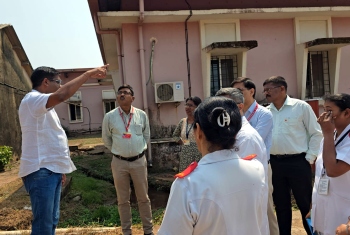
WRD Chief Engineer Dnyaneshwar Salelkar said nearly 80 per cent of the work has been completed and the contractor has been given a deadline till March to finish the remaining construction.
“We faced a few challenges at the site due to objections raised by some locals in the area. Their concerns have now been addressed and work is progressing at a good pace. We are confident of completing the project by March end,” Salelkar said.
Addressing a long-standing vulnerability
North Goa’s water supply has for years depended heavily on the Tillari irrigation project canals, constructed in the 1980s and running through dense forests and hilly terrain in neighbouring Maharashtra.
Over the past four decades, the infrastructure has deteriorated considerably, leading to frequent breaches and interruptions in the flow of raw water to Goa.
These recurring disruptions have often resulted in erratic water supply across several constituencies in Bardez, Bicholim and parts of Tiswadi, especially during peak summer months.
The Sal barrage has been conceived as a long-term corrective measure. The structure will function as a storage facility on the Chapora River, ensuring a more reliable buffer supply of raw water independent of canal failures.
Once commissioned, the barrage is designed to supply up to 250 million litres per day (MLD) of water. The project also includes a 250 MLD raw water pumping station, as mentioned by Chief Minister Pramod Sawant during his Budget speech last year.
Flood mitigation component
Apart from strengthening drinking water security, officials say the barrage will also play a crucial role in flood moderation during the monsoon.
Sal and surrounding low-lying areas of Bicholim have historically experienced flooding during heavy rainfall. The storage and regulated discharge mechanism of the barrage is expected to help manage excess water flow and reduce flood intensity in vulnerable pockets.
Missed deadlines, renewed push
The project, however, has not been without delays. The government had initially announced that the barrage would be commissioned by May 2025. The timeline was later revised to December 2025 before being further pushed to early 2026.
Officials attribute the delays to site-specific challenges, technical modifications, and initial local objections.
Despite the revised deadlines, the government maintains that the project will substantially transform North Goa’s water management framework once operational.
Contrast with opposition in South Goa
The near-completion of the Sal barrage comes at a time when residents of Mirabag-Sanvordem in South Goa have been stoutly opposing a proposed ₹280 crore bhandara project in their locality, citing environmental and livelihood concerns.
While the Mirabag project faces resistance, the Sal project is now being projected as a model for ensuring water security and reducing dependence on ageing cross-border canal infrastructure.
With summer approaching and water demand expected to rise sharply, the commissioning of the Sal barrage is being closely watched as a crucial intervention in Goa’s long-term water sustainability strategy.