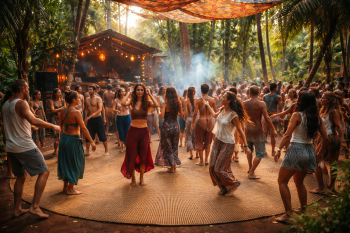
At North Goa, a circle of barefoot strangers moves in quiet rhythm”no alcohol, no phones, no blaring DJ instructions. Just breath, music, and a shared sense of release. It is a scene far removed from Goa’s familiar party image. Yet, emerging tourism and wellness trends suggest that this quieter, more intentional version of Goa is steadily on the rise.
India’s expanding wellness economy, which is estimated at nearly $124 billion, offers a useful lens to understand this shift. As wellness tourism gains traction, travellers are increasingly seeking experiences that prioritise mental, emotional, and physical well-being over conventional leisure. The years following the COVID-19 pandemic have further accelerated this transition, with heightened awareness around mental health and a growing appetite for spaces that promise restoration rather than escape. Within this broader landscape, practices like ecstatic dance are beginning to find both cultural relevance and commercial footing. This isn’t just a random trend”it reflects a larger shift in how people are choosing to relax, travel, and take care of their well-being.
Goa’s tourism patterns reflect this shift. The state now attracts over one crore visitors annually, but what those travellers seek is beginning to change. There is a growing demand for experience-based tourism”activities that offer something more immersive and meaningful than conventional sightseeing or nightlife. From yoga retreats to conscious gatherings, curated experiences are becoming a key part of Goa’s appeal. The state is not turning away from its nightlife identity; rather, it is expanding beyond it, catering to a new kind of traveller looking for depth as much as entertainment.
Dance Without Intoxication
Ecstatic dance, at its core, reimagines the idea of a dance floor. Participants gather to move freely to music in a space governed by a few simple guidelines”no alcohol or substances, no phones, and often barefoot, encouraging presence and uninhibited expression. What began as a global movement rooted in mindfulness and community has gradually found a home in Goa, where such practices resonate with both international travellers and a growing number of Indians seeking alternative forms of recreation. In stripping away distraction and intoxication, these spaces position dance not as escape, but as a more conscious, embodied experience.
Conscious Dance Culture
Across parts of North Goa, dedicated spaces for ecstatic dance and similar conscious movement practices have begun to emerge. Hosting regular sessions through the week, these venues offer structured environments for participants to engage with music and movement in a mindful way. Sessions are often led by facilitators and DJs with diverse, sometimes international backgrounds, blending global influences with local contexts.
What stands out is the diversity of participants: a mix of international travellers and Indian attendees, many of them young and seeking alternatives to conventional nightlife. These spaces, in many ways, reflect an emerging culture”where global wellness practices intersect with Goa’s evolving identity.
Opting Out of Club Culture
A growing number of young Indians are rethinking what a night out looks like. Increased awareness around mental health has led many to seek environments that feel restorative rather than overwhelming, while a broader shift towards sobriety is challenging the centrality of alcohol in social spaces. At the same time, there is a clear desire for experiences that feel more authentic and meaningful”ones that prioritise connection over consumption. In this context, spaces like ecstatic dance offer an alternative that aligns with these changing preferences. As one might observe, “it’s less about escaping reality, more about feeling it.”
Is This a Trend?
Yet, this shift is not without its complexities. Spaces like ecstatic dance, while positioned as inclusive and conscious, often come with price points that may not be accessible to everyone, raising questions about whether this movement remains limited to a certain demographic. There is also the question of local participation”are Goans themselves part of this cultural shift, or is it largely driven by transient travellers and urban visitors? As the popularity of such experiences grows, it remains to be seen whether ecstatic dance will remain a niche subculture or evolve into a more mainstream form of social and cultural engagement. For now, it exists in an in-between space”both emerging and exclusive, expanding yet still selective.
(This writer is a student of Masters in New Media Communication at IIMC)