On April 29, International Dance Day is celebrated annually to honour the beauty of dance and the rich diversity of traditions across the globe. The occasion encourages participation, learning, and appreciation through festivals and events held worldwide. Dance is not only an art form but also a powerful medium of cultural expression and communication, embraced by millions. The date commemorates the birth of Jean-Georges Noverre (1727), the pioneering French ballet master who played a transformative role in shaping modern dance.
Dance has been an integral part of ceremonies, rituals, celebrations, and entertainment for ages. It likely served as a powerful form of social interaction, fostering cooperation and unity”qualities essential for survival among human communities. Beyond its artistic appeal, dance offers significant health benefits. Just 30 minutes of dancing can be as effective as a jogging session. As an enjoyable and engaging form of exercise, it requires no heavy equipment or strenuous routines. Moreover, dance enhances mental well-being, helping to reduce stress and promote relaxation.
World-famous dance forms
Among the oldest dance traditions, belly dance is believed to have evolved across cultures over nearly 6,000 years. Known as Raqs Sharqi, it is often traced to ancient Egypt and later flourished during the Ottoman era. Today, it is widely associated with Turkey and the Middle East, distinguished by expressive torso movements.
Samba stands as a vibrant symbol of Brazil’s cultural identity. Derived from semba, meaning invitation to dance, it emerged from African influences and is closely linked with the Rio Carnival, known for energetic footwork and rhythmic hip movements. Flamenco, originating in southern Spain, combines soulful singing, intricate guitar rhythms, and dramatic footwork, resulting in an intense and emotionally charged performance.
Born along the RÃo de la Plata between Argentina and Uruguay, Tango is a passionate partner dance marked by elegance, improvisation, and signature movements like ochos and turns. Salsa, rooted in Cuban traditions such as Son Cubano and Afro-Cuban rumba, gained global popularity through Puerto Rican and Cuban communities in New York City.
Ballroom dance includes partner styles performed worldwide, featuring coordinated movements and a lead-and-follow technique. Hip hop dance, emerging in the US in the 1970s, developed through street culture and gained recognition through media and performance groups. Jazz dance evolved from African American traditions alongside jazz music, while tap dance combines rhythm and movement, using metal-tipped shoes to create percussive sounds.
Folk dance originated in agrarian communities as a social and ritual expression, preserving local traditions and cultural identity across generations. Similarly, Irish dance, with roots over 2,000 years old, has evolved into both social and competitive forms, celebrated globally for its precision, posture, and lively performances.
Indian dance forms
India has a rich dance heritage rooted in the Natyashastra, with 8“9 recognised classical forms. Major styles include Bharatanatyam, Kathak, Kathakali, Mohiniyattam, Kuchipudi, Odissi, Manipuri, and Sattriya, alongside numerous vibrant regional folk dances.
Bharatanatyam, from Tamil Nadu, dates back to 500 BCE“500 CE and finds mention in the Silappatikaram. It is characterised by a fixed torso, bent knees (aramandi), intricate footwork, and expressive gestures. Distinct bani (styles) reflect different schools, and performances are guided by the nattuvanar, blending music and narrative.
Kathak, a major North Indian form, evolved from Kathakars”storytellers of the Ramayana and Mahabharata. It combines swift spins, intricate footwork, and expressive abhinaya. Recognised for its upright posture and rhythmic precision, performances include sequences like Thaat, Amad, Tode, Parhant, Tatkar, and Gat Nikas.
Kathakali, from Kerala, is a 17th-century dance-drama known for elaborate makeup (vesham) and vivid costumes. It portrays mythological tales through powerful expressions, hand gestures, and rhythmic movements, without spoken dialogue.
Mohiniyattam, also from Kerala, is named after Mohini, the enchanting avatar of Lord Vishnu. Rooted in the Natyashastra, it follows the graceful Lasya style and was traditionally performed by women, though now also by men.
Kuchipudi, from Andhra Pradesh, is a dance-drama form systematised by Siddhendra Yogi in the 17th century. Linked to Krishna devotion, it blends music, expressive movement, and storytelling, often beginning with an invocation.
One of India’s oldest classical dances, Odissi, originated in Odisha’s temples and expresses devotional themes, especially Vaishnavism, through graceful movements and gestures. It developed in two traditions”the temple-based maharis and the gotipua style performed by boys.
Manipuri, or Raas Leela, from Manipur, draws from traditions like Lai Haraoba and Pung Cholom. Associated with King Ching Thang Khomba, it depicts Radha-Krishna devotion through soft, flowing movements and serene expressions.
Sattriya, from Assam, was founded by Srimanta Sankardev and Madhavdev. Originating in monasteries, it combines nritta, nritya, and natya, presenting devotional stories of Lord Krishna through rhythmic and expressive performance.
Goa's dance forms
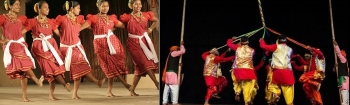
Goa is home to around 27 vibrant folk dances, reflecting a unique blend of Hindu traditions and Portuguese cultural influences. These dances mirror the diverse lifestyles, beliefs, and social fabric of Goan society and are often performed during festivals like Shigmo.
Among the most striking is Ghode Modni, a martial horse dance symbolising victory, where performers mimic warriors on horseback. Rombat and Romat (Mell) are lively processions with drums, banners, and ceremonial displays. Other Shigmo dances like Talgadi, Goff, Tonyamell, and Morulem showcase rhythmic footwork, colourful costumes, and devotional themes, often dedicated to Lord Krishna.
Dekhni blends Indian and Western musical elements in a graceful solo performance, while Fugdi and Dhalo are popular women’s dances expressing devotion and community bonding. Manddo and Dulpod highlight Indo-Portuguese musical heritage, especially at wedding ceremonies.
Martial and historical forms such as Virabhadra and Mussol from Chandor preserve heroic traditions, while the Kunbi dance performed by the Salcete tribal community reflects the simple, social life of Goa’s earliest settlers. Divlyan Nach is a graceful folk dance where dancers skillfully balance a lit brass lamp on their heads while moving rhythmically to soft, melodious music.
(The writer is a Scientist by profession and a freelancer from Taleigão.)