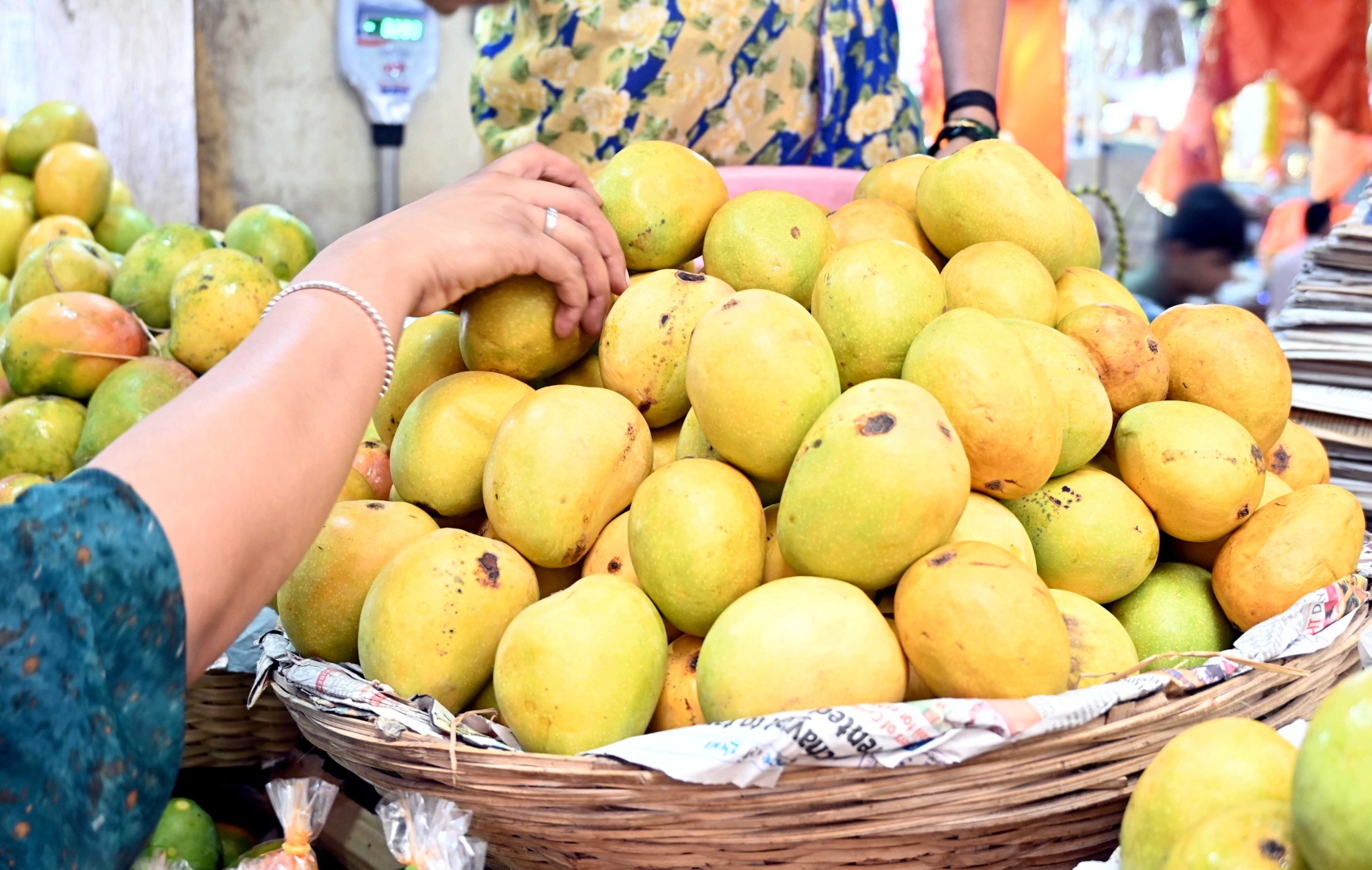
Shaped by grafting, region, and tradition, Goa’s diverse mango varieties speak of different tastes and histories
PANAJI
Goa is undeniably the land of mangoes. Scientifically known as Mangifera indica and native to India, the sweet fruit is a celebrated member of the cashew family. Across Goa, it stands as a symbol of fertility, abundance, wisdom, positivity, and auspiciousness. Deemed the fruit of the Gods, it has been gifted since time immemorial and features prominently in ancient myths and local stories.
Portuguese Legacy
With the arrival of the Portuguese, the mango was elevated above all other fruits. The Jesuits introduced advanced grafting techniques, eventually leading to the creation of the 100 to 120 documented Goan mango varieties that exist today. Chef Oliver, co-founder of The Goan Kitchen, which is co-curating a mango tasting at the Museum of Christian Art today, highlights the absolute necessity of this practice. He notes, “If you grow a mango seed, let’s say you grow a Mankurad seed. The tree that comes out from that seed is not going to be the same as the fruit you ate. Because this is something that the mango has about itself. It kind of shifts from what its original species is. That’s why a graft ensures that the mango tree remains of the same variety.”
Names and Origins
Mango names in Goa reflect deep, personal histories and are intimately tied to landownership, regional cultivation, family homes, and specific orchards. Daniel Dsouza, a renowned Goan horticulturist and active tree preservationist, remarks, “There are many varieties of mangoes in Goa which are still unnamed.” Serving as the curator of the Mango Market at the “Mangoes & Meanings” exhibition at the Museum of Goa, currently on display until June 14, he adds, “I know at least around 70 to 80 mangoes that are named.”
Ongoing Research
According to Dsouza, “There’s a lot of research to be done on mangoes, on the size and shape of the fruit and tree, the flavour of the mango, the colour of the mango, and the fibre of the mango.” Because of the vast historical exposure of the fruit within Goa and globally, people constantly brought in new varieties and grafted them. He shares, “Like recently I came across one mango this time called Niklao Afonso, which I had never heard of.”
Regional Rivalries
Pinpointing exact varieties remains a persistent challenge for botanists, as names and characteristics shift across regions. The beloved Goan Mankurad alone has several subtypes varying in fibre, taste, and size depending on where it is grown. In fact, the debate over which region produces the best mangoes, whether Bardez, Siolim, Chorao, Divar, or the South, is a never-ending Goan pastime.
While this year brought an exceptionally good Mankurad crop, allowing Goans to enjoy the king of fruits at excellent rates, other varieties face grim futures. Dsouza highlights that the Bishop mango is now on the verge of extinction. “You hardly see it around,” he says. Furthermore, he points out a severe beetle infection that is currently killing centuries-old trees at a rapid pace. He urges farmers to remain highly attentive, as trees can be saved organically in the initial stages, but if chemicals are required or if it is too late, nothing can be done, and the tree is often beyond rescue.
Mango Diversity
From the highly commercialised Alphonso to the tiniest Ghontta, Goa’s mango diversity is staggering. Some of the most prominent varieties include the Mankurad, Goa’s most famous GI-tagged mango, which is richly aromatic, sweet, and juicy. The Cardozo Mancurad is a celebrated superior selection developed in Mapusa, while the Hilario is a very sweet, late-season mango from Siolim prized for ripening late. The Fernandin is highly resistant to rain damage and fruit flies, making it a reliable table mango. The Mussarat is known for its reddish immature skin and is widely used for jams, while the Malgesh is a North Goan variety boasting a distinctive tangy flavour. The Culas is slightly tart and uniquely refreshing, and the Xavier is juicy and sweet, found in both fibrous and non-fibrous forms.
Other notable varieties include the Afons, which is the local Alphonso, the Bishop, the largest Goan variety, the Karel, valued strictly for pickling, and the early-ripening Furtado. Numerous other heritage varieties, such as Toranja, Bemcorado, Ananas, Papel, and Salgada, also contribute to this vast agricultural tapestry.
Goan mangoes are celebrated at every stage of growth, from unripe to mature to fully ripe, with specific varieties favoured for distinct dishes. They are transformed into savoury and spicy creations like brine-based or stuffed pickles, curries, and chutneys. For sweet treats, they are the star ingredient in jams, cakes, puddings, mousses, tarts, and ice creams, while also serving as refreshing additions to drinks, salads, and specialised rice dishes.
Keeping Traditions Alive
Today, while a few select varieties take the commercial spotlight, dozens of others remain quietly scattered across family compounds, ancient orchards, and conservation collections, preserving the true, diverse taste of Goa.