PANAJI
Goa Saras, an exhibition-cum-sale of handicrafts, handlooms and traditional food, is organised every year in the State by the Department of Rural Development and the Government of Goa in collaboration with the Goa State Rural Livelihood Mission. The event gives self-help groups a platform to sell their products and promote rural entrepreneurship. The Goan spoke to vendors at the 10-day exhibition held at the D B Football Ground in Campal, where many shared mixed reactions about the public response this year.
Despite the hot and humid weather in the capital city, more than 400 stalls have been set up, displaying a wide range of goods. Most of the products are handcrafted and handmade, with detailed designs. Rural artisans and members of self-help groups from Goa and other parts of India have come together to showcase traditional handicrafts, handlooms and local food items. The exhibition also supports women entrepreneurs and promotes the “Vocal for Local” initiative before the event moves to Margao.
Mixed sales for some vendors
While the atmosphere is lively, some vendors said their sales were not good this year. A few complained that they could not even recover the cost of transport during the 11-day exhibition. “My truck driver will charge Rs 1.20 lakh to transport my wooden artefacts to Saharanpur in MP,” said Nayeem, an artisan who sells wooden kitchenware.
Another artisan from Rajasthan said he will have to take back heavy wooden swings (jhoola), carved cupboards and writing tables. “The swings cost Rs 1.5 lakh each, and not even one got sold,” he said. However, M D Munir, a carpet weaver from Mirzapur in Uttar Pradesh, said he was happy with his sales. He said about half of his stock was sold even though it was his first time taking part in the exhibition.
Affordable products draw better response
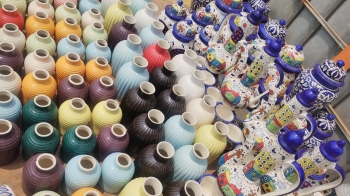
Some vendors said keeping their products affordable helped them attract buyers. Raees Din, from a family of award-winning artisans in Khurja, sold hand-painted terracotta crockery and ceramic sets. He said a set of six cups costs between Rs 250 and Rs 350. Raees added that he does not send his stock back but takes it to different exhibitions held in Goa. “I have been participating in all exhibitions here, including the Lokotsava held recently,” he said.
Jewellery stalls also attracted customers. Priya Unmesh from Kerala sells handmade jewellery and offers customised ornaments in one-gram gold, pearls, corals and terracotta. She named her business ‘Sona’ after her daughter and is supported by both her daughters, Sneha and Sona. “I have many customers in Goa who place orders for dance ornaments and festive jewellery,” she said. Neha Chonkar from Assonora, who has been selling one-gram gold ornaments for the past 15 years, said sales were good this time. “Many women in Goa now hesitate to wear real gold. They choose one-gram gold jewellery instead because it looks similar and costs less,” said Neha, who is part of the Ekta Self-Help Group.
Local crafts and eco products
Some stalls also focused on eco-friendly products. Ruchi Adiwarekar has been making jute and canvas bags for 20 years, while Pranita Kandolkar from Nerul sells chemical-free incense sticks in more than a dozen fragrances. “I buy the raw material from Gujarat and complete the rest of the process at home, including scenting, drying, packaging and labelling. Since we don’t use chemicals, there are no allergy complaints,” she said.
Shishir Gaonkar from Chimbel sold sun-dried resins from Nagpur, while Rakesh and Roshan from Jaipur sold papier-mâché stationery and handmade paper diaries. “This is my first time in Goa and sales have been good,” said Rakesh. Sangita Gawas from Amone, who started cooking traditional Goan food during the pandemic, sold veg and non-veg thalis for Rs 120 and Rs 150.
One of the participants drawing attention at the exhibition is Suchita Malkarnekar from Margao, known for the traditional Goan craft of Kapiyali, which involves making handmade cotton quilts from patchwork cloth. A former teacher with 18 years of experience, Suchita now works with more than two dozen women who stitch quilts from their homes.
Apart from her craft, she also speaks to students at colleges such as Dhempo, RMS and Rosary, encouraging them to consider entrepreneurship. Sharing her 25 years of experience in quilt-making and business, she motivates students to explore self-employment. “Everyone should do business and grow. Why wait for a job?” she said with a smile.