


PANAJI
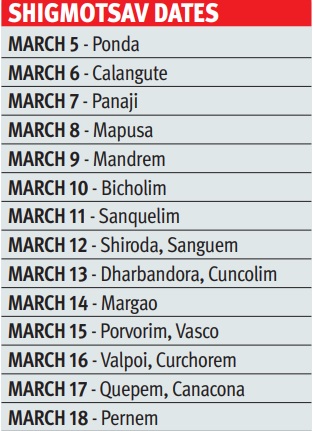
With the official announcement of the Shigmotsav dates and participating towns, Goa and its people are eagerly waiting to welcome one of the region’s most vibrant cultural festivals. Rooted in tradition and closely linked to the land, Shigmotsav is celebrated before the arrival of spring. This year, Goa will celebrate Shigmotsav from March 5 to 18, with each town hosting the festival on a specific day. The spring equinox will begin on March 20, when the Sun crosses the equator, making day and night equal in length in the Northern Hemisphere. The word equinox comes from the Latin words equi (equal) and nox (night).
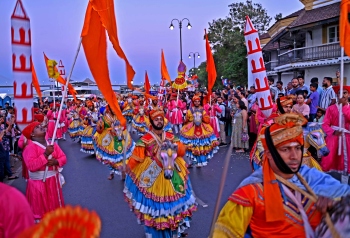
For a culturally rich state like Goa, Shigmotsav brings a lively atmosphere filled with colourful costumes, grand parades, traditional music, folk dances, moving floats, religious processions, and temple rituals, prayers, and community meals. Families celebrate together at home, while markets are already filled with decorations, artificial flowers, masks, musical instruments, and colourful clothing. Vendors are hopeful for good sales as the festival approaches.
A festival close to Goan identity
Goans proudly call Shigmo their own festival, marking the arrival of spring. It reflects Goemkarponn ” the deep-rooted heritage, community spirit, and love for celebration. The month of March reminds many Goans living outside the state to return home, especially when their hometown celebrates the festival. Shigmotsav also attracts many tourists.
Trupti Alve, a woman entrepreneur from Fatorda, said, “We have watched the street parades in Margao since childhood. Traditional Goan folk dances performed by vibrantly dressed artists, often depicting characters from epics and folklore, are the main attraction. It is a musical delight to hear local musicians and singers perform to the beats of the ghumot, dhol, and tasha. The whole town comes alive during the parades. My family still goes to watch them and shout ‘Vossai’ with the performers. I take my young son along to introduce him to our cultural identity and keep him connected to our roots.” As a mother, she said she wants to ensure that authentic Goan traditions are passed on to the next generation.
Roots in harvest traditions
In earlier times, Shigmotsav was linked to the harvest season and was mainly celebrated by farming communities such as the Kunbis, Gawdas, and Velips to welcome the new season. Similar to Holi, it was a festival of colours celebrated in the Konkani region. Gulal, a celebration connected with Shigmo, is observed at the Shree Damodar Temple in Zambaulim, South Goa, and this year it will be held on March 10.
Though Shigmo began as a harvest festival, it is now celebrated by all communities and has become a symbol of unity and togetherness across the state. The word Shigmo is believed to come from the Prakrit word ‘Suggimaho’ and the Sanskrit word ‘Sugrishmaka’, referring to a pleasant summer or the onset of spring, marking a post-harvest celebration.
Dhakto and Vhadlo Shigmo
Traditionally, the festival had two forms: Dhakto Shigmo (Small Shigmo), celebrated mainly by rural communities and farmers, and Vhadlo Shigmo (Big Shigmo), celebrated on a larger scale with folk dances such as Ghode Modni, Goff, and Fugdi. These include processions called Romat or Mell (Romatamel) and are often seen as Goa’s counterpart to Holi, combining cultural, religious, and social elements.
Arrangements and new guidelines
This year, Shigmotsav will be celebrated over 14 days across several towns, allowing both locals and visitors to experience the festivities. The celebrations highlight Goa’s open-air cultural spirit and inclusive atmosphere. The people of Goa are known for celebrating harmoniously. The Department of Tourism monitors the events to prevent chaos during processions.
This year, the department has increased infrastructural assistance to Romtamels by Rs 1 lakh to strengthen on-ground arrangements at festive centres. This is in addition to regular grants given to Shigmotsav committees for infrastructure support and prize money. Committees have been instructed to strictly follow guidelines and regulations. A new rule limits Romtamel team sizes to 150 members to ensure better management and safety.


