


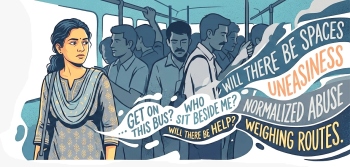
Before stepping onto a bus, a woman’s mind often navigates through a loop of questions: Should I get on this bus? Who will sit beside me? Will there be someone to help if something goes wrong? For many women across Goa, these questions are part of the routine of using public transport. They travel with them every morning and evening, weighing routes, timings, and crowds. And yet, they get on the bus often when the answers to those questions are not in their favour.
At a time when the world celebrates women during International Women’s Day week, these everyday journeys reveal a reality that rarely makes headlines: commuting for women often comes with conditions.
NAVIGATING AN UNCERTAIN COMMUTE
For a college student, Madhura, the commute itself is a long and tiring part of the day. To manage the uncertainty, she has created a small safety network around her commute. She makes sure her parents know which bus she has boarded and where she has reached, and her father has even saved the contact numbers of some bus owners on the route she travels daily.
Radha, who travels for her higher secondary school, has developed her own rules of survival on public transport. She prefers travelling only by Kadamba buses, even if it means waiting longer. Her decision comes from experience. Once, when she boarded a private bus, the journey left her shaken. A conductor allegedly hurled abuse when she tried to pay her fare. Since then, she has avoided private buses altogether.
“We all girls plan our travel earlier than the boys because we want to travel without the stares and comments,” she says.
CROWDED BUSES, UNSAFE SPACES
Across different routes in Goa, the commute is about managing discomfort rather than convenience. Crowded buses are the most uncomfortable. In those tight spaces, personal boundaries blur, and unwanted closeness becomes difficult to avoid.
A young working professional, Snehal, who travels daily to the office, says crowded buses are a regular reality for commuters. With limited options, many passengers simply board whichever bus arrives first. Snehal says, "uneasiness starts at the bus stop itself, which feels unsafe, pointing to the lack of proper infrastructure and lighting." She recalls instances where conductors speak rudely or forcefully push women further back into an already crowded bus. Over time, she says, such experiences have been brushed aside as routine.
“Just because abuse in the bus is normalised, we cannot be living with it,” she says firmly.
Women develop their own coping mechanisms eventually and helplessly. Saiee, a college student, says she deliberately prefers Kadamba buses and avoids staying late. If a situation feels uncomfortable, she does not hesitate to speak up, sometimes confronting the person directly, moving to another spot in the bus, or skipping the ride altogether if needed.
SEARCH FOR SAFER RIDES
For many women, safety is also tied to familiarity and trust.
A middle-aged commuter, Shilpa, says she deliberately sticks to one particular bus every day. Over time, a pattern formed as many women and college girls started taking the same bus because it felt safer and more confident getting on. Shilpa mentions how she has delayed her return journey just to board the same bus she trusts. Crowded buses, she says, often provide cover for those with bad intentions. Unwanted touching, leaning too close, or reaching through gaps between seats are experiences that many women quietly endure.
“Once you sit down, the first thought comes ” who will sit beside me?” she says.
For office-going women travelling later in the evening, the commute can become even more unsettling and like a nightmare.
Pradnya says travelling by bus, particularly in the evening hours, can feel stressful. She and her colleagues often prefer government transport or shuttles because they feel there is more accountability. She mentions how the lack of personal space inside crowded buses often makes women feel vulnerable. She believes overcrowded buses create situations where passengers worry not only about harassment but also about theft or robbery, especially when intoxicated passengers board buses. She encourages the government’s initiative of introducing ladies-only buses as a step that should be strengthened further.
The difference between private and government buses comes up repeatedly in conversations with commuters. Several women say they feel safer in government-owned buses where drivers and conductors are seen as more answerable to authorities. In private buses, they say, the sense of responsibility is often invisible.
Women also point to basic infrastructure gaps that make a difference to their sense of security ” better lighting at bus stops, proper shelters, surveillance cameras inside buses, and trained staff are the need of the hour.
CHANGING THE CULTURE OF SILENCE
At its core, the issue goes beyond infrastructure. It also reflects how women have been conditioned to cope quietly with discomfort in public spaces. Women face these difficulties every single day, adjusting their travel plans, routes, and routines simply to feel a little safer.
“Many girls stay silent even when things go wrong. Maybe speaking up still feels difficult,” says Shilpa. But she believes that the mindset needs to change, and we should not treat these conversations as taboo. “Women are expected to accept and keep quiet. But staying silent about it is not the solution,” she says. She recalls stepping in on several occasions when she noticed harassment happening to younger girls on buses. She emphasises how these experiences can leave deeper scars as they create long-term fear and trauma for young girls, discouraging them from pursuing higher studies.
Reflections from these stories show travel is rarely about reaching a destination for women. It is so much about choosing, negotiating, protecting personal space, and constantly adjusting to stay safe, as reflected in these stories. In a state known for its easy-going rhythm and hospitality, the daily journeys of women commuters tell a different story, where the ordinary act of boarding a bus comes with caution.
When will travel feel safe enough for women to simply enjoy the journey? Until every day feels safe and pleasant for women, the promise of freedom in public spaces will remain incomplete.


