PANAJI
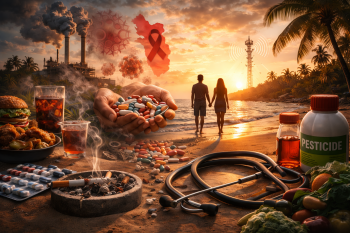
Cancer cases are rising sharply in Goa and across India, with more young people, including newborns, being affected. Several factors are linked to this increase. These include lower immunity levels, especially after Covid, smoking, alcohol and tobacco use, pollution in air, water and food, microplastics, radiation from mobile phones and towers, sunlight, natural underground radiation, power plants, pesticides, chemically treated fruits and vegetables, overconsumption of red meat, oils, sugary soft drinks, processed foods, hard-to-digest foods that stay long in the gut, and poor oral hygiene.
Dr Roque Wiseman Pinto, chairman of the CME Scientific Committee and professor of Pathology, highlighted these causes while speaking to The Goan at the 30th International Conference on Pathology, Histopathology and Cytopathology, being held at Clube Tennis de Gaspar Dias, Miramar.
The two-day conference, organised by Dr Wiseman, former head of the Department of Pathology at Goa Medical College, is held annually in Goa. This year, it focuses on different types of tumours and cancers, along with research on how to identify whether they are benign or malignant. Leading pathologists from the USA, UK and top Indian institutions such as AIIMS New Delhi, PGIMER Chandigarh, Tata Memorial Hospital and SGPGI Lucknow are participating. Delegates have arrived from the UK, the Netherlands, New Zealand, Australia, 23 Indian States and Union Territories. The conference features 101 oral papers and poster presentations, along with slide seminars and quizzes.
Dr Wiseman, former Dean of Goa University and president of the South Asia Academy of Cytopathology and Histopathology, stressed the need to recognise early warning signs. “Difficulty in breathing or swallowing, bleeding from any site, sudden weight loss, change in bowel habits, persistent cough, changes in a mole, or a lump anywhere in the body should not be ignored. A doctor must be consulted immediately. One in 10 such cases may be cancer, and missing even one can cost a life,” he said.
He warned that the risk of developing cancer is about one in ten. “This is based on my observations of causes of death over the past 30 years,” he said.
Speaking about cancer trends, Dr Wiseman said around 30 per cent of cancers in women are breast cancer, followed by ovarian and cervical cancers. In men, lung cancer is most common, followed by prostate, colorectal, liver, kidney, pancreas and urinary bladder cancers. Only about 10 per cent of cancers are genetic, while the remaining 90 per cent are caused by external factors.
He added that some people have stronger genes that help repair cancer damage. A clean environment and a healthy lifestyle also reduce risk. Living in a pollution-free area, maintaining a positive outlook, staying socially connected, pursuing hobbies, drinking enough water and sleeping at least seven hours daily can lower the chances of cancer.
Dr Wiseman noted that cancer numbers are also rising because people are living longer. “Earlier, many died young. Today, people easily live up to 70 years or more. This means longer exposure to cancer-causing elements. Changes in our DNA are also making us more vulnerable. A relaxed, cheerful and stress-free life helps keep illness away,” he said.