


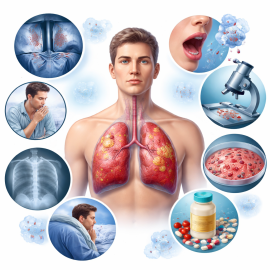
Tuberculosis (TB), also known as consumption or phthisis, is a contagious disease caused by the bacterium Mycobacterium tuberculosis. Although TB can affect almost any part of the body except hair and nails, it primarily impacts the lungs. When an infected person coughs or sneezes, tiny droplets containing bacteria are released into the air, which can infect others. These bacteria can remain airborne for several hours. However, health experts state that only pulmonary TB is infectious, while TB affecting other parts of the body does not spread from person to person.
TB can affect organs such as the mouth, liver, throat, brain, kidneys, spine, and uterus. It is considered dangerous because it gradually damages the affected organ, impairing its function over time. A few decades ago, TB was considered incurable, but today, with timely and proper treatment, it can be completely cured. However, negligence after starting treatment can prove fatal.
According to the World Health Organization (WHO), TB remains one of the deadliest infectious diseases globally. Approximately 4,000 people die from TB every day, and around 30,000 people fall ill daily. Despite the availability of effective treatment, lack of awareness continues to claim millions of lives each year.
To raise awareness about the severe consequences of this global disease and to accelerate efforts to eliminate it, World TB Day is observed annually on March 24.
Various TB-related programs are conducted worldwide under the aegis of the WHO. On March 24, 1882, German physician and microbiologist Dr Robert Koch announced the discovery of the bacterium responsible for TB, which significantly advanced diagnosis and treatment.
A century later, the International Union Against Tuberculosis and Lung Disease recommended observing this day as World TB Day. It was later officially recognized as an annual global event by the WHO and the United Nations.
In 1995, the WHO collaborated with the Royal Netherlands Tuberculosis Foundation in The Hague, and with additional partners, organized a major conference in Berlin in 1997, where DOTS (Directly Observed Treatment, Short-course) was declared one of the greatest public health successes of the decade. Since then, World TB Day has been officially observed every year with a specific theme.
The theme for World TB Day 2026, as declared by WHO, emphasizes national leadership, community-driven efforts, and the urgent need to accelerate progress against TB, particularly through increased investment and innovation.
Under its End TB Strategy, WHO aims to reduce TB deaths by 95% and new cases by 90% by 2035. This strategy focuses on establishing specialized care centers, ensuring strong national commitments, strengthening health systems, and promoting research and innovation. Reports suggest that global efforts since 2000 have saved over 70 million lives.
India is also making rapid progress toward TB elimination. In this direction, the Government of India has launched the “Pradhan Mantri TB Mukt Bharat Abhiyan.” While this initiative is commendable, achieving the goal requires the same level of dedication and preparedness as seen in the successful eradication of polio. There have been concerns that TB-related infrastructure and personnel are sometimes diverted to other tasks.
To achieve a TB-free India, it is essential to strengthen administrative efficiency and ensure optimal utilization of resources dedicated to TB elimination. The healthcare system must be made robust and proactive.
Despite the availability of treatment, TB continues to spread largely due to lack of awareness. One of the major reasons is that people often fail to recognize the seriousness of early symptoms. According to health experts, TB can affect anyone, but awareness about its symptoms, prevention, and treatment is crucial. There is no need to fear TB today. By adhering strictly to DOTS therapy and following medical advice without negligence, this deadly disease can be defeated.
(Author is a senior journalist and has authored the book “Sagar Se Antariksh Tak: Bharat Ki Raksha Kranti”)


