To build a future worthy of its rich heritage, Goa must embrace inclusivity, acknowledge shared histories and reject divisive labels
Post liberation, generally speaking, the trend in Goa has been for Goan Catholics to “go abroad” and often settle there. This situation started long back with the so called “more affluent” class of Goans, whom God had blessed with vast lands and beautiful Portuguese houses, now being sold to buyers from Delhi. Many Goans used to go for an education abroad but would come back to serve their land and people, but, increasingly, many began to settle permanently in foreign countries.
As a result Goa is increasing being emptied of Goans. These Goans who are settled abroad say “they love Goa”. But that love is manifest on Whats App only. Their children and grandchildren are heard chewing and mewing in foreign accents. They even love Konkani but cannot speak the language.
In the last 30 years with the so called Portuguese passport, people have started to work and settle in UK.
They of course are implanting our Goan culture in today’s messy England, organising Goan feast and festivals with ‘tiatrs’, sausages and wonderful processions of Our Lady in the Goan style. It appears that the Catholic churches have revived there due to them after decades of post-war English scepticism, agnosticism and atheism. Then you have our reverend priests visiting their folk. But they don’t bring the sheep back. These folks also send heavy donations to run our costly faith here. But Goan Catholics settled abroad extort astronomic rents from poor migrant labourers.
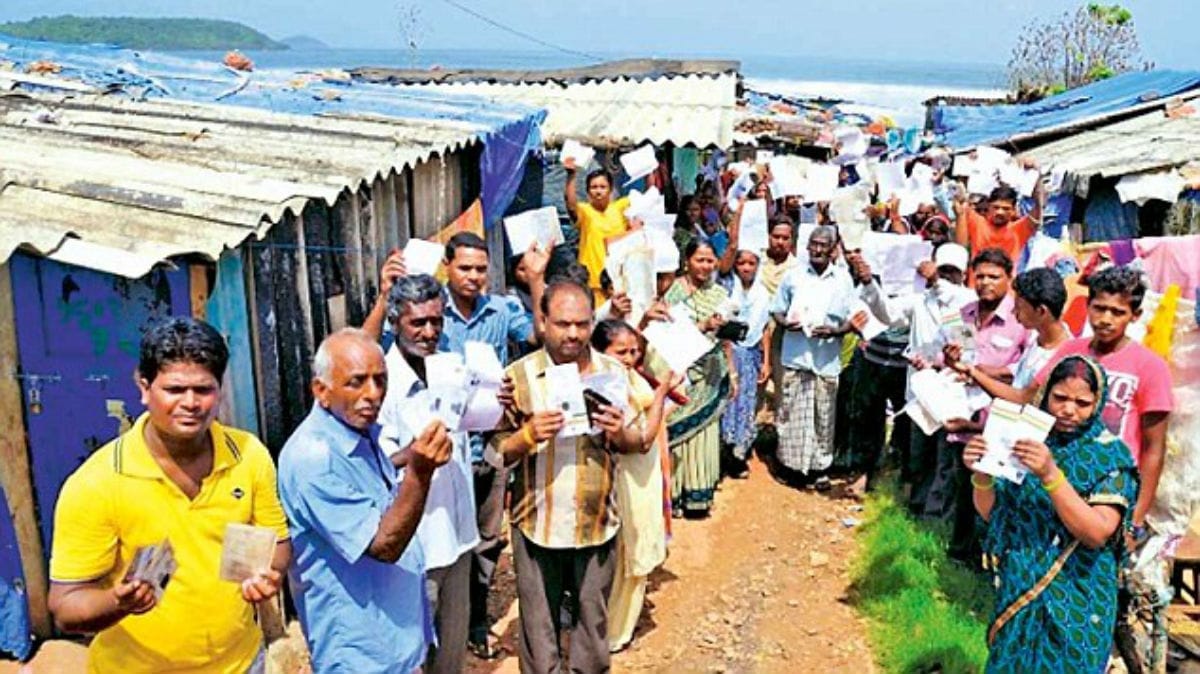
Those we call “ghanttis” have been labouring in Goa, even before Liberation in the harbour and in the Panaji Municipal services.
Construction labour
in Goa is non-Goan (subheads)
At that time, city cleaning was undertaken by metallic handcarts and I used to see these men and women right from 1957 at least, with baskets, brooms and carts early in the morning chattering in their language. The entire construction labour in Goa is non-Goan. So also all artisans, craftsmen and skilled workers like plumbers, masons and electricians. Goan craftsmen have migrated into high level politics, involving the Town and Country Planning Act, in order to develop Goa.
At the bureaucratic level much of the administration is run by non- Goans person right from 1962. And let me say they have served Goa well. When there are jobs there are no Goan applicants; they are in some foreign country. There is another angle also. Our ministers and MLAs for several decades did not bother to provide any kind of preference for Goans. A few prominent officers entered government services about 30 years back thanks to a certain politician and they are still the best. Every single activity in Goa is run, done and performed in Goa by the non–Goans. You have no right to call them names.
Goa was part of Karnataka during the Kadamba, Vijyanagar and Bijapur rule. Goan villages are named in Kannada. Karnataka borders 3/4ths of Goa, but they never laid any claim to merger. As for Maharashtra, its language Marathi kept Goans connected to the motherland for centuries and was and is the cultural language of a vast majority in Goa.
There is nothing special or privileged about Goan origin. This is India and under the Constitution you are entitled to reside, settle and carry on business in any part of India. Those who desert their own land meet their inevitable fate. We depend for everything from Karnataka: water from Mhadei, vegetables, fruits, beef and manpower. If the non-Goans leave Goa even for 24 hours (sometimes they go home for festivals) the State gets paralyzed. Those who shout the loudest about Goan origin are themselves the grandsons of people who come to Goa from other places.
Post Liberation I dare say, in Goa, much has been done by non-Goans, educated and uneducated, teachers in school and colleges, even humble nuns, bureaucrats, professionals, traders, entrepreneurs and most of all the humble manual labour. Let us not forget the Bible:
“You shall not deprive a resident alien of justice…. Remember that you were a slave in Egypt… (Deu 24: 17-18; 24:22).
Those living in glass houses in other countries should not throw stones. With the rise of right-wing parties in the West we are going to see a lot of music in the future. In Portugal, one gentleman has started a party called “Basta” which means ‘Enough’; that is enough of outsiders. Our colour, complexion and racial features are going to matter a little more in the future.
Story not of isolation
but interdependence
Goa’s story is not one of isolation but interdependence. The land has thrived because of the hands, minds, and hearts of both Goans and those who came from elsewhere.
To dismiss migrants with a slur is to erase their contribution and deny the reality that Goa’s daily rhythm -- its schools, hospitals, construction sites, and even its institutions run by the faithful -- rests on their labour.
The irony is stark: while many Goans have sought opportunities abroad, they expect respect and dignity in foreign lands, yet hesitate to extend the same at home.
The Constitution guarantees every Indian the right to live and work across the country, and Goa is no exception.
To build a future worthy of its rich heritage, Goa must embrace inclusivity, acknowledge shared histories, and reject divisive labels. Only then can the state honour its past and secure a more humane and resilient tomorrow.