‘Phirse Kitaab’ emerged as a collaborative reading movement, reinforcing books as key tools for learning, reflection, and social connections across Goa
The perceived lack of readers is a common contemporary concern among bibliophiles and educators alike. India celebrates the National Reading Day on June 19 annually, honouring Puthuvayil Narayana Panicker, the Father of India’s Library Movement.
The National Reading Day theme for 2025 was “Reading, Connecting People Across Generations in Society.”
The theme emphasized the role of reading in fostering intergenerational connections and promoting a love of reading across different age groups.
National Reading Day is a crucial advocacy tool and catalyst for numerous local events, successfully keeping the conversation about the importance of reading alive.
Kerala, where the drive began, is cited for its high literacy rates, a testament to the long-term impact of the library movement that the day honours.
Tea-stalls virtually turning into hotspots for spirited political debates is a common enough feature of Kerala’s rural landscape.
The availability of local newspapers at these joints has long been a deep-rooted and significant part of the state’s culture. Tea-stalls historically served as vital social and information hubs where patrons would gather not only for just tea and snacks, but also to read or listen to the news being read aloud.
This daily ‘ritual’ underscores how deeply embedded reading and awareness of current events are in the everyday life and social fabric of Kerala.
Print readership in Kerala is undoubtedly the highest among all states in India. Reading newspapers is an ingrained habit for most Malayalees.
Even then, newspaper reading in Kerala has seen a gradual decline, especially among younger demographics due to digital media.
With this as the context, ‘Malayala Manorama’, the daily from arguably the biggest media house in Kerala, made it a mission to bring back the habit of reading among school children last year.
A blog by Uma Abraham, assistant manager marketing, Malayala Manorama, gives a broad insight into this initiative.
The campaign was announced on June 19, 2023 - incidentally the National Reading Day - encouraging students to read the newspaper every day and participate in the quiz.
It did this through “Read & Win,” one of the biggest quiz competitions in India for students in grades nine to twelve, and the questions were found only in the newspaper. A whopping cash prize further motivated student participation.
Along with increasing the subscription base of the ‘Malayala Manorama’ daily among students in Kerala, this was an opportunity to meaningfully engage with the student community on a regular basis and create an offering that made newspaper reading a necessity for them.
Besides having achieved impressive results and accomplishing its goals in record time, the campaign motivated schools to introduce an hour dedicated to reading the newspaper.
Hence, when a motley crowd of young girls, and all of them novices at that, decided to do something about reviving the habit of reading in Goa, their efforts attracted wide attention.
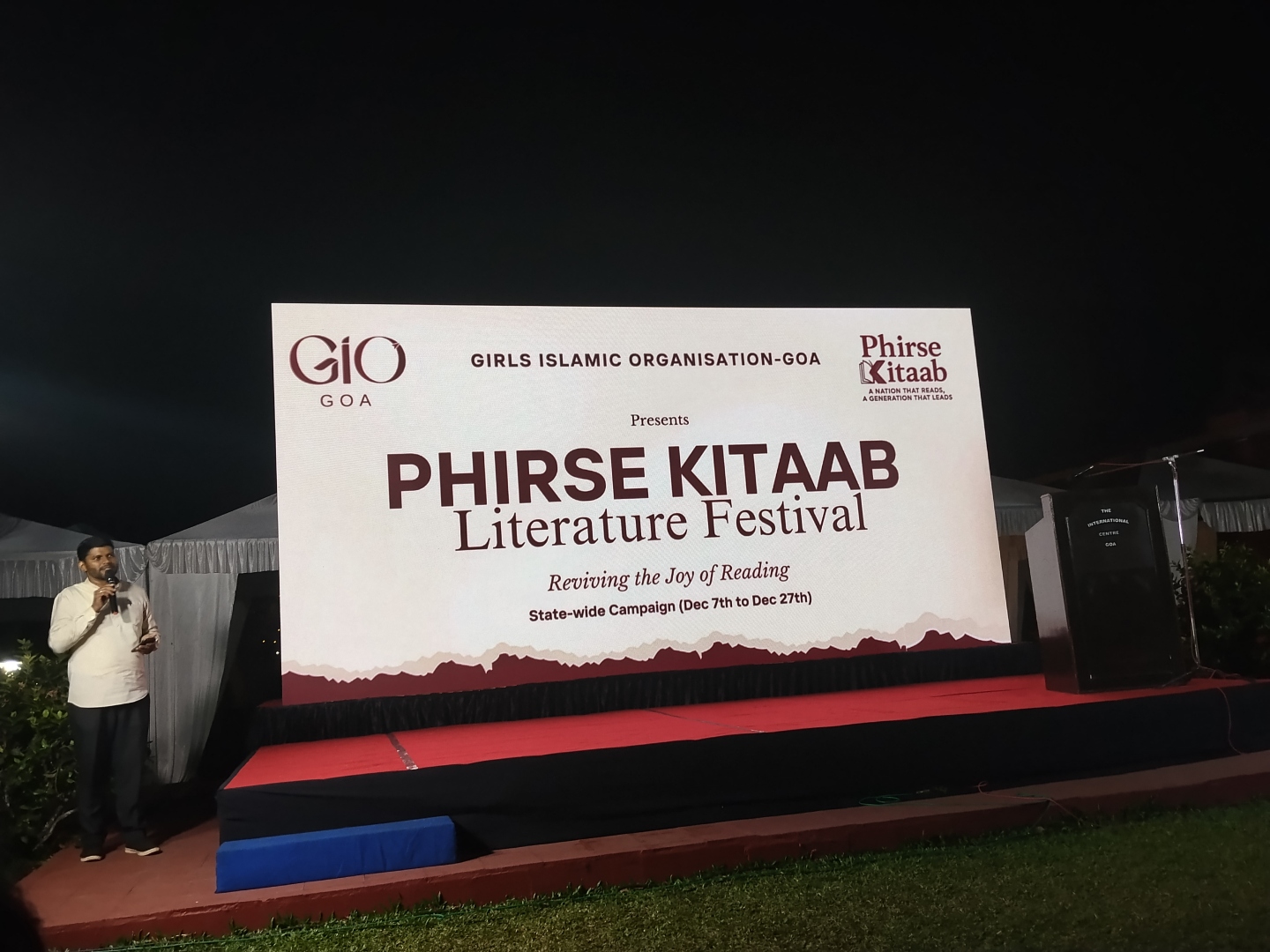
The “Phirse Kitaab” initiative in Goa, organized by GIO (Girls Islamic Organization) Goa’, was a state-wide campaign from December 7 to 27, 2025, aimed at reviving the culture of reading and deep-thinking lost in the digital age.
The GIO is a socio-educational organization of young women working towards the reconstruction of society on moral and ethical foundations through education and community engagement.
The initiative featured activities like community libraries, screen-free reading retreats, author-meet-and-greets, readathons, and a literature festival, promoting critical thinking, intellectual discipline, and community engagements through books.
“Phirse Kitaab” served as a movement to encourage people to read more, think more deeply, and build stronger foundations for their communities by returning to the power of books.
What began as a 20-day campaign slowly grew into a journey of reflection, learning, and change. Each interaction, session, and conversation added meaning, turning an idea into lived experiences.
The campaign aimed to revive reading habits and encourage meaningful engagement with books among children, youth and adults. Brought alive through shared efforts and belief, the campaign became a reminder of why reading matters and how collective action can create lasting impact.
The overall aim was to build a generation that leads with knowledge, curiosity, and wisdom, highlighting the power of reading to improve critical thinking, vocabulary, and communication skills.
‘Phirse Kitaab’ emerged as a collaborative reading movement, reinforcing books as essential tools for learning, reflection, and social connections across Goa.
The initiative has received widespread coverage and appreciation for promoting reading in an era dominated by screens. But the challenge of transforming initial enthusiasm into a permanent cultural shift is not lost on anyone.
A habit that is forsaken can take a significant amount of time and effort to resuscitate. However, with persistence and a positive mindset it is possible to successfully integrate reading back into one’s life.
The reasons people do not read are multifaceted and require a nuanced approach that provides practical solutions, rather than just highlighting the abstract benefits.
Besides helping quench one’s thirst for knowledge, reading has always been a pleasurable habit with people. Over the years though, it has moved from being simply a pastime to something more laborious and time-consuming.
The cost factor too has played a major role in the waning popularity of reading books. Despite the challenges though, the emergence of more affordable formats like e-books and the accessibility of public library systems help mitigate the cost barrier.
The habit of reading cannot however remain dormant for long. The inherent need for reading will eventually resurface and demand attention after a period of inactivity.
In recent years there has been a noticeable push for campaigns aimed at reviving reading culture.
The most successful campaigns are nevertheless built on a solid understanding of the targeted audience’s specific barriers and motivations, with clear, consistent messaging and a commitment to ongoing evaluation and improvement.
For ‘GIO Goa’, the true importance of the ‘Phirse Kitaab’ initiative lies not just in tangible outcomes, but in the intangible legacies of a journey that continues to inspire and strengthen core values long after the initial effort is complete.