GI products in Goa need producer cooperatives, training, access to raw materials, marketing infrastructure and state-backed enforcement
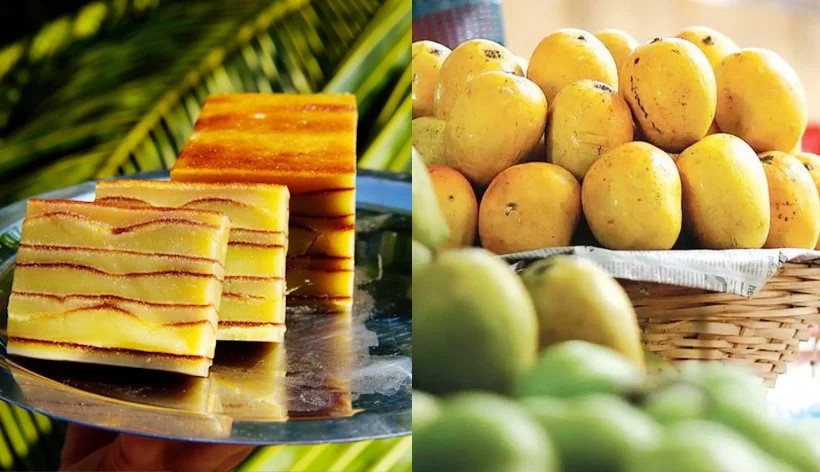
GI. Some of us might have not heard this term earlier. Today "Goa's GI tally" has risen to 15, with five new certifications, we are told. They range from mangoes (the Goa Hilario, Mussarat), the Taleigao brinjal, the Goa cashew apple, traditional Korgut khazan rice variety, announced earlier this month.
Earlier, Goa had also secured GI tags for more items. From bebinca to khajem (the sweets sold at zatras and feasts), cashew feni, the chillies of Khola in Canacona, the Mancurad mango, the Agasaim brinjal, the Harmal chilli, Myndoll (also called 'Moira' banana), the cashew kernel, and the seven-ridge ladyfinger (okra). Officials say they've initiated the GI process for a total of 25 items.
So far so good. For a change, we are prioritising Goa's traditions of yore. We are not anymore acting as if these don't exist, or they simply don't matter.
For many decades, Goa was fed on a diet of statistics that told us how 'progress' was being achieved. To sustain these figures, it was necessary to discount or ignore the value of past traditions, and simply focus on the market economy. Anything that had a price was valued. Those things that grew in your garden, or backyard, was obviously worthless.
Yet, many of our generation are left watching the familiar scents and stories of their childhood quietly fade. Fruits once eaten from the backyard now replaced by supermarket (or city) imports. Foods that took time and space to create are giving way to instant mixes. Even festivals have been shrinking from community affairs into being calendar (sometimes touristy) entries.
Then there are fields lying fallow or built over. Folk practices reduced to stage performances. Fishing knowledge eclipsed by mechanisation and overfishing. Forests thinned and fenced off. Family routines fragmented by migration and village-to-city shifting. Forms of speech and song falling out of daily use. Even faith-linked customs losing their everyday anchoring, while getting politicised.
In this context, steps in the GI. What does it mean? In simple terms: A geographical indication (GI) is a name or label used for a product to show that it comes from a particular place. This label tells buyers that the product has special qualities, is made in a traditional way, or has a good reputation because it comes from that specific region.
If you look for online background (Wikipedia), you'll find that this is not a very new idea. It was used from the end of the 19th century, to ensure that a product comes from the very region that its name suggests.
In France, there have been laws over "appellations of origin" for items like Gruyere cheese (from Switzerland) and many French wines. The 1919 Treaty of Versailles, nor less, forbade Germany from using names for its "cognac" and "champagne" industries. The French considered the terms as misleading references to places in France. Since then, the Germans have been calling it Weinbrand (brandy, roughly speaking) and Sekt (German for certain sparkling wines). There have been court cases over these names, what qualifies and what doesn't.
There are parallel issues too. In an online discussion, Prof Rafael pointed to a BBC report which said that Italian cooking has been awarded special cultural heritage status by the United Nations' cultural agency Unesco. In addition to this, an Egyptian snack, Icelandic pool culture, Cuban music and Albanian Iahuta music also got the recogntion. What Goan items, he asked, could possibly make it to the UNESCO special cultural heritage status list?
Interesting. Maybe the xitt-kodi-kismur; rice cultivation, processing and cooking traditions; fishing-linked foodways (also covering the vanishing ramponkar and coastal communities); feast-day food systems; temple-linked ritual foods; veg fasting and festival food cycles; Ramzan and Urs-linked food practices; even the bebinca-dodol-halwa traditions of Goa.
But is are the GI and the heritage tag the solutions? Traditional Goan products seeking the GI tag face a wide range of challenges. Getting the GI tag alone cannot magically undo these.
Many of these products are made in small quantities using labour-intensive methods, making them expensive and difficult to scale. Raw materials such as local rice varieties, cashew, fish, or coconut are increasingly scarce due to land-use change, environmental stress, and declining cultivation.
Skills across generation are transmitted only informally within families and are breaking down as younger generations migrate or choose more stable livelihoods. Markets are being distorted by cheaper imitations and industrial substitutes that meet demand but hollow out authenticity.
One dramatic case is that of the Moira banana, which, today, doesn't grow in the village of Moira itself. We continue with its name, and get lookalikes, but these are probably grown in some villages of Pernem, or even further afield, in distant Kerala.
Documentation is weak, so “traditional” methods involved here are often vaguely defined or contested. Producers lack collective organisation. They also have a limited bargaining power and access to finance.
For its part, a GI tag can protect a name on paper. But, let's have no illusions, it does not guarantee fair prices, assured markets, quality control, enforcement against misuse, or livelihood security for producers.
What these products need so badly is parallel support. This has to go beyond subsidies alone (which seems to be the government favoured means of offering 'support'). They need producer cooperatives, training, access to raw materials, marketing infrastructure and state-backed enforcement.
Let the GI not remain just a symbolic label, useful for branding and tourism narratives. We need to ensure that the actual traditions it claims to protect do not continue to erode quietly at the ground level.