The problem confronting mundkars is not the absence of statutory protection. It is the chronic failure of adjudication and enforcement
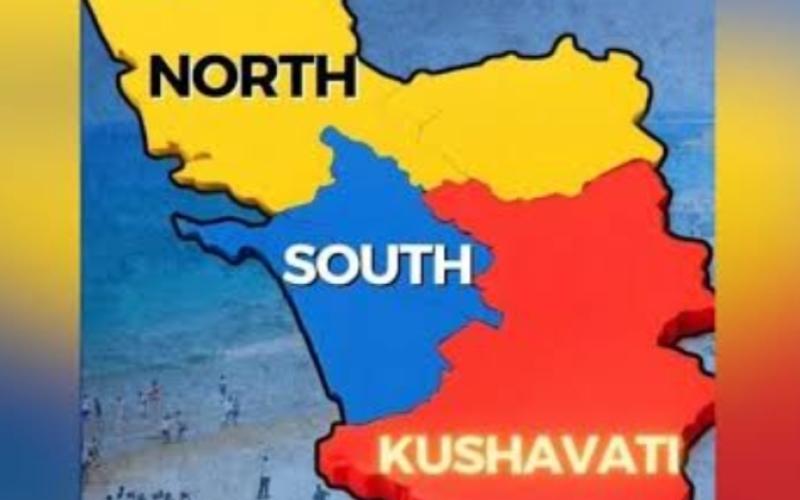
The creation of Kushavati, Goa’s third district, has been presented as an administrative intervention intended to improve governance in the southern hinterland of the State. The talukas forming this district have historically been marked by relatively lower levels of infrastructural penetration, limited industrial concentration and a demographic composition distinct from the coastal and urban centres shaped during the colonial period. These constituencies have long contained significant populations belonging to Scheduled Castes, Scheduled Tribes and Other Backward Classes, many of whom have remained peripheral to Goa’s dominant economic and political narrative.
Viewed in isolation, the decision to carve out a separate district from South Goa cannot be dismissed as inherently regressive. A dedicated district administration promises proximity, visibility and the possibility of targeted welfare delivery in regions that have often lagged behind in social upliftment indicators. From a governance perspective, such territorial reorganisation can be read as a belated acknowledgement of structural disparities that have persisted within the State for decades.
Yet, administrative decisions acquire an additional dimension when they coincide with electoral cycles. The formation of Kushavati under a ruling dispensation that openly foregrounds nationalist symbolism invites a broader reading. The use of culturally resonant nomenclature, the elevation of a new district headquarters and the reconfiguration of administrative frameworks together generate a perception of renewed attention and future promise. In political theory, such interventions are rarely neutral. They recalibrate voter expectations and subtly reshape political loyalties, particularly in regions that have historically experienced marginalisation.
The electorate of a newly constituted district may reasonably come to associate the promise of development with the political formation responsible for its creation. Over time, continuity in governance may be viewed as necessary for the realisation of that promise, regardless of individual candidate performance or manifesto commitments.
Mundkar origins
The discourse surrounding the so-called khushal mundkar must be examined against this administrative backdrop. The colloquial reference to a happy mundkar draws from the Konkani term, itself derived from the Portuguese expression mundcares, found in colonial records. The enactment of the Goa Mundkars (Protection from Eviction) Act, 1975 was a transformative legislative moment. From its appointed date, families residing on the dominant tenement of a bhatkar were entitled to security of residence and, subject to adjudication, to purchase a defined plot of land, generally measuring up to 300 square metres, as recognition of past service relationships.
The legislative intent was unambiguous. The institution of mundkarship was to be abolished, not perpetuated. It was envisaged that declarations of mundkar status under Sections 8 and 8A would be promptly adjudicated by mamlatdars at the grassroots level, followed by applications for purchase and, where necessary, appellate scrutiny. In a State with a relatively small population, it was reasonably expected that such claims would taper off within a finite period.
That expectation has not been realised. Instead, mundkar cases continue to dominate the rosters of mamlatdar courts across Goa. Claims dating back to the 1990s remain undecided, not merely at the appellate stage but even at the level of initial declaration and purchase.
Adjudication failure
The persistence of mundkar litigation has produced unintended consequences. Over time, increasingly expansive interpretations of heritability have emerged, often fuelled by inadequate legal guidance. Claims have been advanced seeking multiple independent entitlements arising from a single mundkar right, notwithstanding settled principles that such rights devolve proportionally and not cumulatively. The resulting adjudicatory complexity has left mamlatdars burdened and parties embroiled in protracted disputes.
This reality exposes the central weakness in the current discourse. The problem confronting mundkars is not the absence of statutory protection. It is the chronic failure of adjudication and enforcement. The State has possessed the legislative tools necessary to resolve mundkar claims for nearly five decades. What has been lacking is administrative resolve, procedural efficiency and time bound disposal.
Against this background, the proposal to introduce legislation restricting the sale of land until mundkar rights are finally adjudicated raises difficult questions. Such a measure does not accelerate adjudication. It does not address institutional delay. Instead, it freezes property transactions across entire tenements on account of unresolved claims, some of which have remained pending for decades due to systemic inertia.
Electoral comfort
The effect of such a proposal is predictable. Mundkars facing prolonged uncertainty are offered immediate reassurance through continued occupation without the pressure of alienation. Bhatkars, on the other hand, find their proprietary and inheritance rights further constrained, not by adjudication but by legislative embargo. Two distinct classes of electorate are thus created, one experiencing perceived protection and the other experiencing deepening grievance.
This bifurcation carries electoral implications. Measures that prolong the status quo tend to generate short term political comfort among beneficiaries, even when long term resolution remains elusive. The assurance of continued occupation, framed as protection, becomes an attractive proposition in the months preceding an election. That such reassurance is achieved by deferring, rather than resolving, adjudication is a distinction that is often lost in public discourse.
The constitutional sustainability of such an approach remains uncertain. Interference with property rights, particularly when untethered to procedural reform or time bound resolution, invites scrutiny under established principles of proportionality and reasonableness. Whether such legislation would withstand judicial review is a question that cannot be lightly dismissed.
Demands for governance
Structural reorganisation and welfare assurances are foregrounded, while underlying adjudicatory failures remain unaddressed. Past performance, rather than present promise, becomes the most reliable predictor of future outcome.
The true measure of commitment to social justice lies not in symbolic district creation or legislative announcement, but in the quiet work of clearing backlogs, enforcing timelines and restoring certainty to legal relationships. Until that occurs, the idea of the khushal mundkar risks remaining an electoral comfort rather than a substantive resolution.