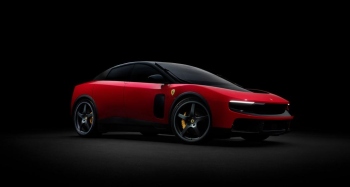
When Ferrari unveiled the Luce, its first fully electric car, the reaction was immediate and deeply divided. Some praised the Italian carmaker for taking a bold leap into the future, while others accused it of abandoning the very identity that made Ferrari legendary.
The Luce was never going to be an ordinary launch. Ferrari is not just another luxury car brand ” it represents emotion, speed, sound, and heritage. For decades, the company built its reputation on roaring petrol engines, aggressive styling, and race-inspired engineering. An electric Ferrari was always likely to face scrutiny. But the Luce sparked criticism on a scale few expected.
Why fans reacted strongly
The biggest source of backlash was the design. Unlike traditional Ferrari supercars, the Luce is a large four-door electric grand tourer with seating for more than two passengers. Many Ferrari fans expected the company’s first EV to be a low-slung sports car that retained the classic Ferrari silhouette. Instead, the Luce arrived with a more practical shape aimed at luxury touring and daily usability.
Social media reactions were harsh. Critics said the car looked too generic and lacked the visual drama associated with Ferrari. Some compared it to premium electric saloons already available in the market. Others argued that the Luce could have worn the badge of almost any luxury manufacturer. The criticism reflected a fear among enthusiasts that Ferrari was becoming too focused on modern trends rather than preserving its uniqueness.
The absence of a traditional Ferrari engine also became a major talking point. Ferrari’s petrol engines are central to the brand’s appeal. The sound of a Ferrari V8 or V12 has long been considered part of the driving experience itself. Electric cars, by nature, operate quietly. For many enthusiasts, removing the engine noise felt like removing Ferrari’s soul.
Price debate
Another reason the Luce attracted attention was its expected price tag. Reports suggest the car could cost significantly more than many rival luxury EVs, placing it among the most expensive electric vehicles in the world. Critics questioned whether buyers would be willing to pay such a premium for an electric Ferrari that does not offer the traditional Ferrari experience.
The Luce is expected to cost around 550,000 euros (roughly $640,000), making it significantly more expensive than most luxury electric vehicles currently on the market. That high price has added to the debate, with critics questioning whether buyers will pay such a premium for Ferrari’s first EV despite the brand’s prestige and exclusivity.
Supporters, however, argue that Ferrari has never competed on affordability. The company sells exclusivity as much as performance. Limited production, advanced engineering, and the prestige attached to the Ferrari badge have always allowed the brand to charge higher prices than competitors. Ferrari is betting that wealthy buyers will still pay extra for craftsmanship, brand value, and rarity, even in the electric era.
Business reality
However, supporters of the Luce argue that such criticism ignores the reality facing the automotive industry. Governments around the world are tightening emission regulations, and major manufacturers are investing heavily in electric mobility. Ferrari cannot remain isolated from this shift forever. Launching an EV is not simply a trend decision; it is increasingly becoming a business necessity.
From that perspective, the Luce represents Ferrari’s attempt to adapt while still remaining premium and exclusive. Rather than building a direct electric replacement for one of its sports cars, Ferrari appears to have chosen a different route ” creating a luxury EV that expands its customer base without immediately replacing its traditional models.
Some automotive analysts believe this strategy makes sense. Ferrari’s loyal enthusiasts are emotionally attached to petrol-powered performance cars. Launching a fully electric supercar as the company’s first EV may have risked even stronger resistance. By positioning the Luce as a separate kind of Ferrari, the company may be trying to ease customers into the electric era gradually.
Technology versus emotion
The interior has also divided opinion. Designed with strong minimalist influences, the cabin features large digital interfaces and a cleaner layout than most Ferraris of the past. Supporters say the interior feels futuristic and luxurious, while critics claim it resembles technology-focused consumer products more than an emotional sports car.
Yet even many critics acknowledge that the Luce is technically impressive. Early reports suggest strong acceleration, advanced battery technology, and high-end craftsmanship. Ferrari is still expected to deliver exceptional performance standards, even in electric form. The company’s engineering reputation remains strong, and some reviewers believe opinions may soften once people experience the car on the road.
Another important factor in the debate is generational change. Younger luxury buyers often value sustainability, technology, and practicality alongside performance. For them, an electric Ferrari may not feel controversial at all. In fact, some younger customers may see the Luce as more relevant to modern lifestyles than a traditional petrol supercar.
Ferrari’s biggest challenge
At the same time, Ferrari’s challenge goes beyond building an electric vehicle. The company must convince people that an EV can still feel emotional and special. Ferrari has spent decades selling not just speed, but passion. Recreating that emotional connection without engine noise will be one of the hardest tasks for the brand.
The Luce therefore represents more than just a new car. It reflects a wider struggle taking place across the performance car industry. Luxury brands are being pushed toward electrification while trying to preserve their heritage and loyal fan base. Every company is handling that balance differently, and Ferrari’s approach is now under global scrutiny.
The road ahead
Whether the Luce succeeds commercially remains to be seen. Initial criticism does not necessarily predict long-term failure. Many controversial cars in automotive history eventually gained acceptance after people became familiar with them. Ferrari may also refine its future EVs based on customer feedback.
For now, the Luce stands at the centre of an emotional debate about what Ferrari should represent in the modern era. To some, it is a brave step toward the future. To others, it feels like the company is drifting away from its roots.
The truth may lie somewhere in between. Ferrari cannot ignore the future, but it also cannot afford to lose the identity that made it iconic. The success or failure of the Luce may ultimately depend on whether Ferrari can prove that electric performance can still deliver the excitement and emotion people expect from the prancing horse badge.