India’s car market has undergone a dramatic transformation over the past decade, shifting from affordable hatchbacks to premium SUVs, leaving models like the Ignis behind as consumer aspirations rapidly evolved
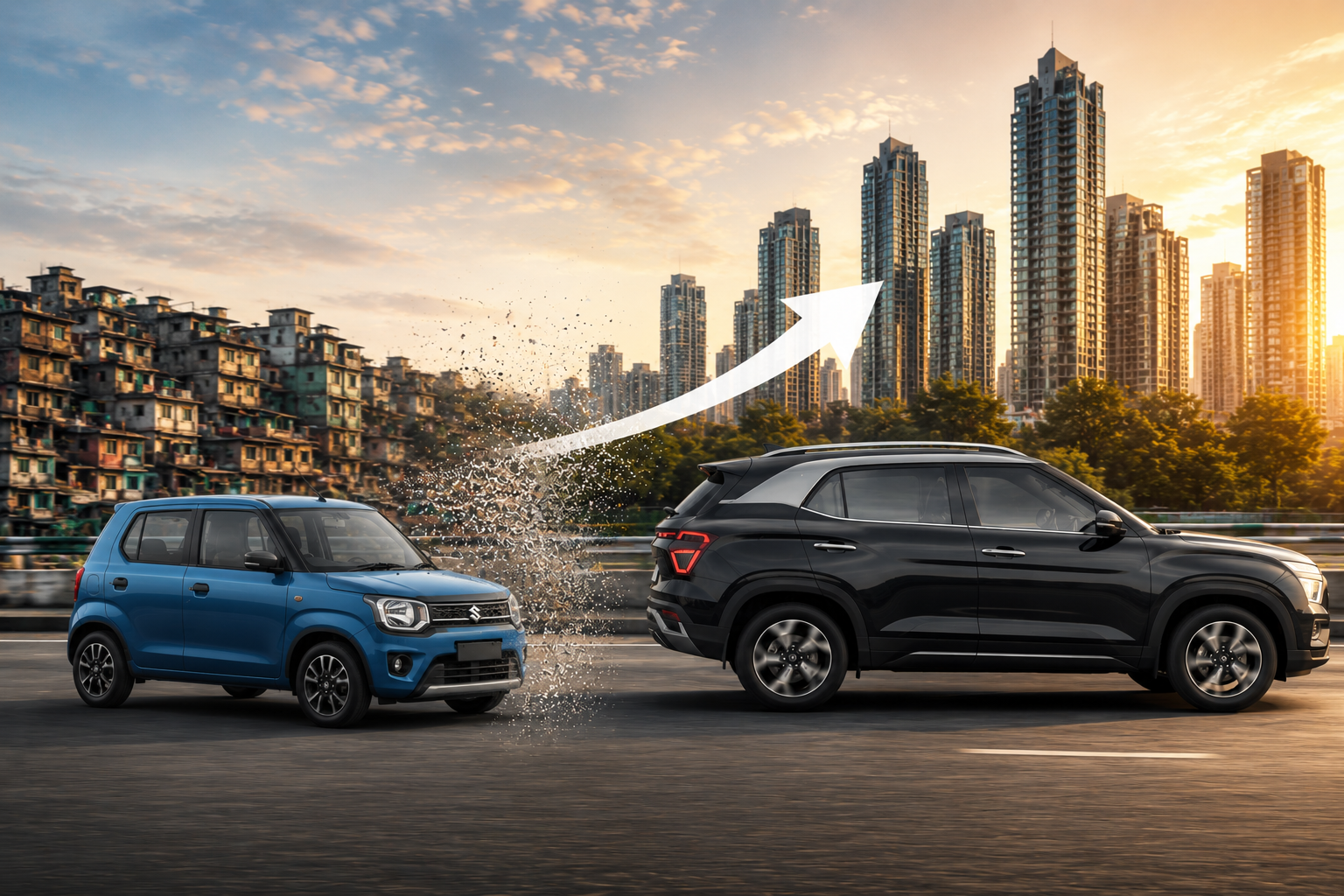
Nearly a decade ago, Maruti Suzuki launched the Ignis with hopes of attracting young buyers and first-time car owners. The launch reflected the mood of India’s automobile industry at the time. Carmakers believed the country was entering another long period of strong growth, especially in the affordable car segment. Rising incomes, easier access to loans and improving rural demand had encouraged companies to expand production and launch new models aimed at younger consumers.
Back then, small cars formed the backbone of India’s passenger vehicle market. Models such as the Alto, WagonR and Swift were extremely popular among middle-class families and first-time buyers. Automakers saw huge potential in entry-level vehicles because millions of Indians were expected to buy their first car in the coming years.
Executives from leading automobile companies frequently spoke about improving market sentiment. Maruti Suzuki highlighted the return of first-time buyers, while Mahindra & Mahindra pointed to recovery in rural demand. The industry expected this broad-based demand to continue for years.
However, the trend did not last as expected. Within a short period, the market began shifting in a completely different direction.
Entry-level cars begin losing demand
Maruti Suzuki later admitted that the small car segment was facing severe pressure due to affordability concerns. Rising vehicle prices, stricter safety rules, higher insurance costs and increasing input expenses made entry-level cars more expensive than before. For many buyers, especially younger consumers and middle-income families, owning even a basic hatchback became difficult.
This change marked a major turning point in India’s passenger vehicle market.
Even though the automobile industry recently reported one of its strongest years in terms of overall sales, affordable cars have not participated equally in the recovery. According to data released by the Society of Indian Automobile Manufacturers (SIAM), passenger vehicle sales crossed 4.64 million units in 2025-26, while two-wheeler sales also recorded healthy growth.
However, most of the gains came from utility vehicles and premium models rather than small hatchbacks. Analysts say this clearly shows that the Indian market is expanding mainly at the upper end, while budget-friendly cars continue to struggle.
The numbers reveal the difference clearly. Passenger cars saw very limited annual growth, while utility vehicles surged strongly during the same period. SUVs now dominate roads across India, and buyers increasingly prefer larger vehicles even if they cost significantly more.
Why buyers are moving towards SUVs
Industry experts believe consumer preferences have changed sharply over the past few years. Buyers are now willing to stretch their budgets for vehicles that offer more space, additional safety features, modern technology and a stronger road presence.
SUVs are also seen as more practical for Indian road conditions. Higher ground clearance, larger cabins and a premium image have made them attractive across both urban and semi-urban markets.
Earlier, many buyers would purchase a small hatchback as their first vehicle. Today, several consumers are directly choosing compact SUVs or mid-size utility vehicles instead. Easier financing and longer loan periods have also helped customers move towards higher-priced models.
For example, a buyer who once considered an entry-level hatchback may now decide to spend extra money on a compact SUV such as the Tata Punch or Maruti Brezza. Industry observers say this mindset shift has changed the entire structure of the automobile market.
The fall in first-time buyers at Maruti Suzuki highlights this trend. The company’s share of first-time customers reportedly declined from around 55 per cent in 2017-18 to nearly 40 per cent in FY25. Though the figure improved slightly during the later months of 2025 due to expectations of tax relief and policy support, analysts believe the market recovery is still not as broad-based as earlier growth cycles.
Carmakers still expect strong profits
Despite weakness in entry-level cars, most automobile companies continue to remain optimistic because demand for SUVs and premium vehicles remains strong.
Brokerage firms expect healthy revenue growth for major automakers such as Maruti Suzuki, Mahindra & Mahindra, Tata Motors and Hero MotoCorp. Analysts believe strong festive demand, improved financing availability and stable urban consumption will support the sector further.
Several brokerages have projected strong profit growth for automobile companies in the March quarter. Mahindra & Mahindra is expected to benefit significantly from the popularity of its SUVs, including the Scorpio, Thar and XUV range. Maruti Suzuki is also likely to post better profits because of improved sales in higher-priced segments.
Analysts say automobile companies are now focusing more on premiumisation because larger vehicles provide better profit margins compared to small hatchbacks. This explains why many companies are aggressively expanding their SUV lineups while reducing focus on affordable entry-level models.
Hyundai faces tougher competition
Hyundai Motor India was among the early companies to benefit from India’s premiumisation trend. Models such as the Creta became extremely popular and helped the company establish a strong position in the SUV market.
However, analysts believe Hyundai has recently faced increasing pressure from rivals such as Mahindra and Tata Motors. Competition in the SUV segment has intensified sharply, and some of Hyundai’s newer products have not generated the same level of excitement as earlier launches.
Market experts also point out that Hyundai’s strong dependence on the Creta has become a challenge. While the SUV remains one of India’s bestselling vehicles, the company needs more successful products across categories to maintain growth.
To address this issue, Hyundai plans multiple product launches between FY26 and FY30. Analysts say these launches will be important for filling gaps in the company’s portfolio and helping it regain market momentum.
Exports are also expected to support Hyundai’s performance in the coming years.
Why the Ignis failed to succeed
The story of the Ignis reflects the larger transformation taking place in India’s automobile market.
When Maruti Suzuki launched the car, the company hoped its youthful design and modern styling would attract urban buyers. The Ignis was positioned as a stylish hatchback aimed at younger customers looking for something different from traditional small cars.
However, the model never achieved the popularity of cars such as the Swift or WagonR. Many buyers considered its design unusual, especially the rear styling. Online discussions often criticised its boxy appearance, and the car struggled to create a strong emotional connection with Indian consumers.
At the same time, the market rapidly shifted towards SUVs. Buyers increasingly preferred models such as the Mahindra Thar, Hyundai Creta, Mahindra XUV700 and Maruti Brezza. These vehicles offered a more premium image and aligned better with changing consumer aspirations.
As SUV demand kept rising, hatchbacks like the Ignis gradually lost relevance. Maruti Suzuki has now discontinued the model, signalling how dramatically customer preferences have changed over the past decade.
The decline of the Ignis also highlights a broader reality facing India’s automobile industry. While overall vehicle sales may continue rising, the era when small entry-level hatchbacks dominated Indian roads appears to be fading.