Sometimes a facelift doesn’t mean a complete redesign. Instead, manufacturers refine the existing package with meaningful improvements, and that’s exactly the approach taken with the updated Tata Punch EV. Introduced barely two years after the original model, this mid-cycle update focuses on enhancing usability, increasing range, and improving the overall ownership experience. Tata has introduced subtle design tweaks, refreshed colours, additional technology, and small but noticeable cabin upgrades. The result is a more polished version of an already popular electric micro-SUV that aims to strengthen its position in the entry-level EV segment.
Exteriors
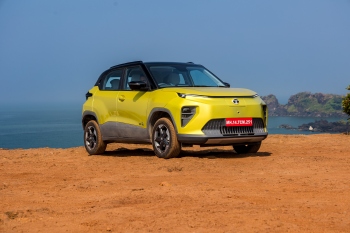
At first glance, the updated Punch EV looks similar to the earlier model, but closer inspection reveals several changes. The front design now features separate daytime running lights instead of the earlier connected unit, giving the face a wider and more assertive appearance. The bumper has also been slightly revised to add visual depth. From the side, the electric branding is now more prominent and the protective cladding appears slightly larger, reinforcing the SUV-like stance. The most noticeable change is at the rear, where the tail lamps are now visually connected through a strip of LED DRLs. The actual tail lamps also receive a darkened finish, adding a sportier touch. Tata has also refreshed the colour palette significantly, introducing several new single-tone and dual-tone options that are brighter and more vibrant. In a segment where compact cars often struggle to stand out visually, these colours help the Punch EV appear youthful and distinctive.
Interiors
Inside the cabin, Tata has focused on refinement rather than a complete redesign. The overall dashboard layout and colour scheme remain largely unchanged, but a few key updates elevate the perceived quality. The new window and mirror control panel features a redesigned interface, while the indicator and wiper stalks now use better textured materials, giving them a more premium feel. The beige cabin theme combined with gloss-black accents creates an attractive environment, though these surfaces tend to attract dust, fingerprints, and minor scratches easily. Over time, this could affect the long-term appearance of the interior. Rear-seat space remains unchanged. The second row is best suited for two occupants due to the compact dimensions of the vehicle. While headroom and shoulder space are acceptable thanks to the upright seating position, the rear section lacks a few practical touches. There are no rear AC vents, the door bottle holders are relatively small, and only a single USB-C charging port is provided.
Tech and safety
The Punch EV continues to stand out in its segment with a strong list of features, especially in the top-spec Empowered S+ 40 variant. The cabin houses dual digital displays, including a large touchscreen infotainment system and a digital instrument cluster. Wireless smartphone connectivity, automatic climate control, ventilated front seats, connected car technology, and an electric sunroof with voice commands are also part of the package. Tata has introduced additional functionality as part of the update. The instrument cluster now supports built-in navigation, and the front USB ports are upgraded to 65W units capable of charging laptops. Rain-sensing wipers and voice-controlled sunroof operation further enhance convenience. One unique addition is a system that alerts the driver if the high beams remain activated for more than a minute, encouraging safer driving habits. Safety remains a strong point. Every version of the Punch EV comes with six airbags, ABS with EBD, electronic stability control, tyre pressure monitoring, ISOFIX child seat mounts, and a five-star BNCAP crash safety rating.
Battery, charge, range
One of the key upgrades is the availability of a larger battery pack. From the Smart+ variant onwards, buyers can opt for a 40kWh battery offering a claimed range of up to 464km. The more realistic C75 estimate stands between 335km and 350km. The front-wheel-drive electric motor produces around 127bhp and 154Nm of torque. Charging performance has also improved, with Tata claiming that a 65kW DC fast charger can add approximately 180km of range in just 15 minutes. In mixed driving conditions during testing, the Punch EV achieved an efficiency figure of roughly 120Wh per kilometre, translating to a real-world range of around 333km. This represents about 71 percent of the claimed maximum figure and aligns closely with the C75 estimate.
Drive and suspension
On the road, the Punch EV delivers a smooth and confident driving experience. Like many electric cars, power delivery is immediate and responsive. There are three drive modes available”Eco, City, and Sport. Eco mode prioritises efficiency, while Sport mode sharpens throttle responses significantly, making highway overtakes easier. However, aggressive driving in Sport mode will naturally reduce range. Drivers can also choose between three levels of regenerative braking. The strongest setting slows the car noticeably when lifting off the accelerator but does so smoothly enough to avoid discomfort. Ride quality is a highlight. The suspension absorbs bumps and rough surfaces with ease, maintaining composure even on uneven roads. With 180mm of ground clearance, the Punch EV can handle broken roads and speed breakers without concern. Despite the added weight of the battery pack, the vehicle remains agile and easy to manoeuvre thanks to its compact footprint and light steering at low speeds. Noise insulation is generally good, with wind and tyre noise well controlled. However, the ventilated seats can become quite audible at their highest setting.
Competition
In the entry-level electric SUV space, the Punch EV competes with vehicles such as the Citroen eC3 and some variants of the MG Comet EV, though each of these models targets slightly different buyer preferences.
Verdict
The facelifted Punch EV strengthens an already compelling package. With its improved battery options, expanded feature list, refreshed styling, and comfortable ride quality, it raises the bar in the affordable EV segment. However, it isn’t without shortcomings. Fit and finish could be better in some areas, and the rear-seat experience feels slightly basic, lacking features like AC vents and additional charging points. Even so, the Punch EV remains a well-rounded electric vehicle that offers practicality, modern technology, and enjoyable driving dynamics in a compact footprint. For buyers looking to enter the EV space without compromising on features or safety, it continues to be one of the most convincing options available.