When people talk about clean mobility in India, the focus is usually on electric cars, large charging hubs and battery plants. But this misses what most Indians actually use every day. On Indian roads, two-wheelers dominate. They make up more than 70 percent of all registered vehicles and account for over half of petrol consumption.
If cutting emissions is the goal, the biggest impact will not come from cars alone. It will come from the vehicles used by the majority. Electric two-wheelers are not just an extra part of India’s EV shift — they are leading it.
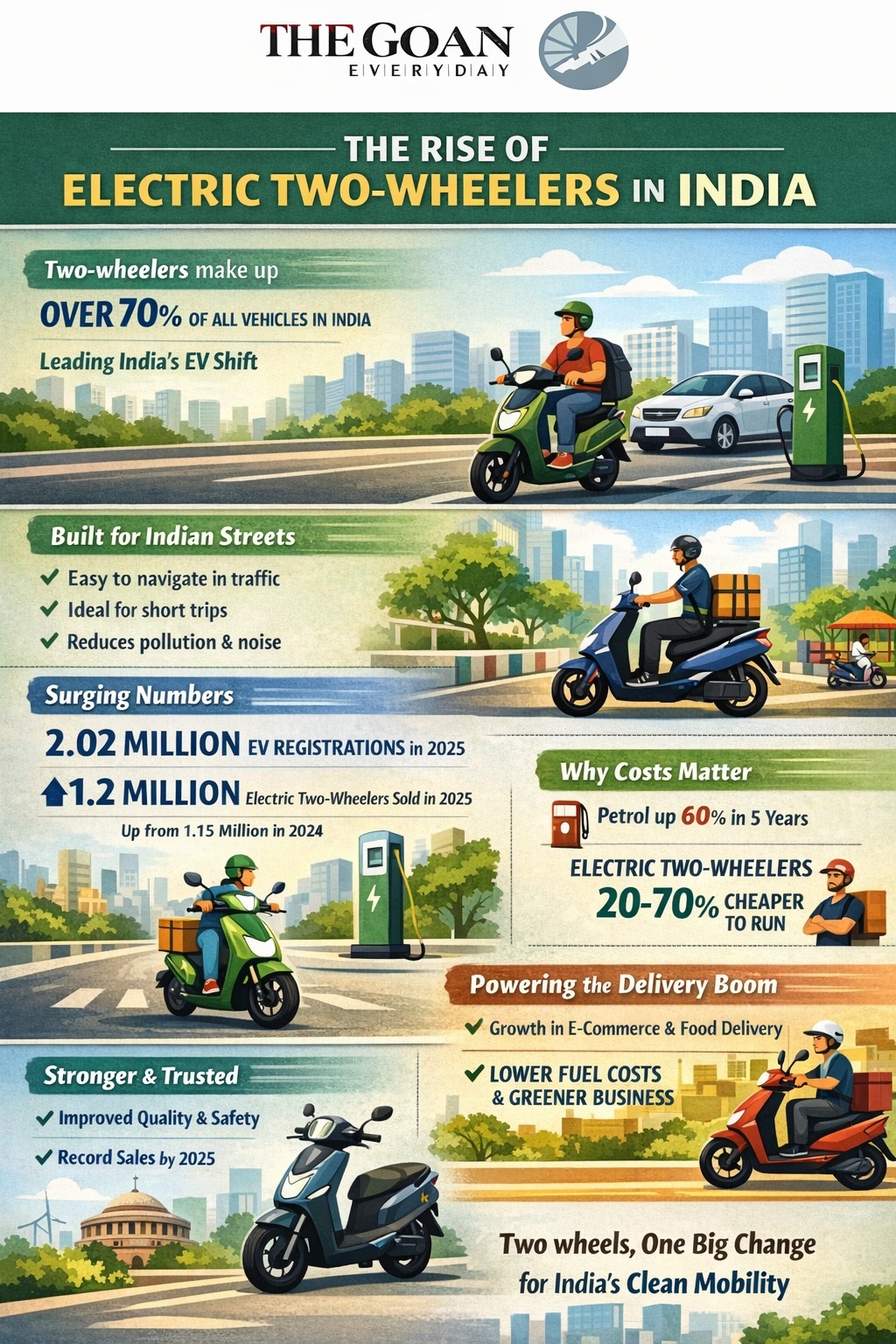
The numbers reflect this change. In 2025, India recorded over 2.02 million electric vehicle registrations, crossing the 1.95 million mark of 2024. Electric two-wheelers drove this rise, with nearly 1.2 million units sold, up from 1.15 million the previous year. This shift is not about trends or slogans. It is about daily needs and practical choices.
Built for Indian streets
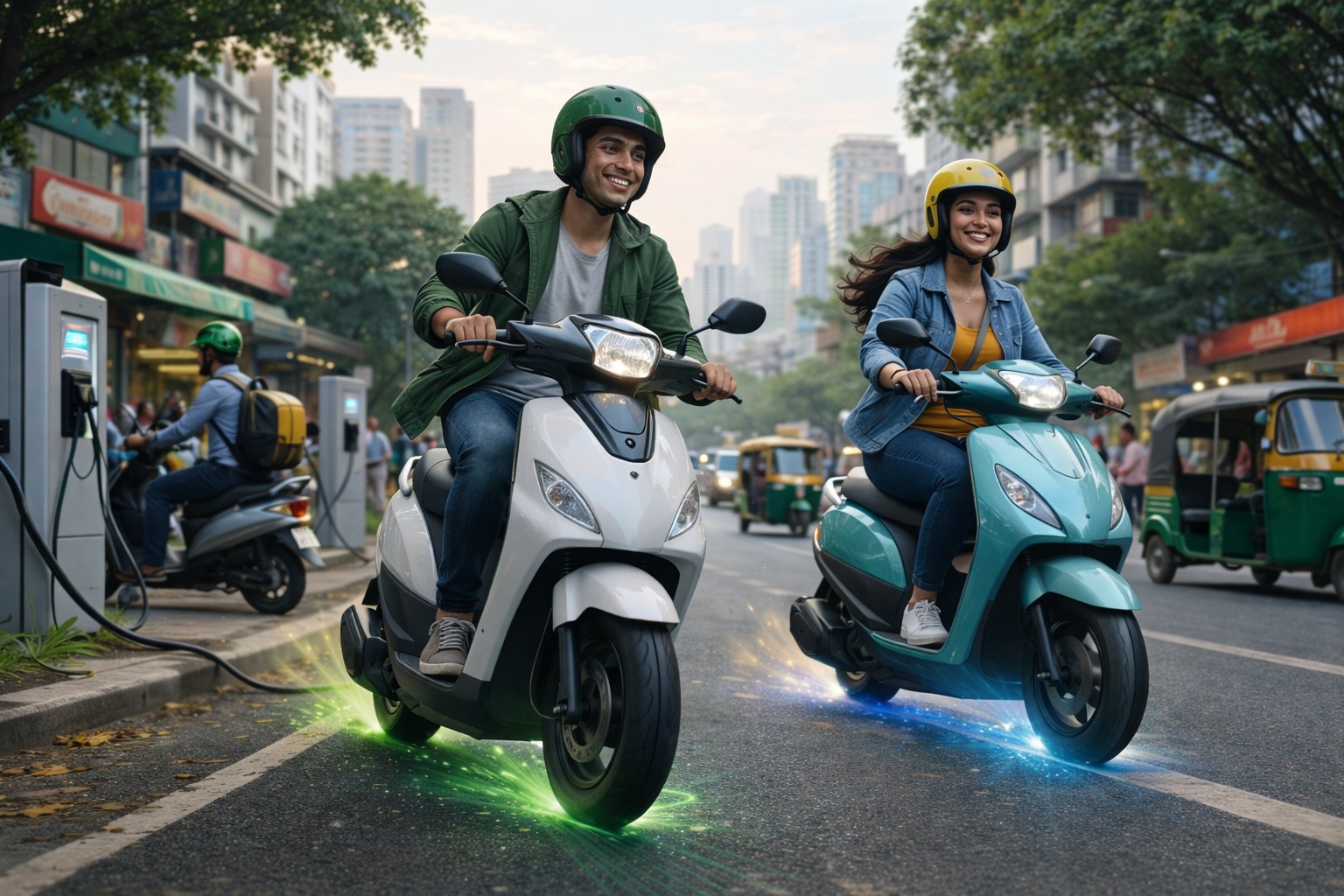
Indian cities favour small, light and easy-to-handle vehicles. Two-wheelers have always fit this requirement. They move easily through traffic, squeeze into tight parking spots and are ideal for short daily trips.
Most journeys in cities are within the range of electric two-wheelers. Charging at home or at work reduces the need to depend on public charging stations. Electric models also help reduce noise and air pollution.
While cars often get the attention, two-wheelers already serve multiple roles — personal transport, shared rides and last-mile connections. Electrifying this segment brings quicker and wider benefits than waiting for large-scale car adoption.
Why costs matter
In India, price plays a major role in buying decisions. This is where electric two-wheelers have an edge over petrol models. Petrol prices have risen by around 60 percent in the past five years, increasing running costs. Electricity, on the other hand, is much cheaper per kilometre.
For daily riders, the savings add up quickly. Research shows that owning and running an electric two-wheeler can cost 20 to 70 percent less than a similar petrol vehicle, depending on usage.
Two-wheelers in India are often work tools rather than luxury items. Electric options are now practical financial choices for students, delivery workers and families.
Powering the delivery boom
The rapid growth of doorstep delivery has changed travel patterns in cities and towns. Food, groceries and parcels are now commonly delivered on two-wheelers instead of trucks. This trend grew during the pandemic and has continued.
For businesses, electric two-wheelers reduce fuel expenses, lower maintenance costs and protect against fuel price swings. They also perform better in crowded neighbourhoods where larger vehicles struggle.
These vehicles can support taxis and public transport by offering flexible last-mile connectivity. India’s clean mobility future will not depend only on private car ownership, but also on millions of kilometres travelled daily for work and services.
Stronger products, growing trust
In the early days, some electric two-wheelers were criticised for quality and safety issues. Sales were low in 2018 and 2019. But the market has matured. Established manufacturers have invested in technology, service networks and financing options.
As confidence improved, sales grew steadily. By 2025, electric two-wheelers had crossed new sales records and formed the backbone of India’s EV expansion.
Policy push and long-term vision
India’s clean mobility efforts align with its climate goals. At the COP26 summit, the government announced an aim to reach net-zero emissions by 2070, and transport is a key sector. Programs such as FAME II, EMPS and PM E-DRIVE have encouraged the shift toward electric mobility. The Union Budget 2026 also highlighted support for battery production, energy storage and raw material processing.
To conclude, while electric cars often get more attention, the real transformation is happening on two wheels. For many households and workers, the change is practical and immediate. India’s clean mobility journey will move ahead through everyday choices made on busy streets — powered increasingly by electric two-wheelers.