Systemic failures exposed by another unforgiving season of heat and hardship
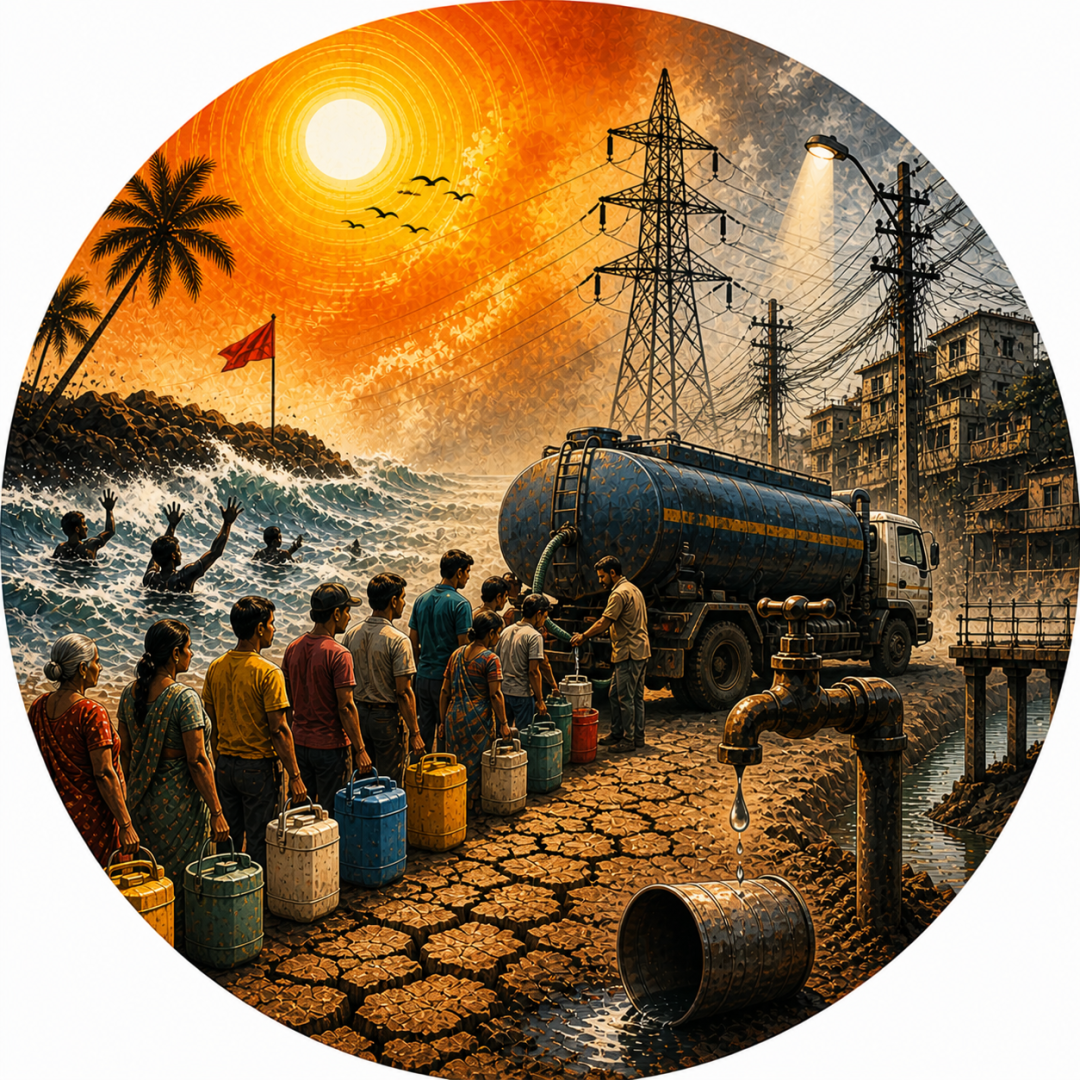
The summer this year feels less like a season of carefree nostalgia and more like a test of endurance. Unlike the “best days of our lives” that Bryan Adams immortalised in Summer of '69, the ‘Summer of 2026’ has been marked by parched reservoirs, faltering power grids, rising health emergencies, and tragic drowning deaths that strip away the joy of the season and demand urgent reflection on resilience and preparedness
====
PANAJI
Every summer brings with it a familiar story: parched reservoirs, faltering power supply, rising health emergencies, and tragic accidents at picnic spots. The summer of 2026 is turning out no different, except harsher, hotter, and more unforgiving.
With the Indian Meteorological Department (IMD) warning of a weak monsoon due to the El Niño effect, Goa finds itself once again grappling with crises that recur annually, with little sign of systemic improvement.
The question is not whether Goa can endure another summer, but whether it can break free from this cycle of annual summer strain.
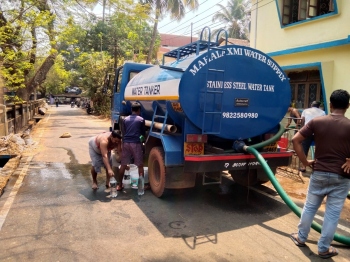
Earlier this week, Goa's Water Resources Minister, Subhash Shirodkar held a press conference where he admitted that the State's reservoirs are under strain — a recurring crisis in the month of May. He said that by late April, water levels had dropped alarmingly, as they do every year before the monsoon, but he assured that there was enough to manage the water supply demand until the monsoon arrives, even if it comes as late as mid-June.
Shirodkar added that the dwindling levels of storage in key reservoirs, particularly Anjunem, will prompt the department to ration the release of water into irrigation canals by up to 50% and prioritise drinking water supply.
Farmers, dependent on timely irrigation of cash crops, may face the brunt and uncertainty, but Shirodkar said those affected will be few.
This is not a new story. Each summer, reservoirs run dry, tanker dependence rises, and the government keeps promising long-term solutions. Yet, year after year, the same cycle repeats.
Meanwhile, the weak monsoon prediction for 2026 does raise an alarm of possible inadequate replenishment and the looming spectre of a prolonged water crisis next summer.
Power woes and cooling discomfort
This year's heatwave has coincided with frequent power outages as well. Homes and offices without functioning fans, air conditioners, and refrigerators have added to the woes of Goans. Businesses have reported an adverse impact, and households are forced to endure disturbed nights when power supply fails.
Goa’s power grid is heavily dependent on imports from the national grid, and the Electricity Department is juggling and struggling to meet demand. Again, like water, the power supply faltering in the summer is a familiar refrain. Every summer, as demand spikes, the grid systemically falters.
Promises of renewable energy investment and infrastructure upgrades have yet to translate into noticeable relief, and the discomfort is real for Goans, especially those who cannot afford generators and inverters.
Extreme heat and health concerns
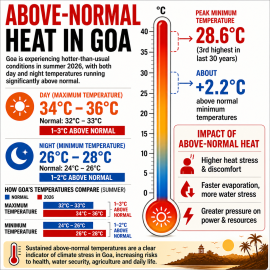
The Ministry of Health and Family Welfare issued a nationwide alert warning of above-normal heatwave conditions between April and June 2026.
The Directorate of Health Services has set up dedicated heatstroke units, stocked oral rehydration solutions (ORS), and has sent out advisories through its network of primary and community health centres that vulnerable groups — the elderly, outdoor workers, and children — stay away from direct sun, particularly during the 12 noon to 4 pm afternoon hours.
Several doctors practising in the private sector we spoke to said there was a marginal rise in cases of dehydration, heat exhaustion, and cardiac events. They stressed that prolonged exposure to high temperatures increases the risks of hypertension and heart attacks.
Beyond clinical cases, the general population has been suffering the usual discomfort of hot and humid weather: fatigue, irritability, and reduced productivity.
These health concerns, too, recur every summer, with hospitals bracing for predictable surges. Yet preventive measures from civic authorities in Goa's towns and villages, such as shaded public spaces, awareness campaigns, and cooling shelters, are non-existent and nowhere on the radar of the State's planners.
Rising risks at Goa's summer escapes
As the mercury rose, families and youth flocked to rivers, waterfalls, and forested picnic spots in search of relief. Tourism operators noted a seasonal surge, but the rising incidents of drowning, often linked to reckless swimming or ignoring safety precautions, have alarmed the State and the authorities.
The numbers tell a grim story: in just the first 115 days of 2026, Goa recorded 44 drowning deaths. Only 10 of these happened along the coast at sea, while 34 occurred in rivers, canals, quarries, and other inland water bodies.
The victims in these incidents included 28 locals, six tourists, and 11 migrants, indicating that both residents and visitors are at risk. Additionally, lifeguards saved 41 lives at beaches during the same period, but inland sites lack any comparable safety presence.
"How can we guard every such spot? The canals, for instance, have a length of hundreds of kilometres," rued an official of the tourism department.
Recent tragedies underline this danger. Two youths, Iosias Sharry (24, Fatorda) and Harjitsingh Dhanu (22, Uttarakhand), drowned in a canal at Quepem after misjudging the current. In Bhatpal, Canacona, two children aged 11 and 7 drowned while swimming in the Vazhe river. In the north-eastern interiors of Sattari taluka, rivers like the Mhadei have become notorious for accidents, often linked to alcohol consumption and reckless swimming.
These inland water bodies are deadlier because, unlike beaches, they have unpredictable depths and currents, no lifeguards, and few warning signs.
In South Goa, despite prohibitory orders against swimming in natural water bodies, enforcement continues to remain lax. The instinct to escape the heat drives crowds to these sites, but the absence of safety infrastructure turns the expected relief into a serious risk.
Authorities, meanwhile, have contemplated comprehensive water safety measures in the past, including trained volunteers at village level, lifesaving equipment, and warning signage at some of these dangerous spots. However, the sheer logistical requirements to implement such a mechanism across the State's hinterland have ensured that the plans have remained only on paper.
Dudhsagar waterfalls, a major attraction for both tourists and locals in the summer, is perhaps the only spot adequately manned for water safety.
Govt response: Promises sans progress
The Goa government convened high-level meetings in Panaji, led by Revenue Secretary Sandip Jacques, IAS, to coordinate a heatwave response system. Departments were ordered to appoint nodal officers, ensure clean drinking water in public areas, and provide medical kits. The IMD was tasked with issuing faster updates. These measures are welcome, but they echo similar announcements made in previous summers.
The pattern repeats: reactive steps taken in the midst of crisis, followed by a return to complacency once the monsoon arrives. Without sustained and long-term planning, Goa risks reliving the same summer woes year after year.
As the monsoon clouds approach, possibly later than usual due to El Niño, Goans will wait for relief with perhaps the same longing captured in Bryan Adams’ Summer of ’69. But instead of carefree “best days,” the summer of 2026 has been marked by shortages, crises, and drowning deaths. This season won’t be remembered for beaches or picnics, but for the reminder that nostalgia and hope alone cannot solve these recurring summer problems. Whether Goa can make next year a true “summer to remember” will depend on breaking this cycle, with the government working on lasting solutions.