My PhD taught me things no classroom ever could, patience, resilience, and the ability to sit with failure without giving up. It changed how I think, how I work, and how I see myself
GLOBAL GOENKARS IN FOCUS
MONTRÉAL
Every day, businesses face difficult decisions — how to schedule workers, plan deliveries, or manage resources efficiently. These are optimisation problems, and solving them well can make a real difference.
When I began my PhD in Montréal in 2020, that was exactly what I set out to do. In my field, a PhD involves designing algorithms that can help tackle these complex problems. I began this journey with a lot of excitement and high expectations, quietly hoping to change the world with my research.
Year 1: Humble beginnings
The first year was very different from what I had expected. I had just left Goa for the first time,
and adjusting to life in Montréal — a new country, a new culture, a new language — was itself a full-time job. On top of that, COVID-19 hit right at the start. I had just moved, and suddenly everything shut down. There was very little interaction, and life felt isolating. It was not the start I had imagined.
The year also involved coursework and slowly understanding what research really means. Even finding a research problem was not easy — in research, the problem itself is often unclear, and you are expected to make a novel contribution.
By the end of the year, I had defined my research problem, but I had also understood something important: I was not going to change the world quickly. It is a much longer journey, one that takes time, patience, and persistence.
Year 2: Year of Failure
Due to COVID, I returned home to Goa and continued my work remotely. Managing time zones
was difficult — there were days when I stayed awake until 5 am just to attend meetings and
classes, sitting in my room at home while the rest of the family slept. During this time, I was
trying to teach a computer to make smart decisions on its own — a technique called reinforcement learning. I spent almost a full year on it, but in the end, it simply did not work. There was nothing to show for all that effort.
On top of that, working remotely made it harder to communicate with my supervisors, and progress felt invisible. After two full years into the PhD, I had nothing concrete to show. This was the phase where doubts began to creep in. Would it always be like this? Would I ever find a solution, or even be able to finish?
Year 3: Fall and the Rise
After the failed attempt, I shifted to a new direction — pure mathematical theory. The goal was to prove that my problem was fundamentally hard to solve, essentially showing that no computer in the world could solve it perfectly in a reasonable amount of time. This kind of work involves building theorems and lemmas — essentially long chains of logical arguments, where one small mistake can bring the whole thing down. I had never done this before.
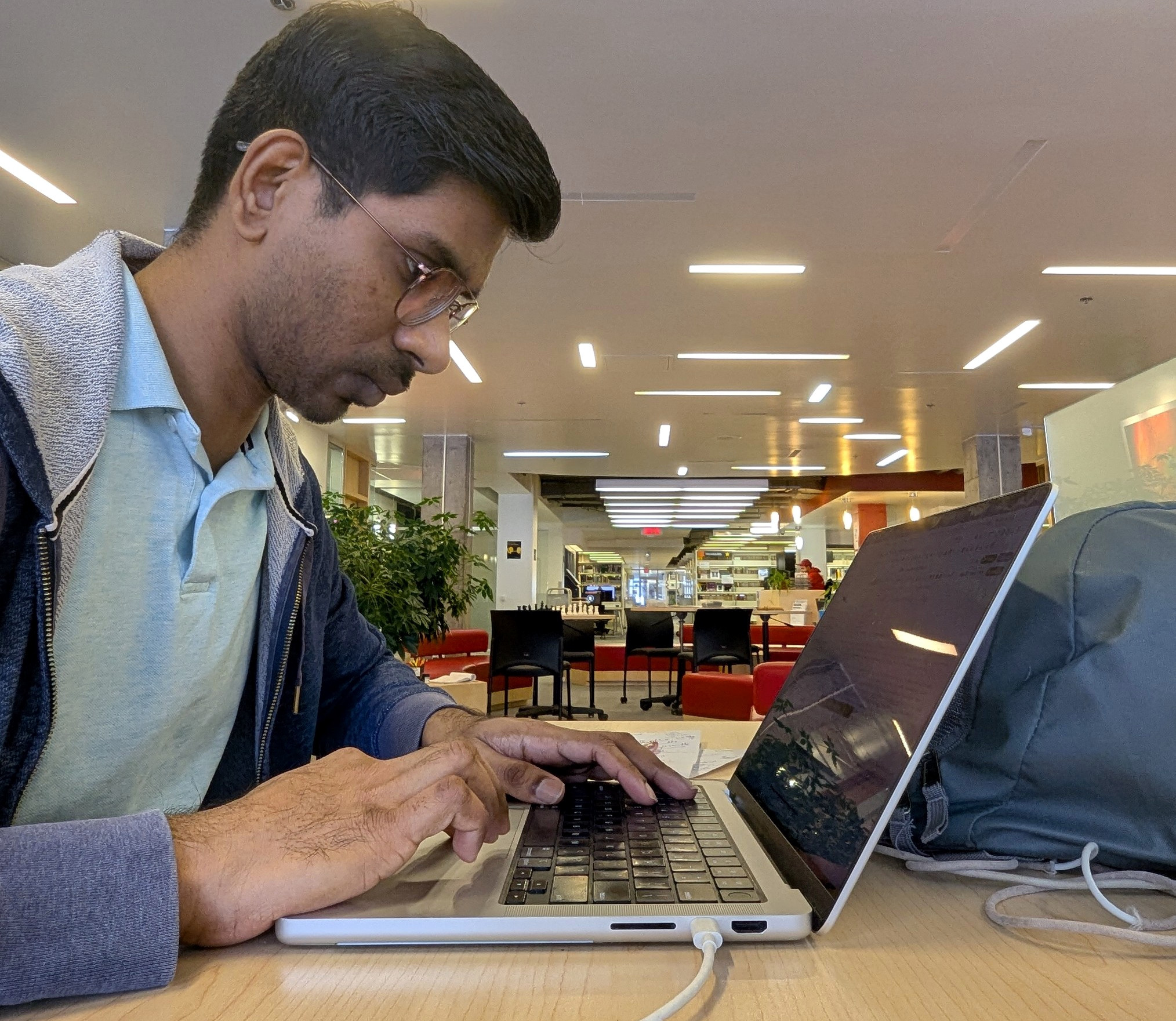
Progress was painfully slow. Unlike coding, where you can at least show partial results, here it was all or nothing — either the proof worked, or it did not. Most of the time, it did not. There was a phase where I seriously doubted whether I could finish. My supervisors suggested I take a break and rethink things. So I stepped away completely for two weeks — no research, no papers, nothing.
When I came back, I gave it one last honest try. And then one afternoon, sitting alone at my desk, the key idea suddenly clicked. I could not believe it at first. When I explained it to my supervisor, he listened carefully and said just one word: Eureka. That single word, after months of failure, made everything worth it.
Year 4: Finding my feet in research
I wrote my first research paper and submitted it to Management Science — one of the most
respected journals in my field. It was rejected. The work itself was not wrong, but I had not presented it well enough. That is when I learned an important lesson: research is not just about solving problems. It is also about explaining them clearly — why they matter, who they help, and how they fit into a bigger picture.
This was the year I began to truly understand what research means. At the same time, I worked on a second project. This time, I learned from my past mistakes. Things moved faster, and I completed another paper. For the first time, I could see the finish line.
Year 5: The Finish Line
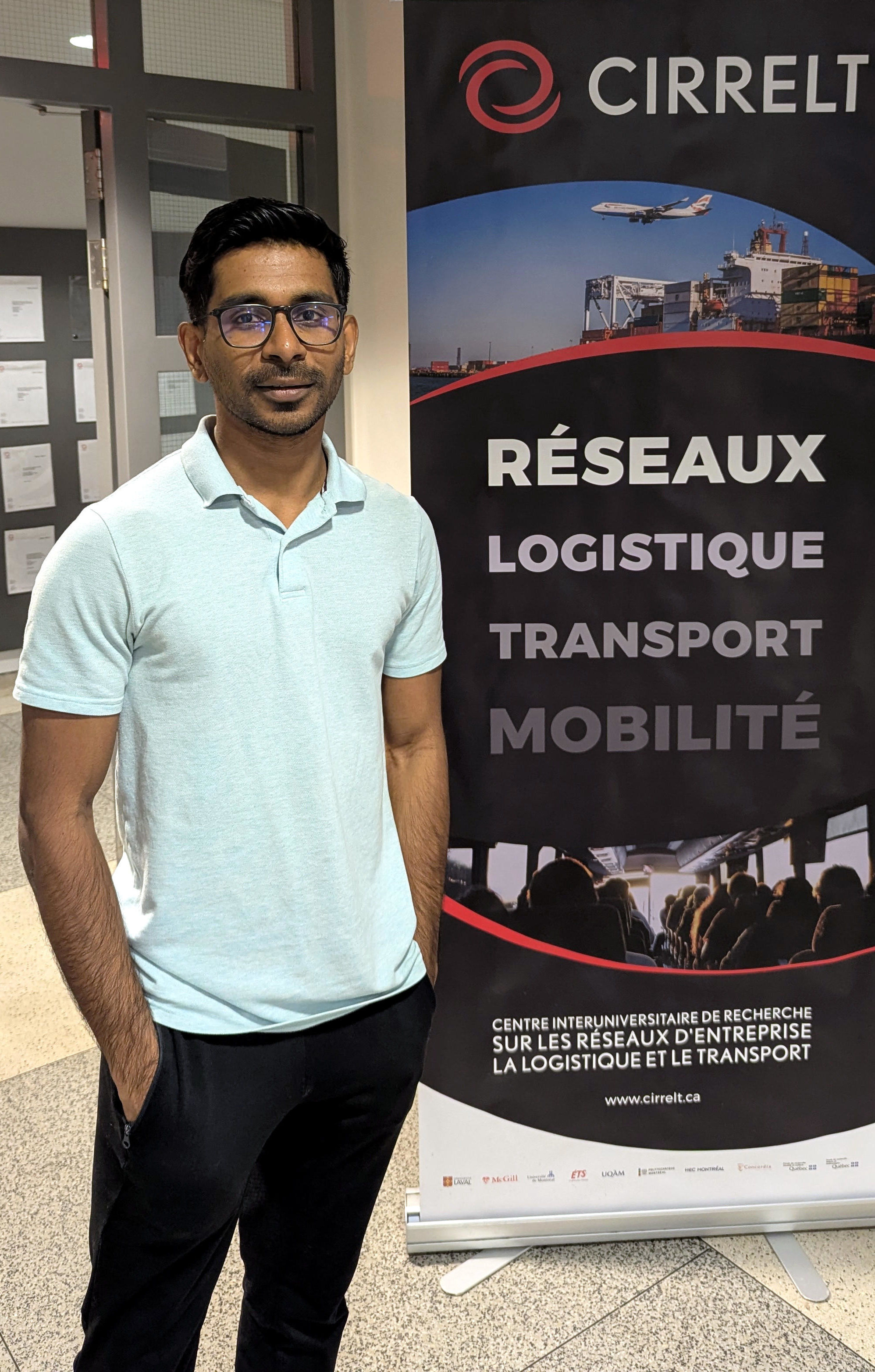 The final year was more stable. I spent time reading more, understanding the field better, and completing my thesis. I also had the opportunity to present my work at conferences in Europe — from Sweden to Italy — meeting researchers from across the world and seeing my work receive recognition for the first time. In the last few months, I focused only on writing.
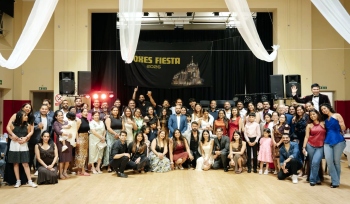
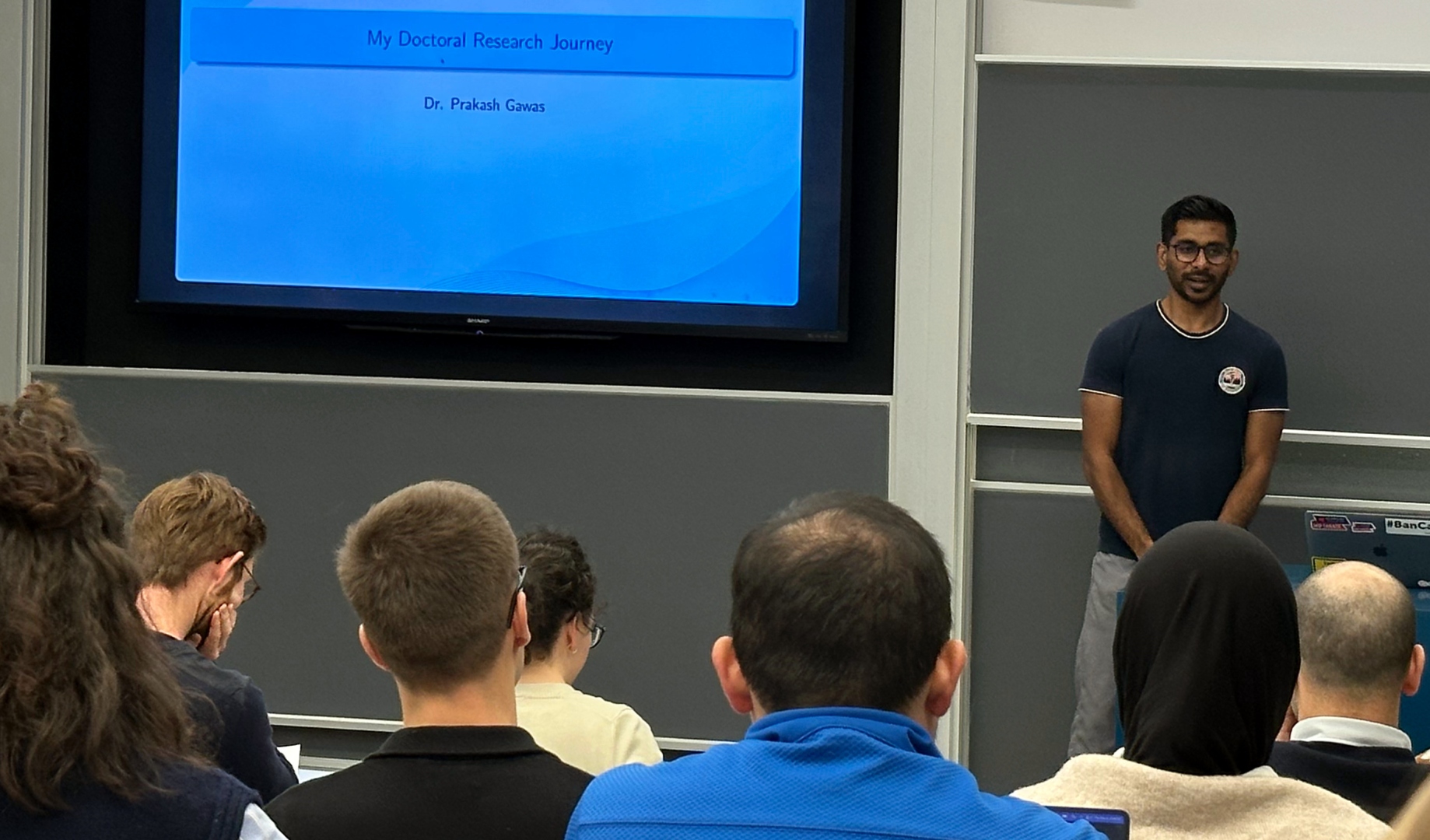
Everything else became secondary. The goal was simple: finish. The defence day arrived. I had invited everyone I knew and asked them to wear yellow. To my surprise, the room was filled with it — friends, colleagues, and well-wishers, all in yellow. There were many questions, some of them tough, but I answered them with confidence. Nobody knew this research better than I did. At the end, I was awarded my PhD. Five years of hard work, doubt, failure, and persistence had led to this single moment. I was Dr Prakash Gawas.
Looking Back
At some point during my PhD, I realised that work alone was not enough. The gym, running, cycling, ice skating, and cooking were not hobbies I planned—they became survival tools. On the hardest days, stepping away from research helped more than pushing through. Looking back, the PhD taught me things no classroom ever could—patience, resilience, and the ability to sit with failure without giving up. For students starting their PhD journey, my biggest suggestion is simple: stay patient and take care of yourself along the way. Research rarely moves in a straight line and progress may not be visible, but over time, you learn to think independently and keep moving forward even when the path is uncertain. From Mapusa to Mumbai to Montréal—the journey has been long, unexpected, and worth every moment.
Hailing from Chandel in Pernem-Goa, the writer completed his M.Tech from the IIT Bombay and a PhD in Applied Mathematics and Operations Research at Polytechnique Montréal, Canada. He is currently a post doctoral researcher at GERAD, a research lab in Montreal.