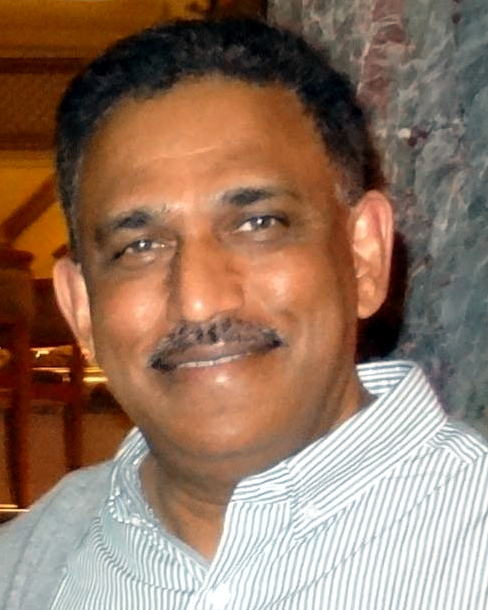
 The writer is professor at Columbia University in the USA who hails from Cortalim
Before leaving East Africa, my mother, a wonderful cook and gifted baker, packed large Macintosh chocolate tins with cakes she hoped would sustain us through our first uncertain days in Goa. None of us understood tropical humidity then. She imagined those tins would carry a small sense of familiarity into an unfamiliar life.
But when the first tin was opened in Cortalim, a thick cloud of fungal spores rose into the air. Somewhere during the long voyage across the Indian Ocean, every carefully packed cake had quietly surrendered to Goa’s humidity before we ever reached home.
It was perhaps our first lesson that Goa, though beautiful, was also raw, humid and unforgiving in ways East Africa had not prepared us for.
I do not wish to romanticise those years. Many returning families arrived to lives far harsher than the ones they had left behind. There was no running water. Water came from neighbourhood wells. Our home had no electricity. Kitchens blackened with firewood smoke. Children studied beneath kerosene lamps while moths circled weak yellow flames.
FRIENDSHIP, FOOD, FAITH
Many East African returnees lived with enormous uncertainty. Men who had held respectable jobs abroad suddenly found themselves unemployed in villages where opportunities barely existed. My father too had no obvious profession waiting for him in Goa.
So each morning he waited for the English newspaper to arrive.
At first, only a few neighbours gathered on our balcony in Cortalim: Daadhi from Quelossim, Bappa from Sancoale and Ramachandran, an old family friend. None of them read English fluently, so my father translated world events into Konkani ” politics, the Pakistan-Bangladesh war, elections and village gossip. Soon fishermen, farmers and factory workers joined them. Without intending to, my unemployed father had created what today would probably be called a reading club.
My mother loved those mornings. She served endless cups of tea blended from leaves bought at Tea Corner near Grace Church in Margao. Conversations drifted effortlessly into lunch. Daadhi brought fresh fish from Quelossim. Bappa sometimes arrived carrying bhaji or chicken xacuti packed by his wife. Religion rarely entered those gatherings because life itself felt larger than identity.
We children barely understood the emotional and financial burdens our parents carried. We did not realise we were surviving partly on savings and money quietly sent from Kenya and England by older siblings. Nor did we understand how disorienting adaptation had been for them. Yet somehow life reorganised itself gently around friendship, food, faith and community.
BELONGING TO ONE ANOTHER
Despite hardship, there existed around us a kind of emotional abundance that compensated for material scarcity.
Doors remained open. Meals were shared easily. Neighbors drifted in and out without ceremony. Conversations stretched late into evenings across balconies, tavernas and village roads. People possessed very little, yet somehow belonged more deeply to one another.
Every home seemed open. Hindu homes. Catholic homes. Homes where altars carried both images of Christ and framed pictures of Hindu deities without anyone appearing troubled by the contradiction.
At catechism we were taught religion in neat and separate categories: one God, one path, one truth. But outside church walls, Goa quietly operated by gentler and more complicated rules.
Post offices, tavernas, panchayat buildings and bus dashboards carried both crosses and pictures of Shantadurga, Mangueshi or Ganesh. Roadside shrines mixed flowers, incense, candles and coconuts in ways outsiders might struggle to classify. Hindu shrines stood beside crosses beneath banyan trees as though history itself had negotiated a quiet settlement.
Nobody seemed troubled by it.
One of my closest childhood friends lived near Japan Bazaar, Cortalim. His father owned a pickup truck that ferried fisherwomen and vegetable vendors between our village and the markets of Margao. A few months after we arrived, I accompanied the family to the Shri Mangeshi Temple after they purchased a second vehicle. The pickup had already been blessed at the Church of St Philip and St James in Cortalim but was now being taken to the temple as well.
During the darshan, the priest suddenly paused and asked whether someone from “Kutthalli,” the ancient name for Cortalim, was present. Though born in Kenya, I was gently escorted forward after it emerged that my ancestors had been among the village’s earliest converts centuries ago.
Only later did I understand the deeper meaning of that moment.
Goa’s story was never as simple as the categories we inherited later. We were not strangers confronting one another across civilisations. In many cases, we were descendants of the same families who had simply moved differently through history. Some retained older traditions. Others adapted to changing rulers and political realities. Yet beneath those shifts, ancestral memory remained connected.
POROUS RELIGIOUS BOUNDARIES
Perhaps that is why Goa’s religious boundaries still feel unusually porous.
The annual exchange between Milagres Saibinn of Mapusa and Goddess Lairai of Shirgao remains among the most profound expressions of that coexistence. During the feast of Milagres Saibinn, devotees from the Lairai temple send sacred coconut oil for the anointing rituals. During the Shirgao Zatra, the Christians reciprocate with baskets of jasmine flowers beloved by the goddess. These are not performances staged for tourists. They are living traditions quietly sustained across generations.
Even today, roadside crosses across Goa are venerated through rituals that blend Hindu and Catholic practices seamlessly. Candles burn beside coconuts and flower garlands. Saint Anthony appears beside Ganesh in home altars. Harvest offerings arrive at churches just as they do at temples.
And this is why many Goans feel deeply unsettled by attempts to import harsher and more confrontational forms of religious identity into a society that evolved differently.
Yes, colonial rule caused suffering. Temples were destroyed in some places. Families migrated. Conversions occurred under varying circumstances across centuries. But what makes Goa unique is not merely the history of rupture. It is the civilisation that emerged afterward.
There are no Portuguese rulers left here now. Only Goans remain.
So one wonders what those now seeking to inflame religious divisions hope to achieve. Why reopen wounds ordinary villagers spent centuries quietly healing? Why import grievance into a society that learned long ago that coexistence was not weakness but survival?
Goa’s greatest achievement was never religious victory. It was coexistence, fragile, imperfect and deeply human, built not by politicians or ideologues, but by fishermen, mothers, tea drinkers, village priests, temple caretakers and neighbours who understood that kindness mattered more than inherited anger.
That inheritance remains Goa’s most fragile and most beautiful truth.