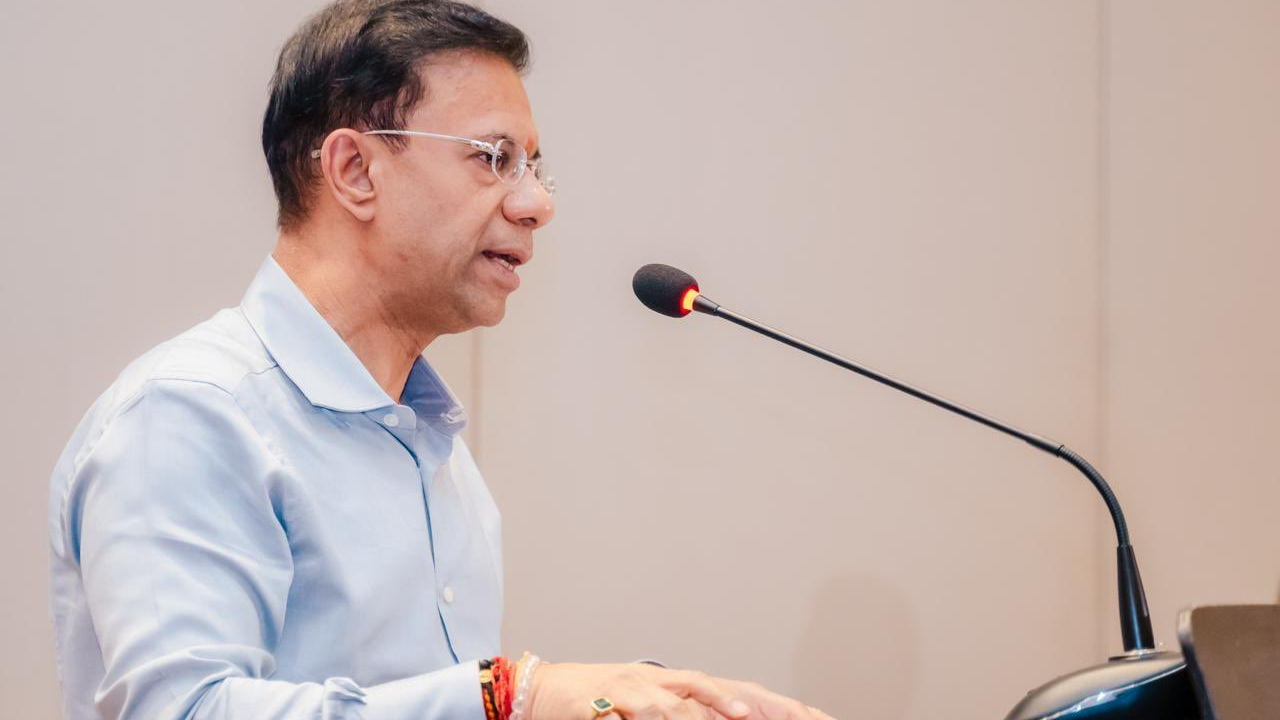
PANAJI: The Goa government plans to make artificial intelligence–based screening mandatory alongside every chest X-ray taken in public hospitals, Health Minister Vishwajit Rane said, as the state scales up India’s first AI-powered lung cancer screening pilot.
Addressing a joint press conference today ahead of World Cancer Day, Rane said Goa has already screened over one lakh chest X-rays using AI with the support of AstraZeneca and Qure.ai, identifying thousands of critical lung nodules and cutting diagnosis time by more than 50%.
He said Goa is among the first states in the country to scale AI-enabled lung cancer detection across primary health centres (PHCs) and community health centres (CHCs), using existing public health infrastructure.
“This is a major milestone for public healthcare in Goa. AI allows us to detect disease earlier, reduce delays in diagnosis, and save lives,” Rane said.
The AI tool has been integrated into routine chest X-rays taken for common conditions such as pneumonia or general health checks. Officials stressed that no new test or additional burden is placed on patients.
According to the Health Department, AI-enabled screening is currently operational at 17 centres across the state, including Goa Medical College.
Chief Medical Officer of NCDC and DHS, Dr Sandesh Madkaikar, said 1,08,474 chest X-rays have been screened so far.
“About 1,650 suspected nodules were identified, and 20 lung cancer cases have been confirmed through CT scans and biopsy. Early detection and early treatment are key,” he said.
Founding Member and Chief Product Officer of Qure.ai, Ankit Modi, said lung cancer continues to be widely misdiagnosed in India.
“Nearly 40% of lung cancer cases are mistaken for diseases like tuberculosis. Of the cases that are diagnosed, almost 80% are detected at very late stages, where survival rates can drop to as low as 5%,” Modi said.
He said AI has effectively been placed in surveillance mode across Goa’s public health facilities.
“We’ve screened about one lakh people, roughly 5% of Goa’s population, without adding any new tests or infrastructure. We simply made chest X-rays smarter,” he said.
Modi said the same AI platform could be expanded to detect tuberculosis, COPD, and heart failure using existing X-rays. He added that the AI software has over 99% accuracy in flagging lung nodules and categorising malignancy risk, while stressing that chest X-rays remain a screening tool and all suspected cases must be confirmed through CT scans or biopsy.
Managing Director and Country President of AstraZeneca India, Praveen Rao Akkinepally, said Goa’s programme represents a shift in how cancer screening can be scaled within the public health system.
“Early detection is the biggest challenge in cancer care. One lakh AI-screened X-rays is not just a number; it’s a paradigm shift. Goa is showing how this can be done for the rest of the country,” he said.
AstraZeneca confirmed it is working on similar initiatives in other states, but said Goa remains the most advanced in terms of scale and implementation.
Rane said a file has already been moved to notify all government hospitals that every chest X-ray will, by default, undergo AI screening.
“Our target is to complete more than two lakh AI-assisted X-ray screenings by the end of 2026. Goa wants to lead the way and become a model state for AI-driven diagnostics,” he said.
Rane also said the Prime Minister’s Office is closely monitoring the construction of the upcoming cancer hospital in Goa, being developed in collaboration with Tata Memorial and scheduled for completion by 2027. The project is expected to be fast-tracked in the coming days.