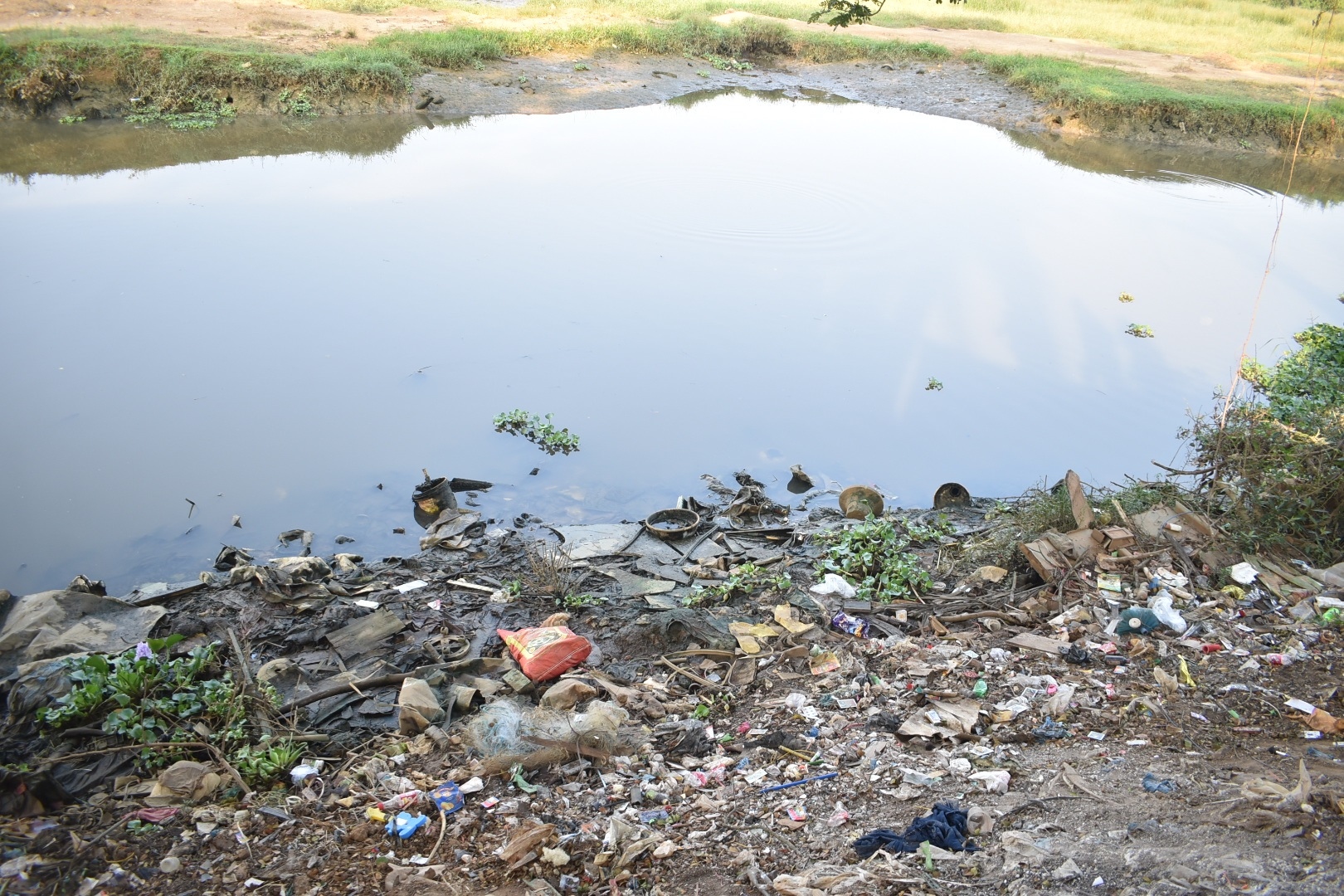
Waste from the scrapyard at Benaulim flowing into River Sal.
MARGAO
The scrapyard operating on the banks of River Sal at Benaulim was not only carrying out its activities without the consent of the Goa State Pollution Control Board (GSPCB) to operate the unit but the waste from the unit was disposed of into the River Sal, Salcete’s lifeline.
A glance at the report compiled by the GSPCB, which ordered the closure/sealing of the scrapyard last week, clearly revealed that solid waste and ceramic waste were disposed of into the River Sal from the unit run by Ms Nikhil Traders. “The unit Nikhil Traders is located approximately three metres away from the River Sal,” the report stated.
The GSPCB inspection revealed that the unit had constructed a toilet with a septic tank/soak pit very close to the River Sal, adding that the bathroom waste was disposed of into the river by pipe.
As far as the glass bottle scrap unit is concerned, the GSPCB report stated that the unit is located at a distance of approximately three meters away from the River Sal. “The unit has piled heaps of collected glass very close to the River Sal with a temporary net fence. Solid waste disposal into the River Sal is found behind the unit. The unit has employed three workers, but has not provided any toilet facility to the workers,” the report further stated.
The GSPCB report made it amply clear that none of the three scrap units in the scrap yard have the Pollution Control Board’s authorisation/consent to operate the activity, with the report further stating that the three units are not fulfilling the GSPCB waste collector guidelines.
The GSPCB inspection and subsequent action for the closure/sealing of the scrapyard has only raised the question of how this activity, just three meters away from the River Sal, had escaped the attention of the authorities, including those in power.
This assumes significance and comes against the backdrop of attempts made by those in power to save the River Sal from acute pollution. While it is an open secret that raw sewage and wastewater from the neighbouring commercial capital find their way into the River Sal, scrap waste disposal in the water adds another dimension to the pollution of the river, with questions raised as to whether the authorities have checked scrapyards operating on the banks of River Sal along the Margao and Benaulim river course.