Local bodies claim a lack of land, manpower and funds
MAPUSA
As the State government races to comply with Supreme Court directions on stray dog management, a widening gap has emerged between policy planning and ground-level implementation, with village panchayats and municipalities claiming they lack the funds, manpower and land required to tackle the growing stray dog menace.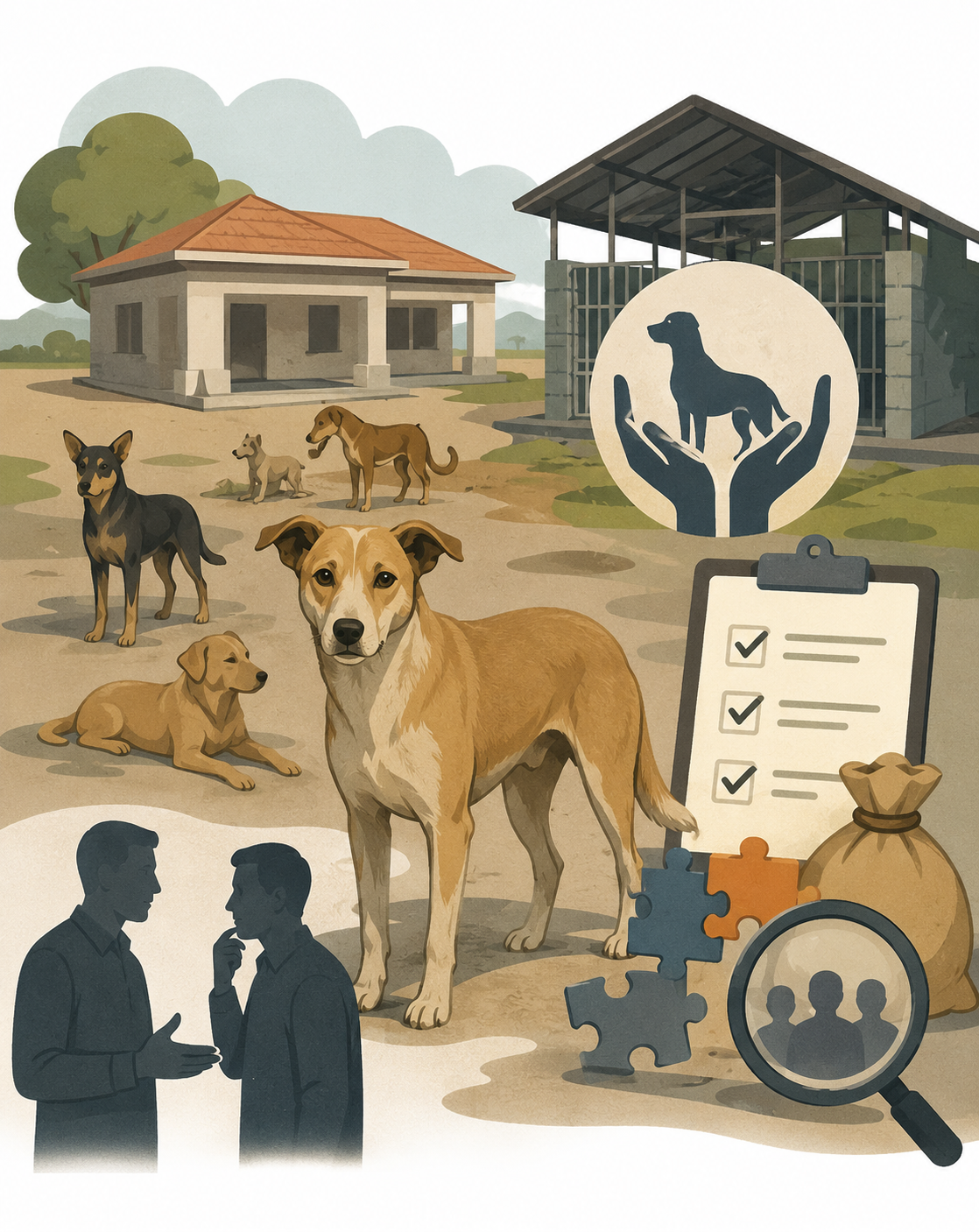 The State administration has initiated steps to identify stray dog hotspots and areas reporting frequent dog-bite incidents, besides appointing nodal officers to oversee coordination and compliance.
However, officials have made it clear that the primary responsibility for managing stray dogs rests with local self-government bodies.
"The primacy of these directions of the Supreme Court is with the local bodies. Our role is to coordinate between different stakeholders such as local bodies, schools, the transport department, tourism department, markets and other agencies," Secretary for Animal Husbandry Agnelo D'Souza said.
However, several panchayat representatives say they remain uncertain about their exact responsibilities and have received little guidance on how the directions are to be implemented.
Calangute Sarpanch Joseph Sequeira said the legal framework remains unclear and that no specific orders have been issued to panchayats regarding the establishment of shelters or management of stray dogs.
"Our panchayat has no land available to build a shelter for stray dogs. We struggled even to find space for a material recovery facility. Ultimately, we had to rent private land to manage our waste segregation operations," Sequeira said.
Officials from other local bodies echoed similar concerns.
A secretary of a coastal panchayat, speaking on condition of anonymity, said it would be virtually impossible for individual panchayats to establish and maintain dog shelters.
"It is a herculean task for any panchayat. There are no resources, no trained staff and no land. The government should formulate a policy to establish at least one major shelter each in North and South Goa. That would address a significant part of the problem," the official said.
The concerns highlight a critical challenge facing the State's compliance efforts.
While the Supreme Court has stressed the need for effective management of stray dog populations, many local bodies contend that they have neither the financial capacity nor technical expertise to undertake such measures independently.
Responding to the concerns, D'Souza said funding support could be routed through government departments.
"A weaker panchayat can be provided grant-in-aid through the Directorate of Panchayats, while weaker municipalities can receive support through the Department of Urban Development. There is also an existing scheme under the Directorate of Animal Husbandry for the construction of animal shelters, which local bodies can avail," he said.
For now, the government's compliance roadmap may be taking shape on paper, but panchayats warn that without resources and institutional support, the stray dog problem will continue to outpace solutions.