MAPUSA
A silent but significant churn is underway at the Our Lady of Miracles church in Mapusa, where the clergy has begun a calibrated push to dismantle long-standing beliefs and rituals associated with the iconic Milagres Saibinichem Fest.
With the April 20 feast approaching and novenas already underway, the priests attached to the church have been using the pulpit to question what they describe as “irrational” practices “ signalling a shift from passive accommodation to active correction.
For decades, the feast has drawn devotees cutting across communities, with a popular belief that Our Lady of Miracles shares a sibling bond with Lairai Devi of Shirgao “ a narrative often seen as a symbol of Goa’s syncretic culture.
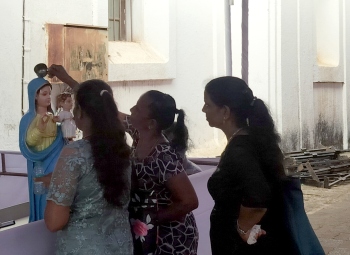
The belief has also shaped ritual practices, including the pouring of oil on the statue of Mother Mary.
That ritual “ observed widely by non-Christian devotees and, over time, adopted by some Catholics “ is now at the centre of the church’s pushback.
The priests in the church have categorically rejected both the belief and the practice, stressing that such interpretations have no basis in Christian faith. They have questioned how such narratives took root and why sections of the Christian community continue to follow them.
Yet, the church’s approach has been notably cautious. There has been no official public statement, no media engagement “ keeping the discourse largely within the congregation.
Voices from
the ground
“This is centuries old practice. Pouring oil is what we have always done. More importantly we have copied this practice from the Christians themselves,” said Adv Satish Rao, a Mapusa-based Hindu devotee, adding that the belief linking the two deities “comes from faith, not logic.”
A Catholic parishioner, however, welcomed the priests’ intervention.
“If something is not part of our religion, then we should not be doing it. The priests are right in guiding us,” said Peter D’Sa, a resident of Angod, Mapusa.
A city-based educationist noted that such beliefs often emerge organically.
“These are not theological positions but cultural negotiations. Over time, communities create bridges to coexist. The Milagres“Lairai link is one such example,” he said, adding that attempts to “correct” them can sometimes unsettle established social harmony.
Sources within the parish maintain that the clergy’s focus is internal.
“They are not questioning other communities. The message is for Catholics “ to follow doctrine, not inherited customs,” a source said.
At the same time, the priests have reportedly expressed concern over sections of the media for amplifying false narratives, which they believe contributed to their wider acceptance.
For generations, the Milagres feast has stood as a symbol of shared traditions, where faith and folklore often overlapped.
As the feast day approaches, it remains to be seen how devotees respond to the church’s call for doctrinal clarity over customary practice.