


PANAJI
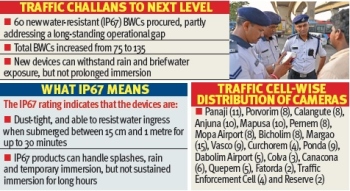
Goa, the first State in the country to mandate the use of body-worn cameras (BWCs) by Police Inspectors (PIs) and Police Sub-Inspectors (PSIs) for issuing traffic challans, has strengthened its enforcement system with the procurement of 60 additional water-resistant devices “ partially addressing an operational shortfall highlighted nearly 18 months ago.
Officials stated that the new BWCs carry an IP67 rating, which provides protection against dust and allows the units to withstand rain or brief exposure to water. However, the devices cannot be used for sustained immersion or long hours, meaning the monsoon challenge that previously disrupted enforcement persists.
With the latest procurement, the total number of cameras has increased from 75 to 135. The previous batch, introduced in July 2024, did not have any form of water resistance or waterproofing, forcing traffic personnel to shield devices with umbrellas or temporarily discontinue their use during intense rain spells.
“We have already procured an additional lot, which are water-resistant devices… The main purpose is to maintain transparency, as every movement and interaction is recorded. It has also helped to avoid allegations against my staff,” SP Traffic Prabodh Shirvoikar told The Goan.
The procurement follows Chief Minister Pramod Sawant’s announcement that all Traffic PIs and PSIs would be equipped with BWCs to improve transparency, public safety and traffic regulation, especially during the peak tourist season.
Former Superintendent of Police (Traffic) Rahul Gupta had earlier admitted that the primary drawback was the inability to use the cameras in rain, adding that the department was exploring waterproof models to address the issue.
Another senior officer explained the current fleet of devices is still helpful for heavy rains and dry weather. “We are aware that it cannot be submerged in water for long hours, but the devices are more than enough for use during the rains,” an officer told The Goan.
More than 120 traffic personnel are currently authorised to operate the cameras on a rotational basis and issue challans.
Shirvoikar added that besides PIs and PSIs, ASIs on field duty are also equipped with the devices. However, the ASIs are not permitted to issue challans and instead report violations to senior officers, based on which action is taken.
The introduction of body-worn cameras followed a series of controversies in 2023, including allegations related to a GPay scam and e-challan machines being logged in simultaneously on multiple devices at different locations.
On data security, SP Shirvoikar said personnel have been trained in standard operating procedures and safety protocols. Recorded footage is downloaded and stored on each Traffic Cell in-charge’s computer, with the respective PI responsible for its custody.


