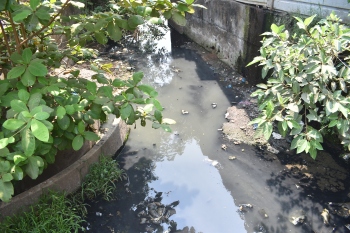
 A storm water nullah at Khareband carrying sewage water to the river Sal.
MARGAO
The long-feared contamination of the River Sal by sewage discharge has now been officially confirmed.
A joint inspection carried out by the Goa State Pollution Control Board and other government agencies has revealed that sewage water is flowing through Margao’s storm water nullahs before eventually emptying into the River Sal, raising fresh concerns over pollution levels in one of South Goa’s most important water bodies.
In a series of recommendations issued after the inspection, the GSPCB has directed the Margao Municipal Council and the Margao Urban Health Centre to jointly undertake an extensive verification drive in areas stretching from Boshe Circle to Comba. The agencies have been asked to inspect houses and residential complexes to determine whether they possess functional septic tanks and soak pits or are connected to the underground sewerage network.
The pollution control board has also sought strict scrutiny of larger housing complexes comprising 25 flats or more. Authorities have been instructed to verify whether these complexes have functional Sewage Treatment Plants (STPs) in place or are linked to the sewerage system, in compliance with environmental norms.
In another key recommendation, the GSPCB has directed the MMC and the Urban Health Centre to accord top priority to inspections in the Khareband locality, where suspected sewage discharge into storm water drains has emerged as a major concern.
Meanwhile, the Sewage Infrastructure Development Corporation of Goa Ltd and the PWD sewerage division have recommended that the Water Resources Department immediately undertake desilting and cleaning of storm water nullahs across both the Margao and Fatorda constituencies.
The WRD has further been instructed to conduct a detailed inspection along the nullahs to identify and trace all sewage discharge points feeding into the drainage network.
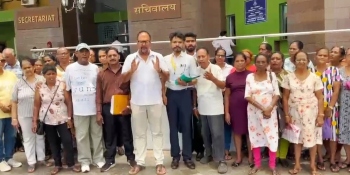
The joint inspection was conducted by officials of the GSPCB, WRD, MMC and the Urban Health Centre following complaints and petitions submitted by Cavelossim Sarpanch Dixon Vaz, Benaulim Block Congress Committee President Keith Gracias and other panchayat bodies. The petitioners had demanded urgent intervention to check the growing contamination of the River Sal and to stop the discharge of untreated sewage into the waterway.
The findings are expected to intensify pressure on civic and sewerage authorities to act swiftly, as environmentalists and local residents have repeatedly warned that unchecked sewage discharge could severely impact the ecology of the River Sal, besides posing serious public health risks to communities dependent on the river.