


PANJIM
A top Goan bureaucrat has said integrity, honesty, a commitment to hard work, a commitment to people and humility are some of the strengths needed in an IAS officer.
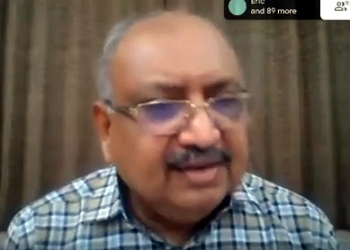
Anthony "Tino" De Sa, former chief secretary of Madhya Pradesh, was speaking online to aspirants interested in the career, at the launch of the ‘Collaborative Learning Cafe’, an initiative of the Friends of the Jesuits in Goa.
It aims to promote career courses, life-long learning and hobby courses in Goa, currently online in pandemic times.
De Sa is one of only two Goans to have held that post in Madhya Pradesh (after RCVP "Ron" Noronha, ICS) and is now retired in Goa.
“The IAS should hold your interest not because of its perks. The reason for wanting to join it should be that development excites you,” said the bureaucrat-author, who has served in prestigious foreign posts, studied in the US and is a man of many roles.
De Sa, the inaugural keynote speaker, gave a talk peppered with his experiences -- showing both challenges and optimism -- about his days in the bureaucracy. He was a topper at St Xavier’s College, Bombay.
CADRE
He pointed to strict rules over political neutrality of the IAS and other civil services. He noted that every IAS, IPS and forest service officer belongs to some state cadre. The Central government has no IAS cadre of its own.
"Your first posting is general SDO (sub-divisional officer). Then, you become an additional collector. You may be working in Tribal Welfare, you could be a Project Officer-Tribal Welfare. Or a Commissioner of a Municipal Corporation in a city. You can be the CEO of a zilla panchayat. Then, you become Collector, After that, you can become Commissioner in various areas...," he informed.
“Once allotted to a state cadre, you need to study the state language. In India, there are 4,000 IAS officers. The IAS officers monitor what's happening in the field, they do not rule, but they give advice (which may not be taken). In a democracy, it's not the bureaucracy but the government that rules.”
CHALLENGES
In a talk laced with humour and rich experiences, De Sa addressed the issue of how non-specialist IAS officers could play a useful role despite being a "generalist service”. Besides, he pointed to their overall role of co-ordinating.
De Sa said getting transferred within the IAS could be a "professional hazard". The IAS officer is not the servant of the minister or of the government, he is a creation and servant of the Constitution, he argued.
De Sa argued that the reputation of an IAS officer "precedes him". "If IAS officers do their job properly, they also earn respect from politicians," he felt.
“In the bureaucracy, one has the opportunity to express one's creativity too. The exam for the IAS is not difficult, but the process is. The numbers are a "bit intimidating" as about 10 lakh apply each year, six lakh take the exam, and a few hundred get selected.”
He gave a lot of details of the IAS admission process -- preliminary and final exams, lateral entry, subjects offered, how to prepare, number of attempts available, when to start preparing for the exams, can one prepare without guidance or coaching, and a lot more.


