VALPOI
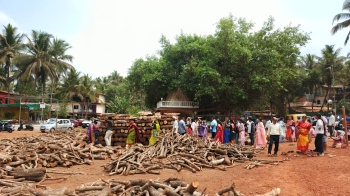
The festive spirit surrounding Goa’s revered deity, Shiroda’s famous Goddess Lairai, has begun to resonate across Sattari taluka. The enthusiasm has reached its peak, with more than 3,000 dhonds currently observing strict religious vows. These devotees are residing across more than 40 camps (talas) in the taluka, where they engage daily in prayers, chanting, and disciplined adherence to traditional guidelines.
CM’s special focus
The grand Lairai zatra is scheduled to be celebrated on April 21. Following certain shortcomings during last year’s festival, all departments of the Goa government have adopted a more vigilant approach this year. Chief Minister Pramod Sawant is personally overseeing the preparations to ensure that the festival is conducted smoothly, safely, and with devotion. Authorities have implemented comprehensive planning, emphasizing that cooperation from both devotees and officials is essential for the success of the event.
Faith and tradition
Although Sattari is primarily known as an agrarian region, it holds a deeply sacred place in terms of religious heritage. Almost every village in the taluka is home to temples regarded as spiritually active (jagrut).
The region continues to uphold its rich cultural and traditional legacy through various religious activities.
The ongoing dhond vow is a vivid reflection of this tradition. From early morning until night, devotees strictly follow rituals in a disciplined and traditional manner, maintaining a deep spiritual connection throughout the observance period.
Improved facilities
In earlier times, dhonds would observe their vows along riverbanks or under trees. However, this scenario has significantly evolved. With support from the government, panchayats, and local representatives, nearly 80% of the camps now have well-constructed halls. Facilities such as bathing ponds and proper accommodation have been developed, ensuring better living conditions for the devotees.
Beyond religious practices, many camps are actively involved in social initiatives. Activities such as financial assistance to needy families, community gatherings, and discussions on various social topics are being organized. These efforts highlight a growing sense of social responsibility alongside spiritual devotion.
Spiritual growth
Special emphasis is being placed on spiritual enrichment through naam-smaran (chanting of the divine name). Renowned Goan kirtankar Suhas Buva Vaze has been visiting various camps for several years, encouraging devotees to engage in chanting and meditation.
His initiative aims to strengthen not only religious faith but also enhance inner spiritual power and intellectual clarity among participants. Through such practices, devotees are experiencing both spiritual and personal growth.
Currently, between 2,500 to 3,000 dhonds are observing the vow with utmost dedication, staying away from regular habitation, preparing their own meals, and following strict discipline as part of this sacred tradition.