


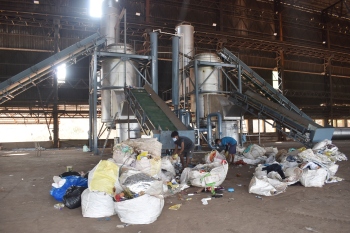
 The gasification plant commissioned at Sonsodo by the Margao Municipal Council.
MARGAO
Once bitten, twice shy”so goes the old adage. But will the Margao Municipal Council (MMC) draw lessons from the bitter experience of the now-defunct 5 TPD biomethanation plant set up at the SGPDA market in 2021? The civic body has now opened a new chapter in its efforts to tackle the garbage crisis, this time banking on gasification technology.
Nearly five years ago, promoters of the biomethanation plant had promised power generation, bio-fertiliser production, and a steady revenue stream for the MMC during their presentation to city officials. Those assurances, however, failed to translate into sustained results.
In the current proposal, first mooted by the Goa Energy Development Agency around two years ago, similar claims have surfaced. The gasification plant is said to have the potential to process plastic and mixed waste”including sanitary waste and diapers”while generating oil and gas, making the project commercially viable.
However, questions linger. During the commissioning of the gasification plant by Chief Minister Pramod Sawant, PWD Minister Digambar Kamat, and MLAs Vijai Sardesai, Reginaldo Lourenco, and Ulhas Tuenkar, concerns were raised over whether the proposed Rs 7.5 crore, 10 TPD plant would indeed produce fuel and gas, or merely generate fly ash suitable for brick-making.
Senior officials from project proponent Pune-based G D Environmental Pvt Ltd have sought to clarify the issue. According to them, the outcome depends largely on the MMC’s objectives. If the council aims to produce fuel, it will need to ensure a consistent supply of high-quality plastic waste. On the other hand, if the priority is to clear mixed waste from the nearly 30-odd black spots across the city, the process is likely to yield fly ash, which can then be used in brick manufacturing.
As the MMC moves forward, the success of this initiative may hinge not just on technology, but on clear planning and realistic expectations”something that past experience has shown cannot be overlooked.
Brick making at Sonsodo with fly ash
As the 10-tonne gasification plant at Sonsodo is expected to generate approximately 0.5 tonnes of fly ash per day, concerns have been raised about whether the civic body has established a proper mechanism to utilise this by-product for manufacturing fly ash bricks or pavement blocks.
Officials stated that the relatively small daily generation of fly ash would require interim storage at the Sonsodo facility before it can be used for brick production. “Since the fly ash output is only about 0.5 tonnes per day, it will need to be accumulated over time before being mixed with cement to manufacture blocks. To offset labour costs, brick production will be undertaken only when a sufficient quantity of fly ash has been collected,” an official explained.
The company has asserted that fly ash bricks are an eco-friendly and durable by-product of the process. However, given the bitter past experience, sources cautioned that the municipal body must ensure regular monitoring to see that the promised utilisation of this by-product is effectively implemented.
New facility prompts rethink of contractor agreement
MARGAO: With the proposed 10-tonne gasification plant capable of handling sanitary waste, including diapers, the Margao Municipal Council (MMC) is poised to achieve significant cost savings”potentially running into lakhs of rupees”currently spent on transporting and treating such waste at the biomedical facility in Kundaim.
However, this development also brings into focus another critical issue: whether the civic body should revisit its agreement with private door-to-door waste collection contractors, which comes at a staggering cost of Rs 6.5 crore.
Under the existing contract, these contractors are tasked not only with household waste collection but also with clearing and segregating garbage from black spots across the city before it is transported to Sonsodo for processing. With municipal officials now asserting that the new gasification plant will substantially ease the burden of managing waste at these black spots, sources suggest that the workload of these contractors could reduce considerably since the plant has gone operational.
This raises an important question”should the MMC reassess the terms of its current agreement, or at the very least, factor in the reduced workload when evaluating costs in future tenders for the coming financial year?
Sources say as the civic body moves ahead with its waste management strategy, a careful review of existing expenditures and contractual obligations may be necessary to ensure that public funds are being used efficiently in light of the evolving infrastructure.
Grand claims, but no gains from defunct biomethanation plant
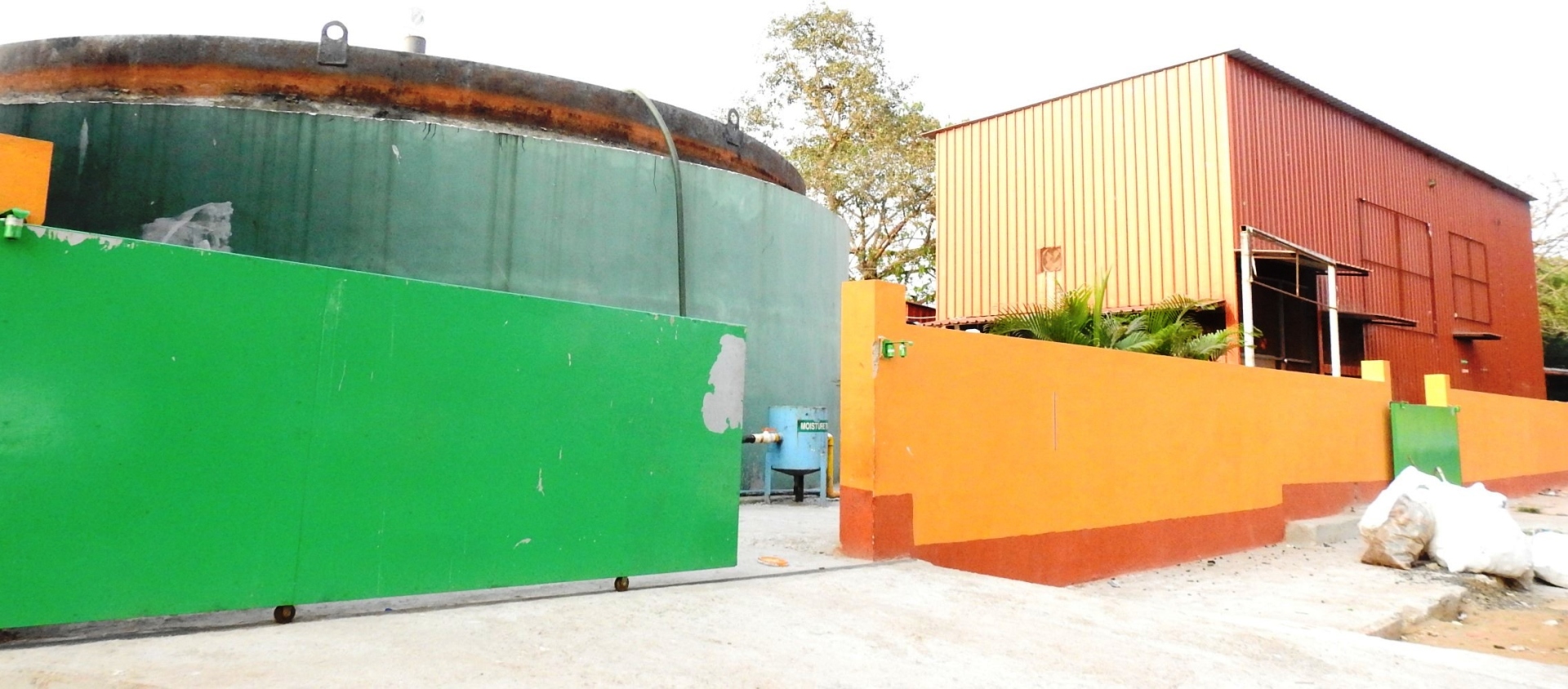
MARGAO: Can you hazard a guess how much revenue the Margao Municipal Council (MMC) earned from the 5 TPD biomethanation plant set up at the SGPDA mega market complex before it was rendered defunct after the Goa State Pollution Control Board refused to renew its consent to operate?
At the time of its inauguration on November 4, 2021, project proponents had claimed that the plant would generate 450 units of electricity per day, along with bio-fertiliser. It was projected that the civic body would earn around Rs 10,000 daily through the sale of power and fertiliser.
Additionally, it was stated that the electricity generated would be sufficient to illuminate the SGPDA market, provided the MMC and SGPDA supported the proposal.
However, the plant now lies defunct. According to MMC officials, although electricity was generated during its operation, the civic body could not derive any financial benefit due to delays in connecting the plant to the power grid.
Sources told The Goan that the MMC failed to monetise the power generation primarily because the unit was never connected to the grid.
As for revenue from bio-fertiliser, the plant’s fate was effectively sealed by the handling of the digestive slurry. Instead of tapping the slurry to churn out bio-fertiliser, the Goa State Pollution Control Board found that the slurry was being discharged into open fields in violation of pollution control norms.


