PWD begins plantation campaign even as thousands of trees face the axe for highway widening projects
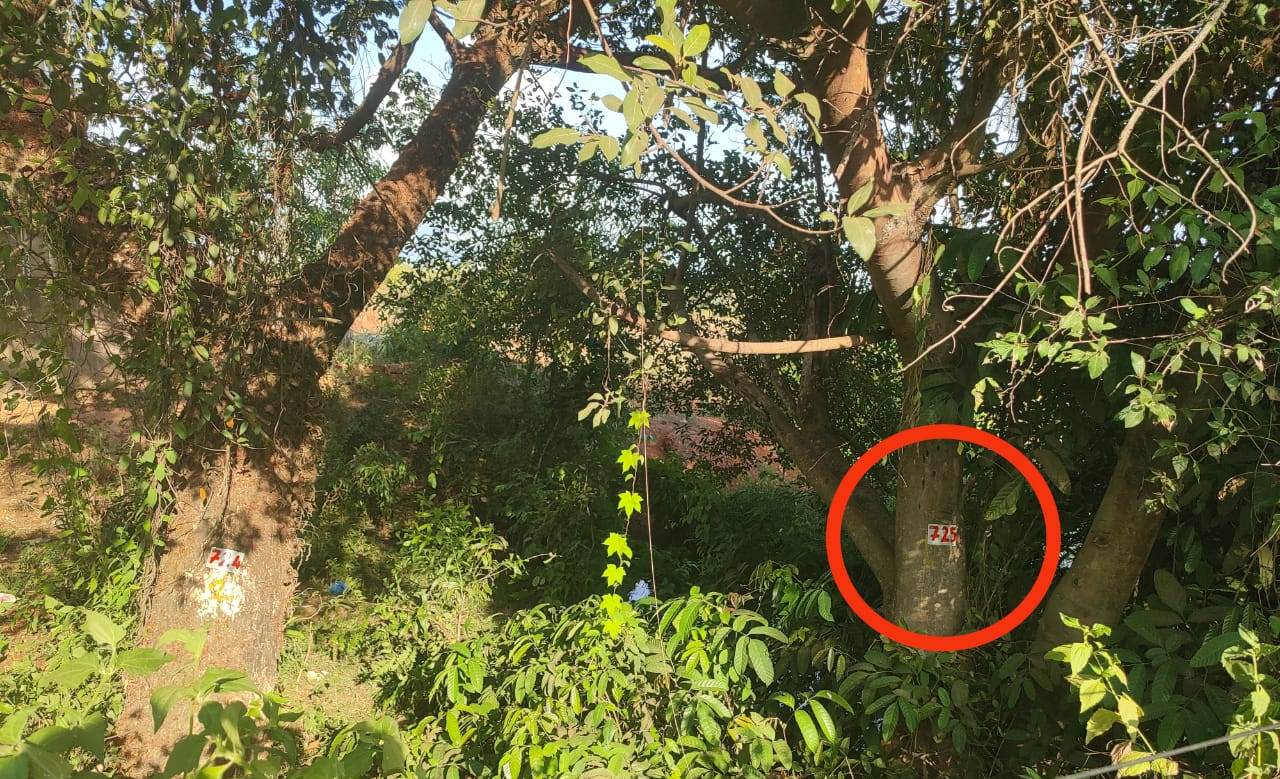
File photo of hundreds of trees marked for felling on the Navelim-Cuncolim NH66. The green cover on the NH66 passing through Chinchinim village.
MARGAO
The Goa government’s World Environment Day initiative to plant thousands of saplings along National Highway-66 (NH66) has brought into sharp focus a critical question: Will the plantation drive help clear the Public Works Department’s (PWD) long-pending tree compensation backlog, or merely offset fresh tree losses resulting from ongoing highway expansion projects?
The issue has gained prominence following the PWD’s proposal earlier this year to fell 2,395 trees standing on its property for the widening of NH66 between Navelim and Cuncolim and along the Cortalim-Verna stretch.
Of the total trees marked for felling, 1,918 are located along the Navelim-Cuncolim section, while another 417 trees are proposed to be cut on the Cortalim-Verna stretch.
While granting permission for the felling, the Tree Authority directed the PWD to undertake compensatory afforestation by planting three saplings for every tree removed. The Authority also instructed the department to translocate at least 10 per cent of the affected trees wherever feasible.
PWD’s senior engineer (National Highways) told The Goan that the department has already commenced a plantation drive along the Canacona and Nuvem stretches of NH66 over the last two days. “The contractor appointed by the PWD has begun clearing trees along the Cortalim-Verna stretch of NH66. Work on the Navelim-Cuncolim stretch will commence shortly,” the engineer said.
He further maintained that the department has initiated efforts to clear its backlog of compensatory plantation along highways and open spaces under PWD jurisdiction. “Anyone is free to cross-check with Forest Department officials regarding the trees planted by the department to clear the backlog till date,” he added.
Chinchinim p’yat seeks protection for decades-old trees
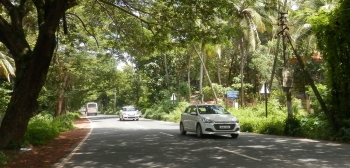
Even as it welcomed the government’s green initiative to plant saplings along NH66 as part of its commitment to environmental conservation and sustainable development, the Chinchinim Village Panchayat has urged the Forest Department and other concerned authorities to take all possible measures to protect decades-old trees proposed to be felled for the highway expansion project.
The panchayat’s appeal pertains to the NH66 widening project from Navelim Belem Junction through Dandeavaddo and Chinchinim up to Uskini Band.
Chinchinim Sarpanch Frank Viegas said residents of Dandeavaddo have, for decades, advocated a bypass solution to address traffic congestion and road safety concerns.
“The panchayat reiterates the long-standing demand of the local community for a bypass on stilts, which would substantially reduce the need for tree felling while achieving the intended infrastructure objectives,” Viegas said.
He stressed that the mature trees form an integral part of the local ecosystem, providing environmental, ecological and social benefits that cannot be immediately replaced by newly planted saplings. “Preservation of existing green cover should remain a priority while undertaking developmental projects,” he added.
The panchayat has appealed to the government, Forest Department and National Highway authorities to explore environmentally sustainable alternatives that strike a balance between infrastructure development and environmental conservation, while safeguarding the area’s natural heritage for future generations.
Will the drive wipe out mounting pendency?
Statistics show that a total of 44,995 trees have been pending since the last five years for plantation by various government agencies, including the PWD. In fact, of the total pendency of 44,995 trees, total of 33,723 trees awaiting plantation falls in the domain of the PWD.
To the proposal to free trees on the Navelim-Cuncolim and Cortalim-Verna NH66, Deputy Conservator of Forest, South had directed the PWD to plant three times the number of trees felled, over and above the mandatory median and roadside plantations required under NHAI guidelines. The species to be planted will be finalised in consultation with the Forest Department and the GSBB, based on the suitability of the planting area.
The DCF had also suggested the translocation of approximately 10 per cent of the trees, subject to feasibility and species suitability. The PWD was further told to plant only indigenous mixed tree species, maintain a geo-tagged record of all plantations, and submit the data for monitoring by the Forest Department.