MARGAO
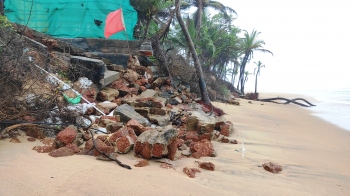
A red flag is hoisted right on the steps leading to the Sernabatim beach. Normally, such flags are put on beaches to warn visitors of dangers in venturing out in the sea.
On close scrutiny, it was revealed that the red flag on the steps was to alert visitors to take care while walking down the steps, which has been damaged Cyclone Tauktae around two months ago.
In fact, the Sernabatim beach belt has come under strain with the rising sea waters making deep incursion into the land over the last few days.
Locals pointed out that the Sernabatim coast has been battered by the nature’s fury since the time Cyclone Tauktae left behind a trail of destruction.
A visit to the beach on Wednesday revealed that the steps are severely damaged and may give way anytime indicating the extent to which sea water has entered land in recent days.
A look at the coast revealed that the waves and rising water has battered the land mass, causing massive erosion.
Local activist Judith Almeida said what is being witnessed along the Colva-Sernabatim coast is indeed a cause for worry. “I think the authorities, including experts should visit the coast at least once to have a look at the damage and destruction”, she said while reiterating her stand of no development in the No Development Zone (NDZ).
She added: “When sand dunes are being destroyed and no time being given for the vegetation on the beach for replenishment, we will face such situations again and again. Besides the incursions made by the sea, we have seen too much footfall on the beach, posing threat to the vegetation cover. The sea normally gets repaired on its own during the month of October and November, but these are the months when tourism resumes again in the state”.
Judith lamented that none of the authorities have visited and inspected the sea erosion and other destruction caused along the coast till date post-Cyclone Tauktae, adding “the least the authorities could do is to just visit the coast and record the ground reality”.
“The NCSCM must visit the eroded beaches and mark the HTL as per the erosion as it is clear that this feature is only going to become a regular issue and the HTL along with being dynamic will move landward side thus a management plan can become progressive and not regressive as seen in the draft”, she added.