Only 130 hectares reclaimed in 5 years despite schemes, policy push and growing concern over idle land
PANAJI
Goa has been taking cautious steps to revive thousands of hectares of fallow farmland, but official data shows that progress remains very slow.
According to government figures, only a small portion of neglected land has been brought back under cultivation despite new schemes and legal measures.
In 2025, recent initiatives helped revive 34 hectares of land through 115 farmers across four villages under the Watershed Development Component of the Pradhan Mantri Krishi Sinchayee Yojana and the Agriculture Department’s ‘Community Farming Scheme’.
A senior official said the State has set a target of reviving another 30 hectares in 2025-26, though data for the current year is yet to be compiled.
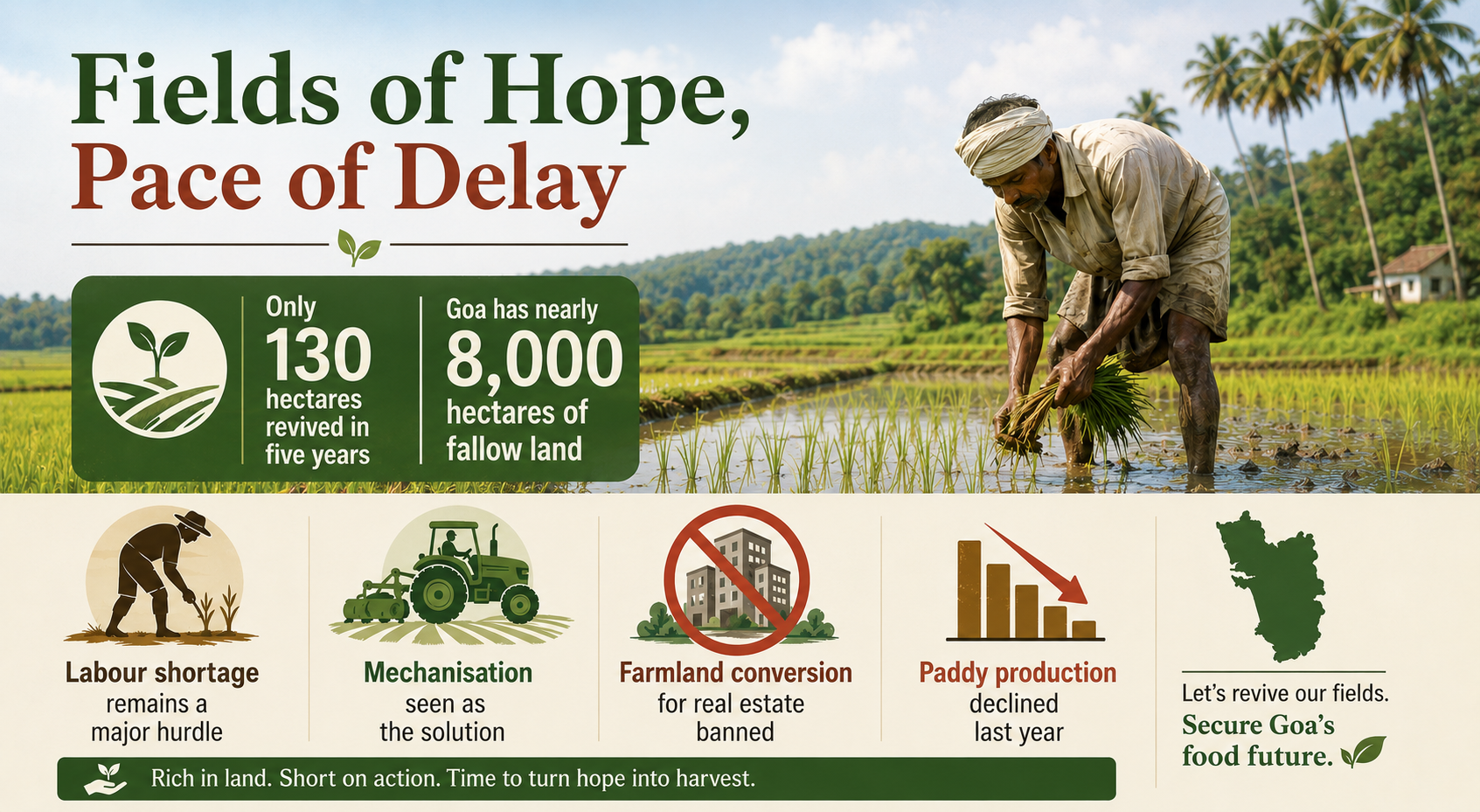
Over the last five years, around 130 hectares of land has been reclaimed and cultivated through incentive schemes, the official added.
Meanwhile, the department’s performance budget for 2025-26 mentions only one project to convert 100 hectares of non-cultivable land in Surla, Bicholim, into farmland.
When asked about the project, the official admitted that the scale of the challenge is huge. A Central government report from 2023 estimated that Goa has around 8,000 hectares of fallow land. Against this, the 130 hectares brought back under cultivation appears only a small step.
“We are committed to bringing uncultivated land into productive use through community farming. But mechanisation is key to overcoming Goa’s long-standing labour shortages and high labour costs,” the senior official said.
On the policy front, the Goa State Amrit Kaal Agriculture Policy 2025, announced in February last year, initially showed promise. However, its implementation slowed after the death of Agriculture Minister Ravi Naik in October last year.
The policy completely bans the conversion of agricultural land for real estate purposes, which has been identified as a major obstacle to the growth of farming in the State. However, the laws and delegated legislation needed to enforce the ban are yet to be framed.
Despite measures introduced by the department, paddy production fell to 1.1 lakh tonnes last year from 1.4 lakh tonnes the previous year. Officials blamed erratic monsoon rains for the decline, even though the area under cultivation increased slightly.
Farmers working in the fields say labour shortages and rising costs remain their biggest challenge, as clearing and preparing neglected land is both time-consuming and expensive. “We are moving in the right direction. However, we must ensure that the pace improves,” said another senior officer from the department’s planning division.
The government has shown intent, but with thousands of hectares still lying unused, the journey from fallow to fertile land remains longer than expected.