Over 3 months on, absence of key panel halts district planning, raises concerns over decentralised planning
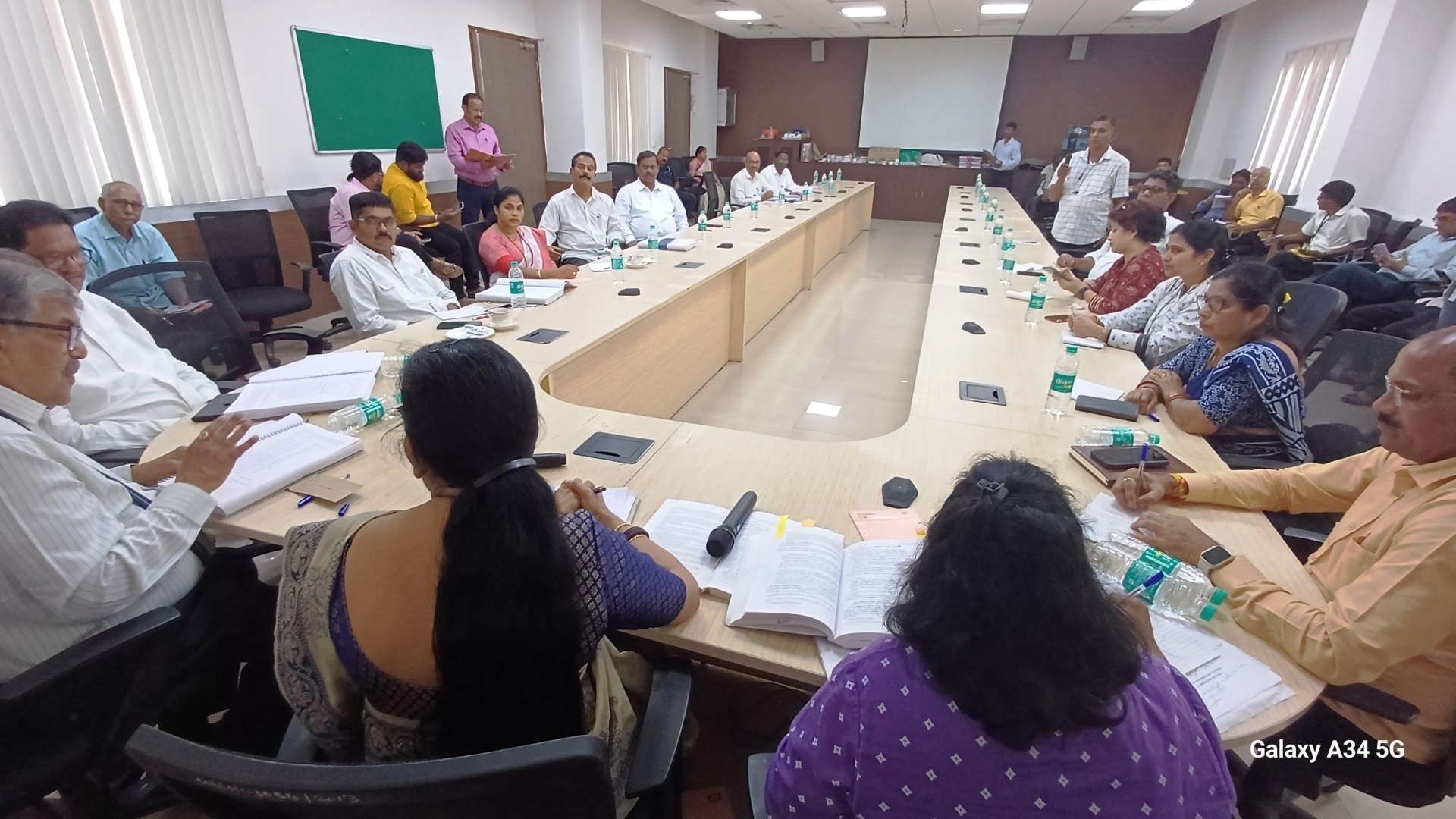
File photo of a meeting of the South Goa District Planning Committee (DPC) held in January 2024 to approve the draft District Development Plan.
MARGAO
Three-and-a-half months after the South Goa Zilla Panchayat (ZP) elected its new Chairperson following the December 2025 polls, the constitutionally mandated District Planning Committee (DPC) for the district has yet to be constituted, raising concerns over delays in decentralised planning and development.
Since assuming office, South Goa ZP Chairperson Sidharth Gauns Desai has convened two meetings of the district panchayat body to outline and prioritise development works across constituencies. However, the absence of a District Planning Committee (DPC) has effectively stalled the next critical step in the planning process — the consolidation of development plans from panchayats and municipal bodies, besides the Zilla Panchayat, into a unified district blueprint.
Under constitutional provisions, the District Planning Committee plays a pivotal role in integrating plans prepared by rural and urban local bodies.
Despite the passage of over three months since the ZP chairpersons took charge, the DPC in South Goa has yet to be notified by the state government.
Inquiries have revealed that the government has sought a list of ZP members to be inducted into the committee. South Goa ZP Chief Executive Officer Vikas Kamble confirmed that the Zilla Panchayat has submitted the names of its representatives for inclusion in the DPC.
Chairperson Sidharth Gauns Desai echoed similar sentiments, saying the South Goa ZP has submitted a list of ZP members for induction to the DPC panel.
Officials suggest that the government is expected to notify the committee once the final composition is ready. The DPC is to include selected ZP members and chairpersons of municipal bodies in the district, while Members of the Legislative Assembly (MLAs) and Members of Parliament (MPs) from South Goa will serve as ex-officio members.
However, the delay has drawn attention to the lack of momentum in initiating district-level planning. Without the DPC in place, the process of inviting and consolidating development proposals from local self-governing bodies remains in limbo, potentially impacting the timely execution of key infrastructure and welfare projects.
With the DPC required to submit the draft development plan to the government before finalising the budget estimates for the new financial year, stakeholders are now looking to the state government to expedite the notification of the District Planning Committee and set the process in motion to ensure that development planning for South Goa proceeds without further delay.
Convenor, Goa Panchayati Raj Institutions, J Santan Rodrigues, said the government should not only expedite the constitution of the District Planning panel but also issue guidelines to the Committee on how to go about the work.
“The District Planning Committees are constitutionally mandated panels. Sadly, we have had a bitter experience with the DPCs in Goa since the time the Zilla Panchayats were established in Goa in the year 2000. Hope better sense prevails and the government implements the DPC in both letter and spirit,” Santan said.
====
Past plan uncertainty fuels distrust among local bodies
MARGAO: Even as the State government is yet to constitute the District Planning Committee (DPC) for South Goa, the delay is likely to pose a larger challenge once the panel is finally notified — that of restoring the confidence of local bodies in the district planning process.
Officials say that whenever the DPC is put in place, both the Chairperson and the Member Secretary will have their task cut out in persuading panchayats and municipal bodies to once again participate actively by submitting their development plans.
The hesitation stems from the experience of the previous DPC. Headed by then South Goa Zilla Panchayat Chairperson Suvarna Tendulkar, the committee had prepared a comprehensive draft District Development Plan for the financial year 2024–25 — an exercise considered significant, as it was perhaps the first such effort in over two-and-a-half decades. However, the plan reportedly received a cold response from the government, and its status remains unclear even months after it was submitted in January 2025.
The apparent non-implementation of the plan has left the earlier DPC in an awkward position. According to sources, the Chairperson and the Member Secretary were repeatedly confronted with queries from local bodies, particularly panchayats, seeking clarity on the fate of the development proposals they had painstakingly prepared and forwarded for inclusion in the district plan.
“The panchayats had invested time and effort in drafting their development priorities, only to be left in the dark about whether these proposals would ever see the light of day,” a source said.
The uncertainty has had a cascading effect. Sources revealed that the outgoing South Goa ZP body, along with the previous DPC, virtually halted the process of preparing a fresh district plan for the financial year 2025-26. The reluctance, officials said, was driven by the perception that any new plan would likely meet the same fate as its predecessor.
“With what credibility can we now approach panchayats and municipal councils and ask them to submit fresh development plans, when the fate of their earlier submissions — consolidated into a district-level plan — remains unknown?” an official remarked.
This trust deficit could emerge as a major hurdle for the incoming DPC, potentially undermining the very purpose of decentralised planning. Unless the government provides clarity on the status of the previous plan and demonstrates a commitment to implementing district-level planning outcomes, officials fear that local bodies may remain disengaged from the process.
As South Goa awaits the constitution of its DPC, the focus is not only on setting up the committee but also on addressing the credibility gap that threatens to derail participatory planning at the grassroots level.
====
SECTION 239: WHAT IT MEANS
Section 239 of the Goa Panchayat Raj Act mandates that the Government set up a District Planning Committee (DPC) in every district to bring together development plans prepared by Zilla Panchayats, Panchayats and Municipal Councils into a single, district-wide blueprint.
In doing so, the Committee is required to examine common concerns such as spatial planning, sharing of water and natural resources, infrastructure needs and environmental protection, while also factoring in available financial and other resources and consulting institutions identified by the Government.
Once the exercise is complete, the Chairperson forwards the consolidated district development plan to the Government for consideration.
Why it matters: The DPC is the only statutory mechanism that links grassroots priorities with state-level decision-making. Without it, local plans remain fragmented, funding alignment becomes difficult, and district development risks being driven top-down rather than by on-ground needs.