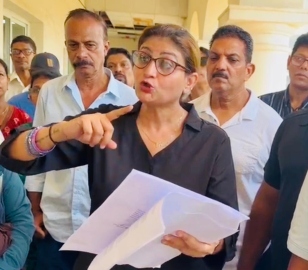
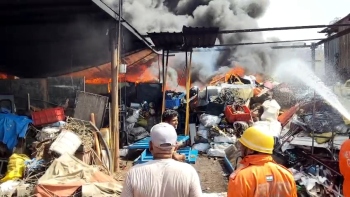
Agitation fizzles out after closed-door talks as rent recovery put on hold
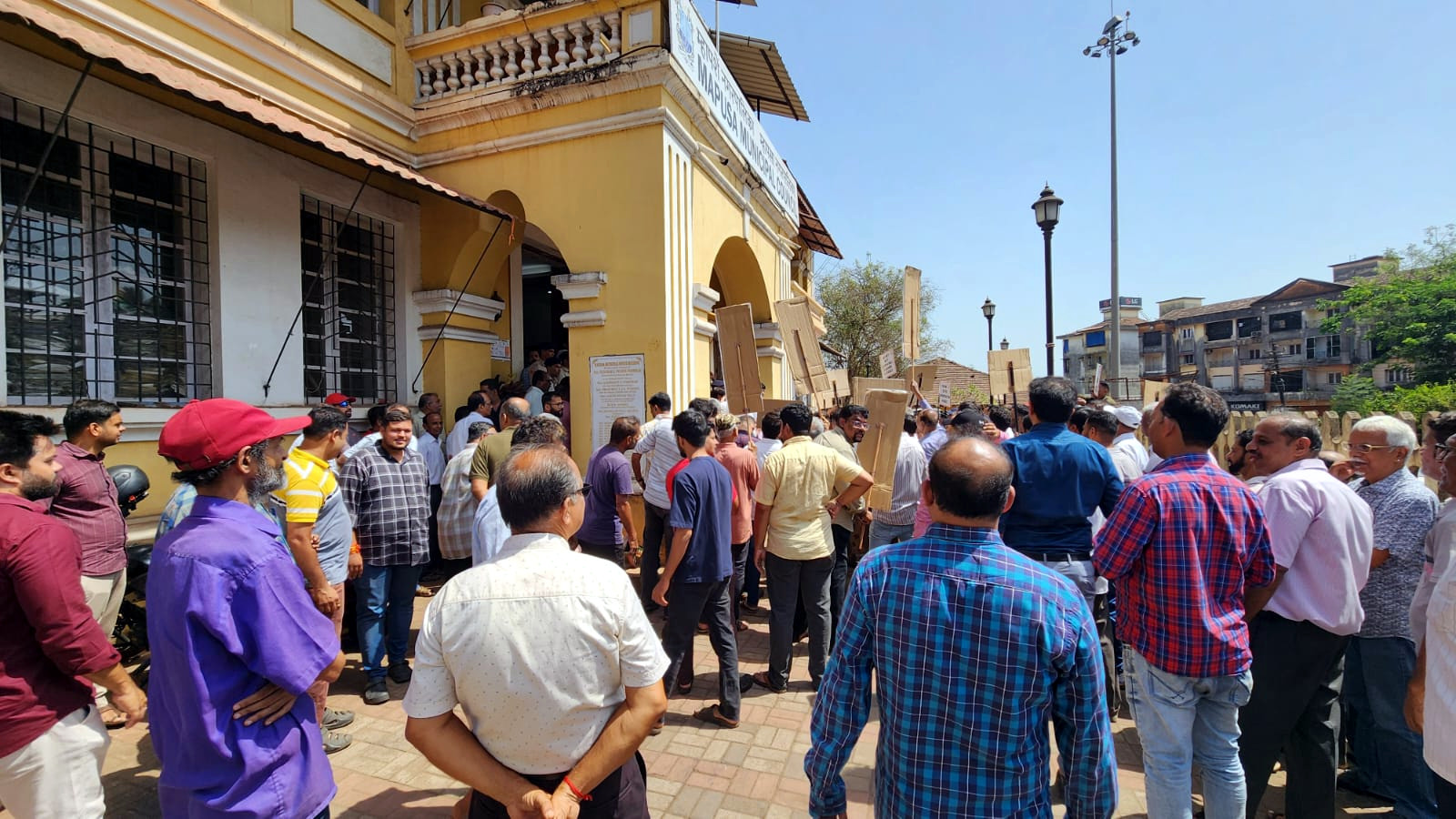
Traders gather outside the Mapusa Municipal Council building on Wednesday during the protest that later ended in an abrupt climbdown.
MAPUSA
The Mapusa merchants’ protest on Wednesday followed a script that is now as predictable as it is ineffective – high-decibel posturing on the streets, followed by a quiet surrender behind closed doors.
What began as a charged protest – with shutters down, slogans raised and a march to the municipal building – quickly lost steam once it reached the corridors of authority.
Within hours, the agitation was called off following a phone call to a senior official of the Urban Development Department and a routine assurance from the Chief Officer that rent collection would be kept in abeyance until the State government takes a call on the contentious arrears issue.
By afternoon, all shutters opened and life was back to normal in the Mapusa market.
For many rank-and-file traders, the abrupt climbdown was both predictable and frustrating. Several merchants, speaking off the record, alleged that the protest was effectively “managed” from within.
A section of the Mapusa Merchants Association (MMA), perceived to be close to the local political establishment, was accused of diluting the agitation at a crucial juncture. “This keeps happening. At the end of the day, we return with assurances while the core issue remains untouched,” said one aggrieved shopkeeper.
Notably, key MMA functionaries, Baba Gawaldankar -- who also doubles as general secretary of the BJP mandal -- and MMA secretary Siddesh Raut, were conspicuous by their absence, while another influential member, Anish Joshi, reportedly arrived late – developments that did not go unnoticed among protesting traders.
There were also visible signs of internal discord. Vallabh Mishal, husband of the Mapusa chairperson, had opened his shop in the morning but was compelled to shut it under pressure from fellow traders, underscoring the lack of unanimity within the community.
Inside the Chief Officer’s chamber, the tone appeared markedly different from the rhetoric on the streets. Observers noted that senior leaders, including Baba Karekar, adopted a cautious, almost conciliatory approach, seemingly attempting to strike a balance rather than press for firm commitments.
Emerging from the meeting, Karekar announced that traders would not be required to pay rent for now and that trade licences could be renewed – both assurances offered by the Chief Officer.
However, he stopped short of providing any timeline for a permanent resolution, instead urging merchants to be prepared for “the next step” if needed.
The pattern is hardly new.
In December last year, a similar mobilisation ended in an identical fashion – a last-minute withdrawal after assurances from the Chief Minister, facilitated by the local MLA. Even then, the threat of a prolonged shutdown fizzled out without extracting any concrete solution.
Repeatedly, the agitation has followed a script: build momentum, escalate rhetoric, engage with authorities, and ultimately retreat on assurances. The result is a cycle where protests generate headlines but fail to deliver substantive outcomes.