Clean-up begins as monsoon nears, but vulnerable floodplains still lack a long-term flood-mitigation blueprint
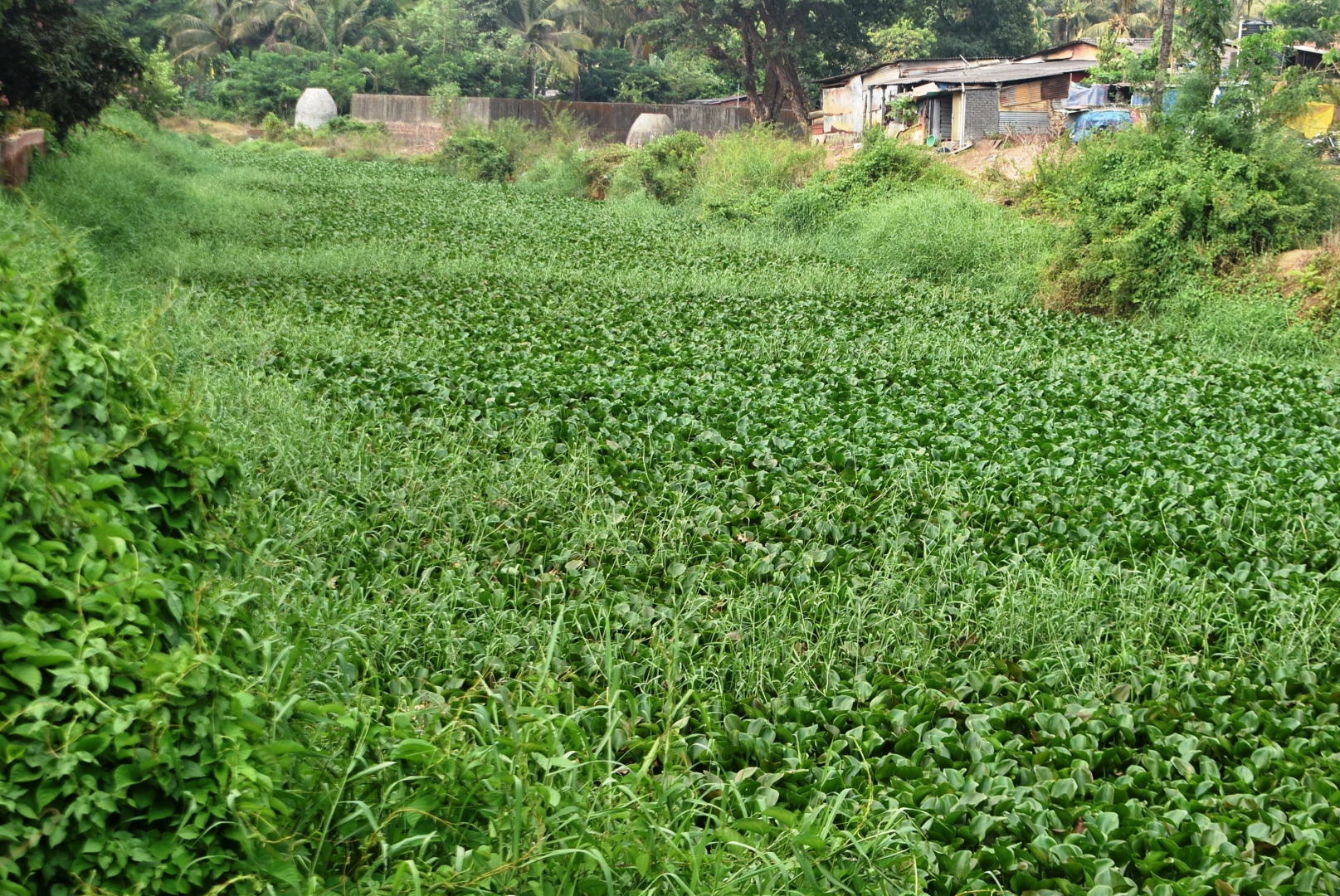
The green carpet of weed invading the River Sal will soon be removed by the WRD, but a comprehensive drainage plan for the river has failed to take off to date.
MARGAO
With the monsoon fast approaching, authorities have floated a tender to de-weed the River Sal stretch along the 4-km stretch between Comba in Margao and Mercado Mall in Benaulim.
Even as the weed-removal exercise is set to begin in patches, serious questions, however, continue to be raised over the government’s failure to implement a long-pending comprehensive drainage plan for the River Sal — particularly the vulnerable stretch from Comba-Margao to the Khareband bridge.
Locals and environmental observers point out that this section of the river has, over the years, virtually turned into a stormwater nullah. Large portions of the riverbed are heavily silted, while several bunds along the banks are in a dilapidated condition. During every monsoon, the river overflows at multiple points, inundating low-lying areas of Khareband and Benaulim, both of which lie within the floodplains of the River Sal.
Against this backdrop, the recommendations made nearly three years ago by R.K. Pandey, the expert attached to the Union Ministry of Surface Transport, assume renewed significance. Pandey had carried out a study in connection with the western bypass project and had specifically underlined the urgent need for a comprehensive drainage and flood mitigation plan for the River Sal basin.
His recommendations had called for a detailed review of the drainage network around the Khareband bridge and adjoining floodplains to mitigate flooding in Benaulim and neighbouring areas. The report had also stressed the need for strengthening bunds, improving water-carrying capacity through desilting, and ensuring proper discharge of stormwater during peak monsoon conditions.
Despite the passage of almost three years, little appears to have moved beyond official files.
Sources in the Water Resources Department (WRD) admitted that while a detailed proposal along with cost estimates had been prepared and forwarded to higher authorities for approval, the project is yet to receive the green signal for implementation.
Officials further conceded that with the monsoon barely weeks away, there is presently no concrete plan to undertake any major drainage or flood-control works along the River Sal, including the strengthening of weak and crumbling bunds.
The delay has become even more glaring in light of the completion and commissioning of the western bypass through the Benaulim stretch in December 2024. Work on the bypass had resumed only after Pandey submitted his findings asserting that flooding concerns in Benaulim and surrounding villages could be addressed through a scientifically designed drainage management plan.
Now, nearly one-and-a-half years after the bypass became fully operational, the expert recommendations continue to remain confined to paper, while residents of the Sal floodplains brace for yet another monsoon season with apprehension.
---
Centre clears road link, but Sal drainage plan still awaits funds
MARGAO: The Union government has sanctioned a road project linking the western bypass at Pedda-Benaulim to the Vidya Vikas Mandal’s educational hub over the River Sal, at an estimated cost of Rs 15 crore.
Thanks to constant follow-up by PWD Minister Digambar Kamat, Union Minister for Surface and Road Transport Nitin Gadkari has sanctioned the road project, which would link the western bypass road to the city at the VVM’s educational hub and help reduce congestion.
However, funds for increasing the drainage capacity of the River Sal and restoring the crumbling bunds have seemingly not been forthcoming till date. According to sources, the comprehensive drainage project has failed to take off to date for want of funds.
---
Expert red flags on Sal drainage persist; call for scientific study
MARGAO: Central expert R K Pandey has recommended the construction of additional culverts along the Khareband bridge-Mercado Mall road in Benaulim to facilitate faster drainage of rainwater from the Tolleaband lake into the adjoining River Sal.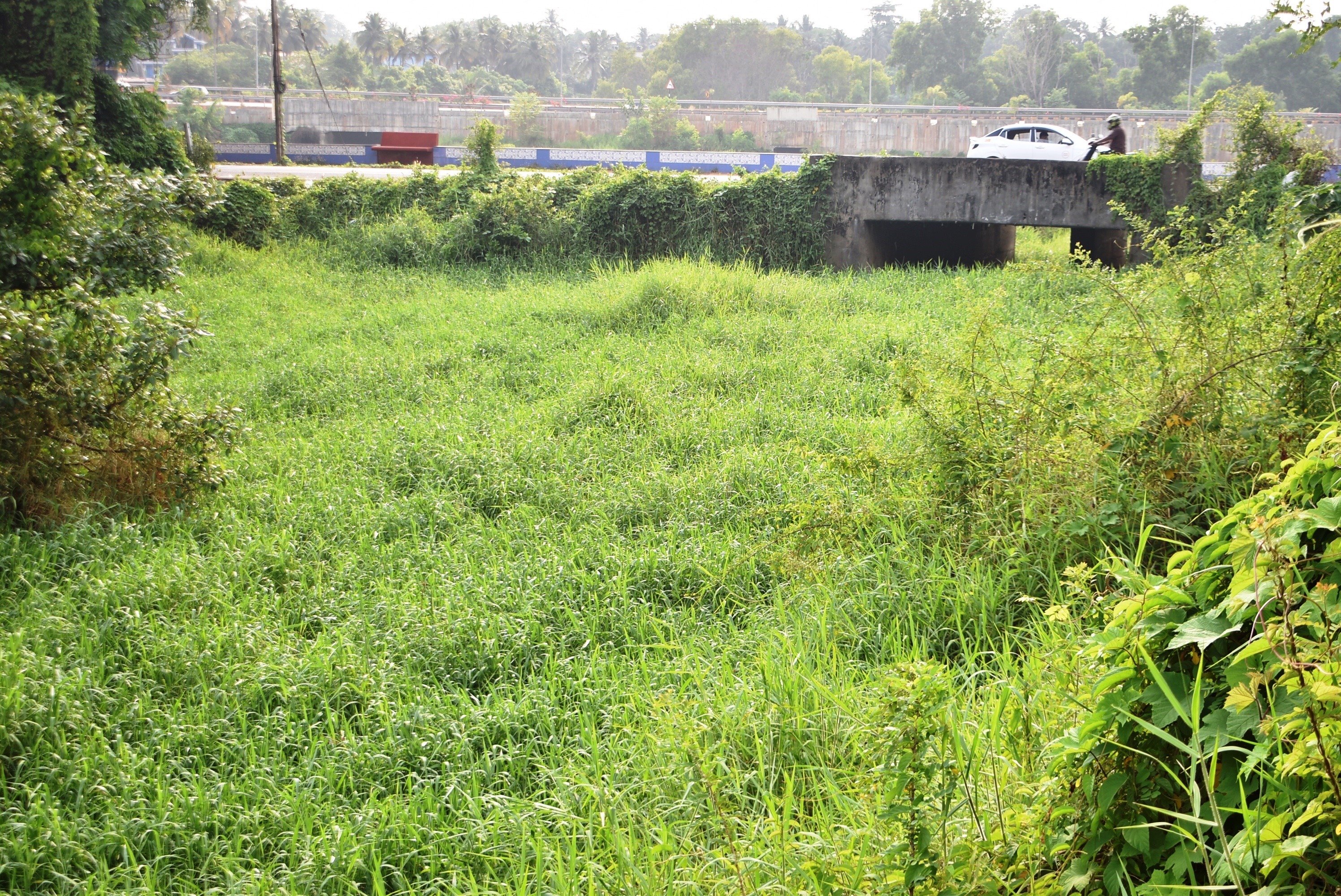 Pandey made the recommendation after observing that the 650-metre-long western bypass road passing through the Tolleaband water body has nearly 10 drainage openings, with a total area admeasuring 157 square metres. Comparatively, the 750-metre Varca road passing in front of Mercado Mall has only two culverts (total area 36 square metres) for discharging water into the River Sal, which Pandey insisted is insufficient for quick drainage.
Following the submission of Pandey’s recommendations to the government, the PWD constructed a major new culvert near Mercado Mall in addition to the existing one. However, locals have demanded that the government and the PWD conduct a scientific study to determine whether the newly added culvert is sufficient for the quick discharge of floodwaters or if more drainage openings are required.
Social activist Santan Pereira said flood-control measures should be implemented only after a detailed assessment. “If the Khareband–Mercado Mall road requires additional culverts, they should be installed as part of a proper plan,” Pereira said.
He further stressed the need for immediate maintenance of existing drainage infrastructure ahead of the monsoon season. “The authorities should ensure that the existing culverts are de-weeded and desilted before the onset of the monsoon. With the monsoon just around the corner, they should move quickly to clean the culverts and the nullahs connected to the River Sal to ensure smooth flow of water,” he added.