


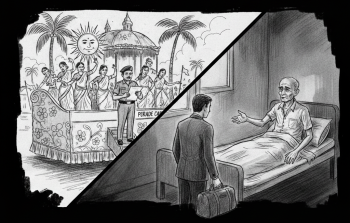
The bags were packed and the schedules were finalised. The vibrant spirit of the Goa float was ready to represent our "emerald land" at the 1997 Republic Day Parade in the National Capital. As an officer for the Department of Information and Publicity, my mind was already at the Rabindra Rangshalla camp, visualising the logistics and coordinating with the artists.
But in a quiet corner of our home, the atmosphere was heavy. My father, still recovering from a recent heart attack, watched me with uncharacteristic vulnerability. His eyes, usually a source of strength, were moist.
"Is it necessary to go?" he asked softly.
I responded with the practical logic of a dedicated professional. I told him the department, led by Director K V Prabhugaonkar, relied on me. I was the bridge between the artists and the administration. I used the words we often use to comfort ourselves: "You are a strong man. Nothing will happen. I’ll be back as soon as the parade is over."
He looked at me with a weight I didn’t yet understand and said, "Don’t go. I am not feeling well."
I left anyway. I boarded the train at Margao, the rhythm of the tracks drowning out the quiet plea of a father who knew his time was short.
The contrast of celebration
In Delhi, the days were a whirlwind. While I was coordinating movements and attending functions at the PMO and Rashtrapati Bhavan, my heart was tethered to a telephone line. In that era before mobile phones, a brief STD call was our only bridge. Papa didn't say much; he was never one for long-distance chatter. I took his silence for stability.
On January 29, the celebration ended abruptly. A message reached Goa Sadan: Father’s condition is critical.
The transition from the triumph of the parade to a frantic rush was a blur. I was already on a train for the long journey home when the staff of Goa Sadan intercepted me. They pulled me from my compartment with news that transcended words: an air ticket had been booked for the morning. In that moment, the weight of the Delhi sky felt like it was collapsing.
The silence of the return
The flight back”IC 467”was a hollow experience. I was not alone in my grief; Late Shivdas Verekar, then the MLA of Ponda and a family friend, was traveling with me from Delhi to Goa. His kindness during that journey remains a blur of gratitude and dread. Upon landing, he drove me directly from the airport to our home in Tiska, Ponda.
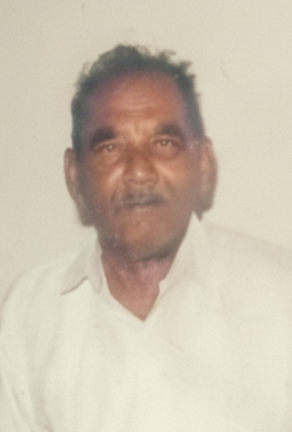
When I finally walked through the doors, the silence was louder than any parade. There he lay, motionless. In the stillness of his face, I didn't just see peace; I felt the sting of his final request. It felt as though he were still holding onto that moment of departure”not because I had chosen my profession, but because I wasn't there to hold his hand when the curtain finally fell.
The burden of the 'strong man'
We often tell our parents they are "strong" because we aren't ready to face their fragility. We prioritise our "duty" to our careers because we assume our parents will always be there to welcome us home.
I represented my State in the heart of the country, but I missed the most important event of my life: the final goodbye of the man who made me who I am. Today, the applause of the Republic Day crowds has faded, but the echo of his voice asking me to stay remains.
He was a strong man, indeed. But even the strongest men shouldn't have to say goodbye alone.


