PANAJI
As temperatures gradually rise, signaling the advance of the summer season, Goa begins its annual search for respite from the heat. A winning solution is often found in the region’s brightly colored local fruits, each with unique flavors used for hydration, snacks, or traditional drinks.
While the juicy ‘Mankurad’ mango is widely considered the ‘King of Goan fruits’ and the cashew fruit is beloved for the ‘urrak’ and ‘feni’ it produces, this sizzling season offers much more. Beyond the dominant duo, the Goan landscape yields kanttam, chunna, bhirand, jamun, and boram, to name just a few.
Miguel de Braganza, hailed as the “Plant Man of Goa,” provides insight into the arrival of these berries. “The berry season in Goa usually begins around November and December with konneram and mattoma berries. By January, fruits like boram and chunna appear, followed by zaam and kanttam around March and April,” Braganza explains.
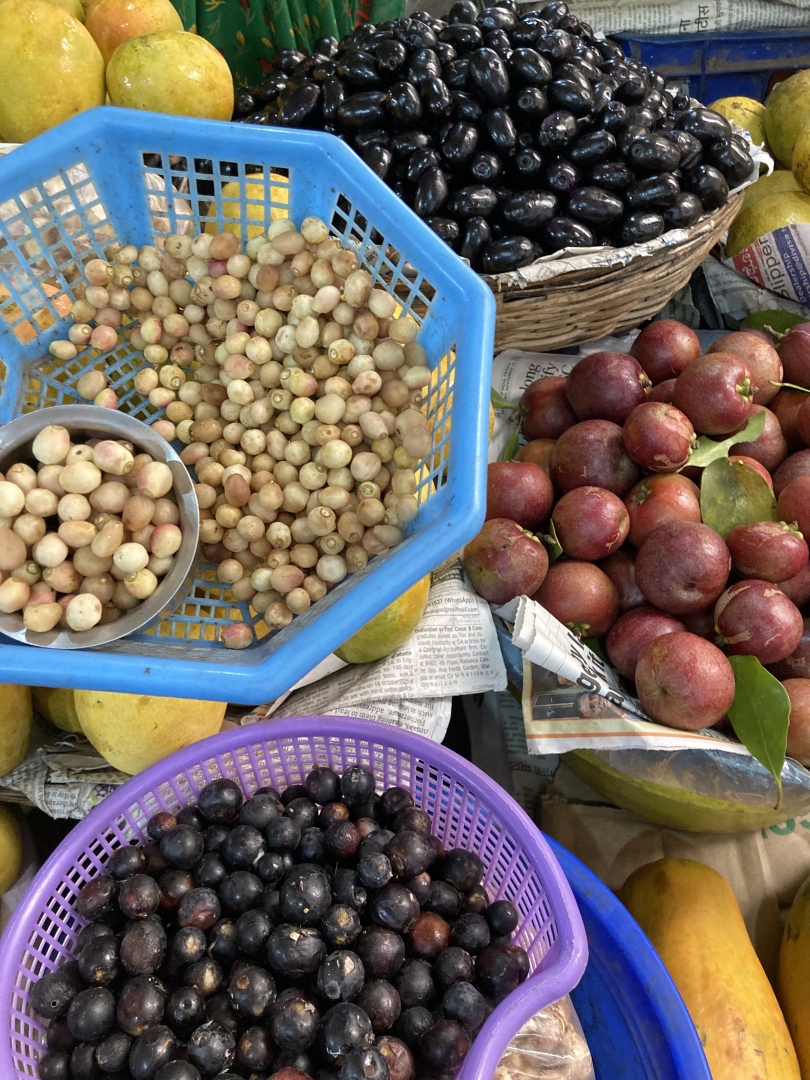
This seasonal shift is evident in the Panaji market. “Chunna and kanttam are sold for Rs 50 a vatto; Bhirand (kokum) sells for Rs 100 for 10 pieces, while jamun usually sells for Rs 400 per 100 pieces,” say local vendors, surrounded by baskets laden with the harvest.
Kanttam and Chunna
Kanttam, or karonda, are small wild berries found in hilly, forested areas. Known for their sweet and tart flavor, they are rich in antioxidants, Vitamin C, and iron. Beyond their taste, kanttam possess medicinal properties and are often consumed raw, pickled, or ground into homemade chutneys.
Antonio Francisco Fernandes, a resident of Aldona who enjoys foraging for local fruits, recalls the tradition: “A friend and I go to collect kanttam from the hillside and bring back bags full of them. Later, the whole family sits together to deseed the raw ones and eat the ripe ones. My wife prepares the masala and makes pickles out of the collection.”
Fernandes notes that while they also seek out chunna, the task is more difficult because the plant is thorny. Chunna (or zunna) berries are wild fruits found in the jungle between March and May. Ripe chunna are white to light pink, sometimes sporting a white powdery coating. Their texture is mealy and soft, offering a mild, honey-like sweetness.
Boram and Jamun
Boram, or the Indian jujube, is a highly nutritious berry despite its small size. Known as the ‘desert apple,’ boram are ripe when they turn brown and develop a distinct aroma. They are green and crisp when raw, becoming chewy and sweet as they ripen.
“Ripe boram is used to make pickles or preservatives and can even be processed into a juice squash,” says Braganza. These berries are high in Vitamin C, iron, and fiber; they are known to promote digestion, boost immunity, and are traditionally used to aid relaxation and sleep.
Another summer staple is the jamun (also known as zamblam or jambul). This dark purple, plum-like fruit is packed with anthocyanins, iron, and Vitamin C. Highly regarded in traditional medicine for diabetes management and digestive health, jamun is best enjoyed raw with a dash of salt, though it is also popular in juices and jams.
Bhirand
Bhirand (or binnam), commonly known as kokum, is an essential pillar of Goan cuisine. These deep pink fruits from the mangosteen family offer a tart flavor that makes them one of the most versatile local crops. When the rind is dried, it is known as ‘sole’ and used to provide a tangy depth to curries as a substitute for tamarind. The famous ‘solkhadi’, a refreshing pink drink served with the local fish thali, is made from this fruit to aid digestion. Bhirand is also used medicinally to treat skin irritations, digestive issues, and to improve cardiovascular health.
A disappearing heritage
Despite their health benefits and culinary importance, these fruits are slowly being forgotten. “Deforestation and development have led to the gradual disappearance of these local fruits,” says Fernandes. “If we do not create awareness, the next generations will never know they existed.”
Braganza attributes the decline to lifestyle changes. “With the advent of social media and technology, we’ve become spectators rather than participants. Earlier, we knew which berries in the wild were edible; now, the younger generations are unaware.”
Inaccessibility is another factor. As hillsides are cleared for construction, the once-plentiful trees are being cut down. Furthermore, the prickly nature of plants like chunna makes them less appealing to modern foragers.
Native fruits are a vital part of the Goan identity. As keepers of the land and culture, educating the public and protecting these species is essential to ensuring that Goa remains a state of vibrant tradition and bountiful abundance.