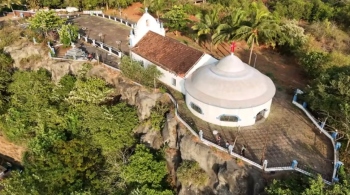
Siridao, a peaceful coastal suburb between Curca and Bambolim along the Zuari River, is lined with coconut palms and a quiet beach. The village comes alive each year with deep devotion during the feast of Jesus of Nazareth/Jezu Nozrem, held on the second Sunday after Easter.
The village’s religious heritage is rich and layered. Its original parish church, Santa Maria Magdalena, built by the Dominicans in 1603, stood as a strong symbol of faith until its collapse in 1869, after which the parish was attached to Goa Velha. Over time, new places of worship emerged, including a chapel dedicated to the Holy Souls and Our Lady of the Rosary which was elevated to a church in 1906. However, it was later damaged in the 1967 Koyna earthquake and eventually fell into ruin.
Amid these changes, one structure endured in both memory and devotion”the chapel popularly known as Anjeanchem Kopel. Built in 1877 by Antonio Matias Gomes of Panaji on his property, in remembrance of those who perished in the cholera epidemic between 1790 and 1810. When the Rosary chapel fell, two of its statues found a new home here, continuing the legacy of faith of the people of Siridao.
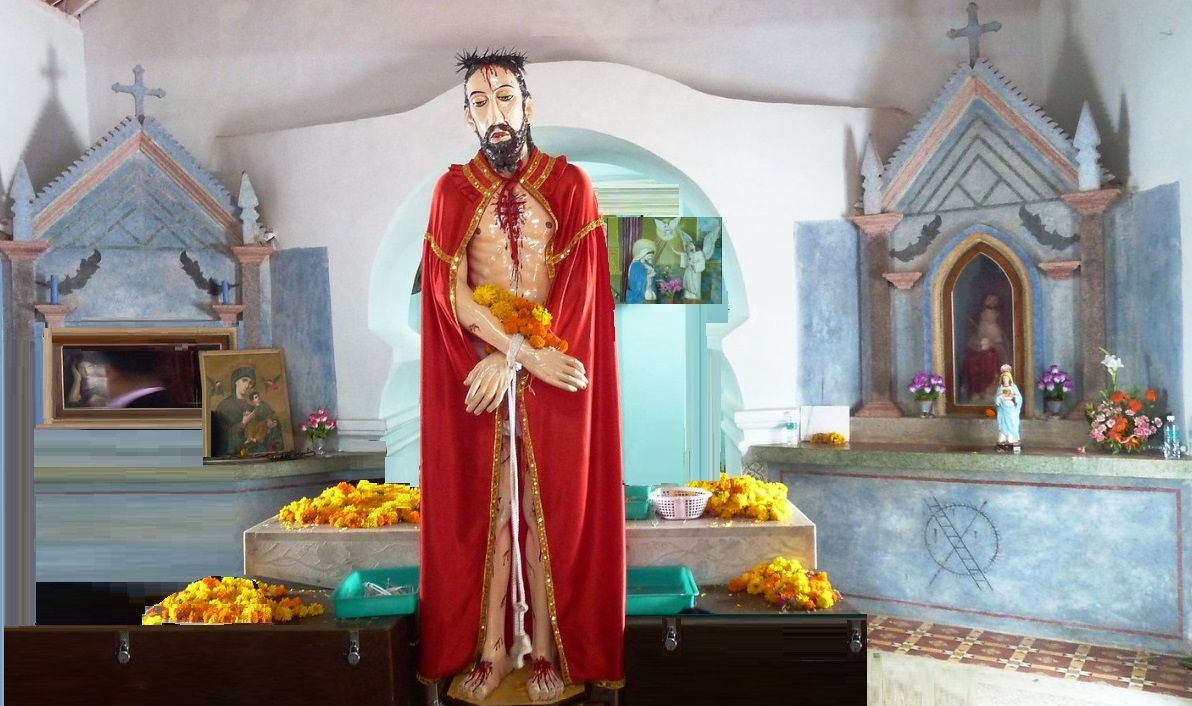
Though the chapel is dedicated to Our Lady of the Annunciation”commemorating the moment when the angel Gabriel revealed to Mary that she was chosen to be the Mother of God”the local devotion has taken on a unique character. A beautiful mural above the main altar portrays this sacred event. Yet, the faithful fondly refer to the feast as that of Jezu Nazareth, gathering in large numbers to venerate the deeply moving statue of the suffering Christ, which has become central to their spiritual life.
The historic Chapel of Siridao
Perched gracefully atop a hillock, the Chapel of Jesus of Nazareth was built in 1604, this historic chapel is believed to be the smaller dome-shaped circular structure. Intriguingly, elements of its design”such as the circular platform behind the altar and the unique architectural layout”bear a striking resemblance to features found in a Jewish synagogue.
According to Fr Cosme José Costa of the Pilar Society, a historian and priest, the chapel’s circular inner wall contains several small niches or openings. These may once have served as receptacles for storing Torah scrolls”the sacred first five books of the Bible. Siridao itself lies along the northern fringe of the ancient port of Gopakpattana, which once encompassed the coastal stretches of Goa Velha and Agasaim. Over a thousand years ago, this bustling port welcomed ships from distant lands, making it a vibrant centre of trade and cultural exchange.
Adding to its historical richness, the discovery of a 7th-century St Thomas Cross at Dandi in Agasaim, inscribed in the Pahlavi language, has shed light on the diverse communities that once inhabited Gopakpattana. The Pahlavi script, used by Persian traders under the Sassanid dynasty, points to the presence of early Pahlavi Christians in the region, long before the arrival of the Portuguese. This has led researchers to explore the possibility that Siridao may also have hosted a Jewish settlement in ancient times.
Historical records further suggest that during the reign of Yusuf Adil Shah (1498“1510), hundreds of Jews lived in Old Goa and contributed to the development of the former capital. The existence of a street named Rua dos Judeus”Street of the Jews”stands as testimony to their presence along Goa’s western coast prior to Portuguese rule. However, this vibrant community is believed to have gradually disappeared during the period of the Goa Inquisition (1560“1812).
The living tradition of Siridao
Pilgrims arrive in large numbers to fulfil vows, locally known as angvonn, or to make new ones, praying with heartfelt words: Saiba maka borem kor. Hanv tujea paiam kodden yevun pez jevtam (Lord, please heal me, I am at your feet and partake of kanji). The simple act of consuming the blessed kanji is believed to bring healing and grace.
In earlier times, hospitality formed the soul of this feast. Families in Siridao would open their homes to pilgrims travelling from distant places such as Sanguem and Sanvordem. Many journeyed on foot, while others came by canoe or catamaran, singing devotional hymns to the rhythm of the ghumott. Those arriving by river would dock behind the chapel and climb the hill in reverence. On this sacred day, no one in the village is ever denied a meal”every home becomes a place of sharing.
The kanji/pez tradition
While the Eucharistic celebration takes place in the chapel, kanji is prepared down the hill, where ukkde tandull (boiled rice) is traditionally cooked in seven large copper pots (moddkeo) under a palm-leaf enclosure known as the Mol’lancho Mattov. The task is entrusted to a married woman (soyasini), in keeping with age-old custom. The kanji is then served in earthen bowls (kholeachem aidon), often accompanied by local pickles.
The responsibility of sponsoring kanji rests with the Dempo family, the traditional landowners of Siridao. Local folklore connects this act of generosity to pensavanchem bhat”property inherited with the obligation of offering prayers or masses for the souls of the departed. It is believed that the offering of kanji is an act of atonement and remembrance tied to this legacy.
Historical accounts support this tradition. The noted Konkani writer and historian, Fr Moreno de Souza, records that on the feast of Jezu Nozre, the Dempo family provides kanji to all. Similarly, former Siridao vicar Fr João Francisco Xavier Maciel noted in the church records in 1968 that the landlord gives the kanji to fulfill the pensão.