Neuroplasticity involves forming new neural pathways as life demands, thus adapting itself to experiences, learning or even injury, right from birth to old age
We have all heard this common English idiom that goes, 'You cannot teach an old dog new tricks.' This drew from the observations that while puppies are easy to train, adult dogs resist new learning, especially if it requires a change in behaviour that has already set in. Applied to humans, it implied that it would be difficult to learn new skills, change habits and engage in new behaviours as one grew older. Now, this could be a rather outdated idea, as neuroscience indicates that one can indeed learn new tricks, possibly at every age.
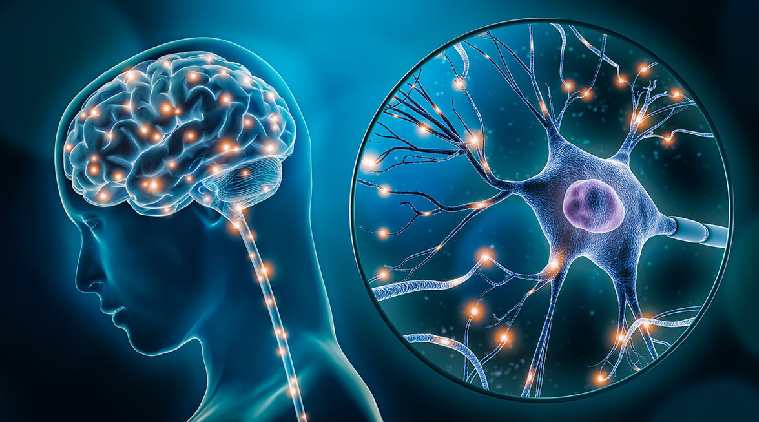
Neuroplasticity is the brain’s rather remarkable ability to literally rewire itself. While most behaviours do bring in a set pattern strengthened by reinforcements, it is still possible to reshape the mind, as neuroscience has proved that brain plasticity persists lifelong. Neuroplasticity involves forming new neural pathways as life demands, thus adapting itself to experiences, learning or even injury, right from birth to old age.
Simply, what it implies is that the brain is not fixed like clay once it hardens; rather, it is like Play-Doh, which can be reshaped as required. In childhood, with 100 billion neurones, neuroplasticity is at its peak, as it seeks to strengthen its network of connections while pruning away the weaker ones. Children in enriched environments, from attending school, music lessons, sports and hobbies to learning human interactions, form rich neural pathways that strengthen with repeated behaviour and rewards, thereby mastering such behaviours. However, we are emotional beings by nature, and even neuroplasticity requires some emotional backing. A nurturing environment will empower neuroplasticity, and hence even simple skills of reading and maths, for instance, picked up during this time, will last a lifetime.
During the teen years, the unused neural pathways get pruned to improve efficiency; however, the pathways in the prefrontal cortex of the brain take their time to mature. This part of the brain is crucial for decision-making and impulse control. That’s why, perhaps, teenagers can get quite argumentative with regard to being told what to do, though they may have no idea of what they actually want themselves. However, as hormones surge, so does plasticity, but in a different way. Learning of languages, musical instruments, dance and sports comes effortlessly during this time thanks to the brain’s adaptability.
As adulthood approaches, the idea that the brain slows down comes from the instances of reflexes not being as quick as they were when one was younger. But in fact, the brain still has the potential to keep growing new cells. There is rather iconic research on London cab drivers, who require passing one of the most challenging tests in the world to secure their driving licence. With time, MRI studies prove that their neural networks expand from memorising the 2000-odd road maps as they master their driving routes. Mid-life career shifts and lifestyle changes with moving residences can be navigated through neuroplasticity. No doubt stress can challenge the ability to forge new pathways in the brain. While chronic worry can shrink it, mindfulness meditation can thicken it. Friendships with emotional connections and social support can make neuroplasticity nimble.
Growing old beyond 60 years once meant mental decline, but neuroplasticity debunks that. The ageing brain compensates with "cognitive reserve". In India, seniors practising yoga or Carnatic music preserve executive function. Even post-stroke, patients regain functionality by "tricking" the brain.
Across decades, three pillars drive neuroplasticity: repetition directs neural pathways, novelty builds new pathways and emotion bonds the pathways. Neuroplasticity isn't magic; it is science. For the common person, it simply means ‘use it or lose it’. In Goa, where 11% of the population is already over 60 years, it would help to embrace the idea that one’s brain is remodelling. So if 60 is the new 40, then silver is the new gold.
(The writer is Associate Professor and Head of Department of Psychology at St Xavier’s College, Mapusa)